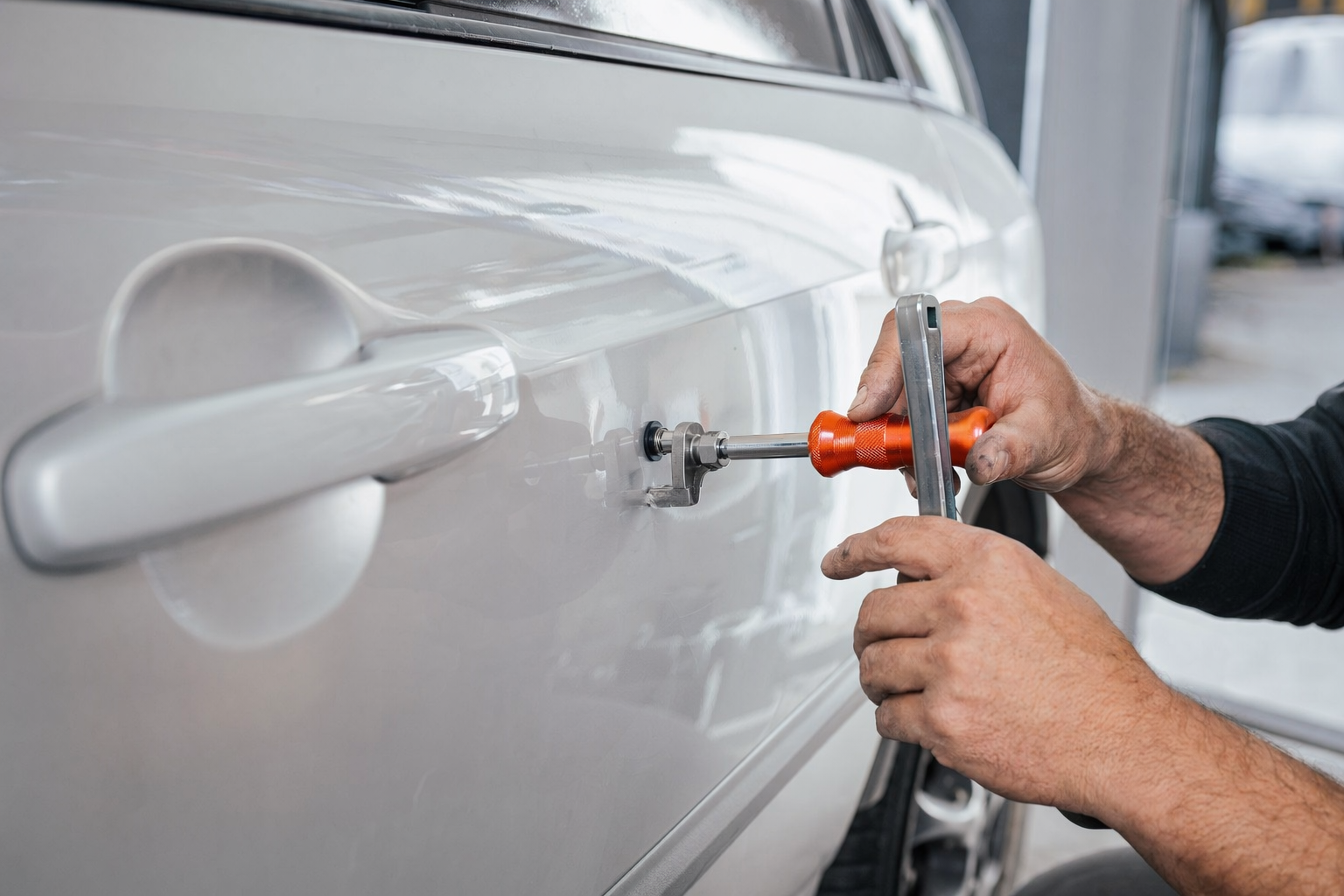
What is paintless dent repair (PDR)?
Paintless dent repair, often called PDR, is a way to remove dents without filling, sanding, or repainting the panel. A technician uses special tools to work the metal from behind the panel, or gently lift the dent from the outside.
That makes PDR different from regular bodywork. Traditional repair usually means filler, sanding, primer, paint, and clear coat. PDR tries to keep the original factory paint intact.
Why drivers like it:
- It is often faster than conventional repair.
- It can cost less when the dent is a good fit for the process.
- It helps preserve the original paint finish.
PDR is common for small dings, hail damage, and some door dents. If you are trying to figure out the next step after a collision, How CollisionLane works explains how we help you get matched with a local shop that can inspect the damage.

When PDR works, and when it doesn't
PDR works best when the dent is in the metal, not the paint. The paint should be unbroken. The panel also needs to be accessible so a technician can reach the back side, or can use special glue-pull tools from the outside.
PDR is often a good fit when:
- The dent is small to medium.
- The paint is not cracked, chipped, or stretched badly.
- The damage is a shallow crease or door ding.
- The panel has not been sharply folded.
- The metal can be moved back without leaving a visible ripple.
PDR often does not work well when:
- The paint is cracked or missing.
- The dent is deep, sharp, or on a body line.
- The panel edge is heavily damaged.
- There is rust, corrosion, or prior body filler.
- The damage includes broken trim, broken clips, or nearby structural issues.
If you are unsure, a shop can inspect it in person. That is the safest way to know whether PDR is enough or whether you need conventional repair. For broader repair choices, see Auto body repair services.
Hail and door-ding damage
Hail and parking-lot door dings are two of the most common PDR jobs.
Hail damage often creates many small dents across the hood, roof, trunk, and panels. PDR can be a strong option when the paint is still intact. If the hail was severe, the shop may need to mix PDR with conventional repair on certain spots.
Door dings are another good PDR candidate. These are the small dents you get from another car door, shopping cart, or tight parking space. Many door dings can be removed cleanly if the metal was not creased too hard.
Helpful questions to ask a shop:
- Can this hail or ding damage be fixed with PDR only?
- Will any panels need paint after the dent work?
- Are there dents in hidden areas that change the price?
- Will trim or interior panels need to be removed to reach the dent?
If your damage came from a storm, this guide may help: Hail damage repair options. For a single parking-lot dent, see Door ding repair.
PDR vs conventional dent repair
PDR is not better in every case. It is just one method. The right choice depends on the damage.
PDR usually means:
- No repainting on the repaired panel.
- Less labor when the dent is a clean fit.
- Faster turnaround for many repairs.
- Better chance of keeping original paint.
Conventional dent repair usually means:
- Sanding and reshaping the damaged area.
- Using filler if needed.
- Priming and repainting the panel.
- Blending nearby panels if color match is needed.
Conventional repair is often needed when the paint is broken, the dent is severe, or the metal is badly stretched. It may also be needed if the panel has been bent near a seam, crease, or edge where PDR cannot fully restore the shape.
A good shop should explain both options and why one is better for your specific damage. If you want to compare repair methods, How to read an auto body repair estimate can help you understand the line items you may see.
Finding a PDR specialist
Not every body shop does high-quality PDR, and not every dent is a good candidate. Look for a shop or technician that can inspect the damage first, then explain the repair plan in plain language.
Good signs:
- They can show you why PDR will or will not work.
- They explain whether paint is damaged.
- They talk about access points, trim removal, and possible limits.
- They offer a written estimate before work starts.
- They are clear about what is included and what could change if hidden damage is found.
Red flags:
- A promise that every dent can be fixed perfectly with no inspection.
- Pressure to start work before you approve the price.
- Vague answers about paint damage or panel access.
- No written estimate.
You can also compare shops before you choose. CollisionLane is a free matching and information service, not a repair shop. We help drivers connect with trusted local auto body shops so they can compare options and decide. Start here: Get matched with a trusted auto body shop. If you want general tips before choosing, see How to choose a trustworthy auto body shop.
Typical cost ranges
PDR prices vary a lot. The size of the dent, the panel location, and how hard it is to reach the back side all affect the price. These are typical U.S. ranges, not quotes.
Common ranges:
- Small door ding: about $75 to $200
- Medium dent: about $150 to $450
- Larger or harder-to-reach dent: about $300 to $800+
- Hail damage on one panel: about $150 to $500+
- Full hail repair on a vehicle: about $500 to $2,500+
A few things can raise the cost:
- Damage on a roof rail, body line, or edge.
- Trim removal or interior panel removal.
- Aluminum panels, which can be harder to repair.
- Many dents close together, like after hail.
- A mix of PDR and conventional repair.
Conventional dent repair is often more expensive because it may involve repainting. Small jobs may still be a few hundred dollars, while bigger panel repairs can run much higher. If paint must be blended to match nearby panels, that adds labor and materials.
The safest move is to get a written estimate and confirm the final price before work begins. If you are comparing options, the Auto Body Repair Cost Estimator can give you a rough starting point, then a shop can inspect the car in person.
How to decide what to do next
If the dent is small and the paint looks intact, PDR may be worth asking about first. If the paint is broken, the metal is sharply creased, or the damage is part of a bigger crash, conventional repair may be the better route.
A simple way to move forward:
1. Take clear photos in good light.
2. Check whether the paint is cracked or chipped.
3. Get an in-person estimate from a shop that offers PDR.
4. Ask whether the price could change after hidden damage is found.
5. Compare written estimates before you decide.
If you just want help finding a shop that can inspect the damage, How CollisionLane works explains the process. If you are ready, Get matched with a trusted auto body shop.
Common questions
Can PDR fix a dent if the paint is scratched?
Sometimes, but not always. If the paint is only lightly marked, a shop may still recommend PDR. If the paint is cracked, chipped, or missing, conventional repair is usually needed.
Is PDR good for hail damage?
Yes, often. Small hail dents with intact paint are one of the most common PDR jobs. Severe hail damage may still need a mix of PDR and regular bodywork.
Why do some dent repairs cost much more than others?
Price depends on dent size, location, panel type, paint condition, and how hard the area is to reach. Dents on edges, body lines, or aluminum panels usually cost more.