Signs you need collision repair
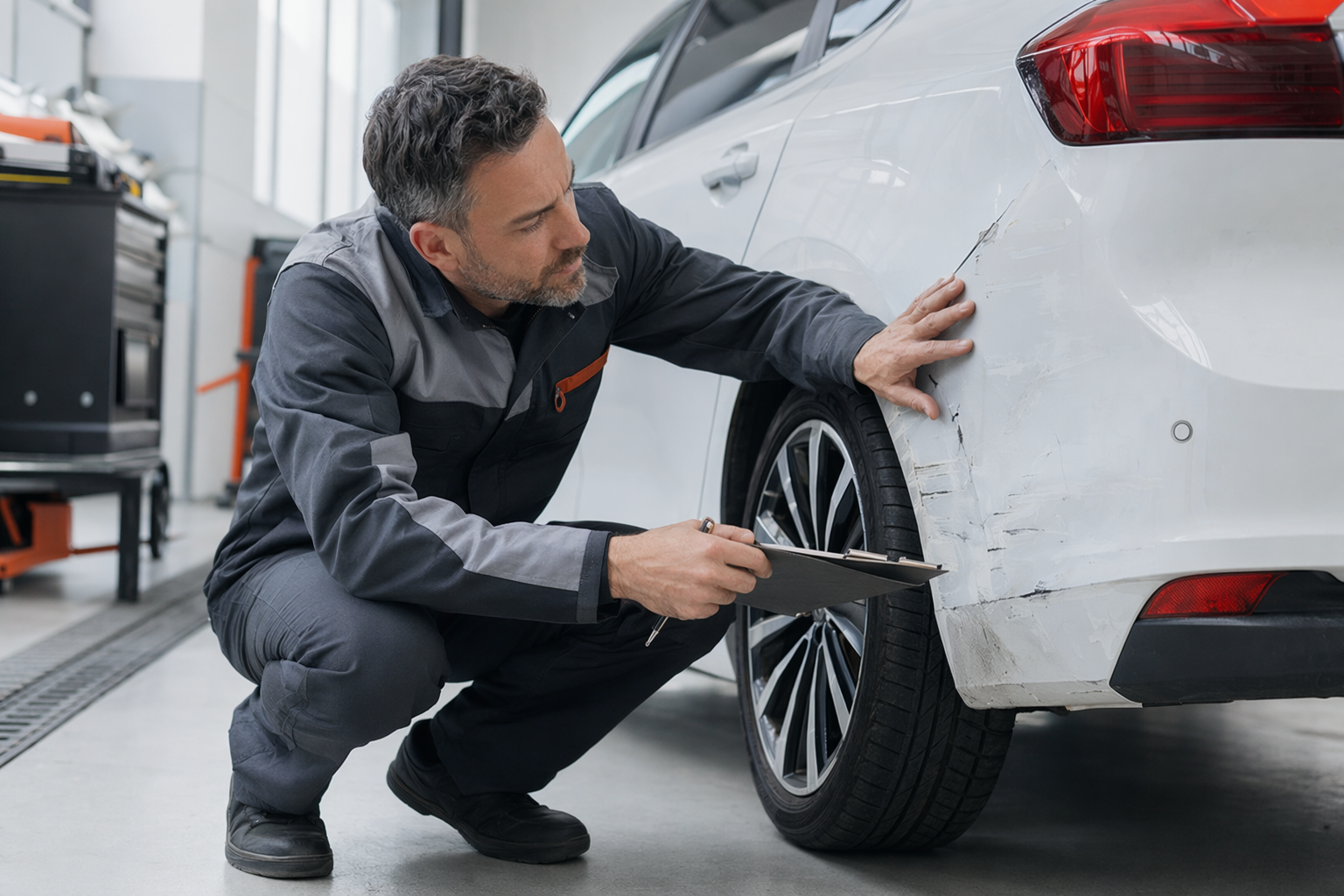
If your car was hit, even at low speed, it may need more than cosmetic work. Common signs include:
- A bent bumper, fender, hood, trunk, or door that does not line up right.
- New gaps between panels, or panels that rub or stick.
- A steering wheel that sits off-center.
- The car pulls to one side.
- Strange noises, shaking, or a rough ride after impact.
- Cracked lights, broken clips, or loose parts.
- Airbag, check engine, ABS, or other warning lights.
- Visible frame damage, crushed metal, or rust starting where paint cracked.
Sometimes the damage is hidden. A car can look okay on the outside and still have bent structure underneath. That is why a proper inspection matters. If you are unsure whether it is safe to drive, get it checked as soon as you can. For a general safety check after a crash, see Is My Car Safe to Drive After an Accident?.
Frame and unibody straightening
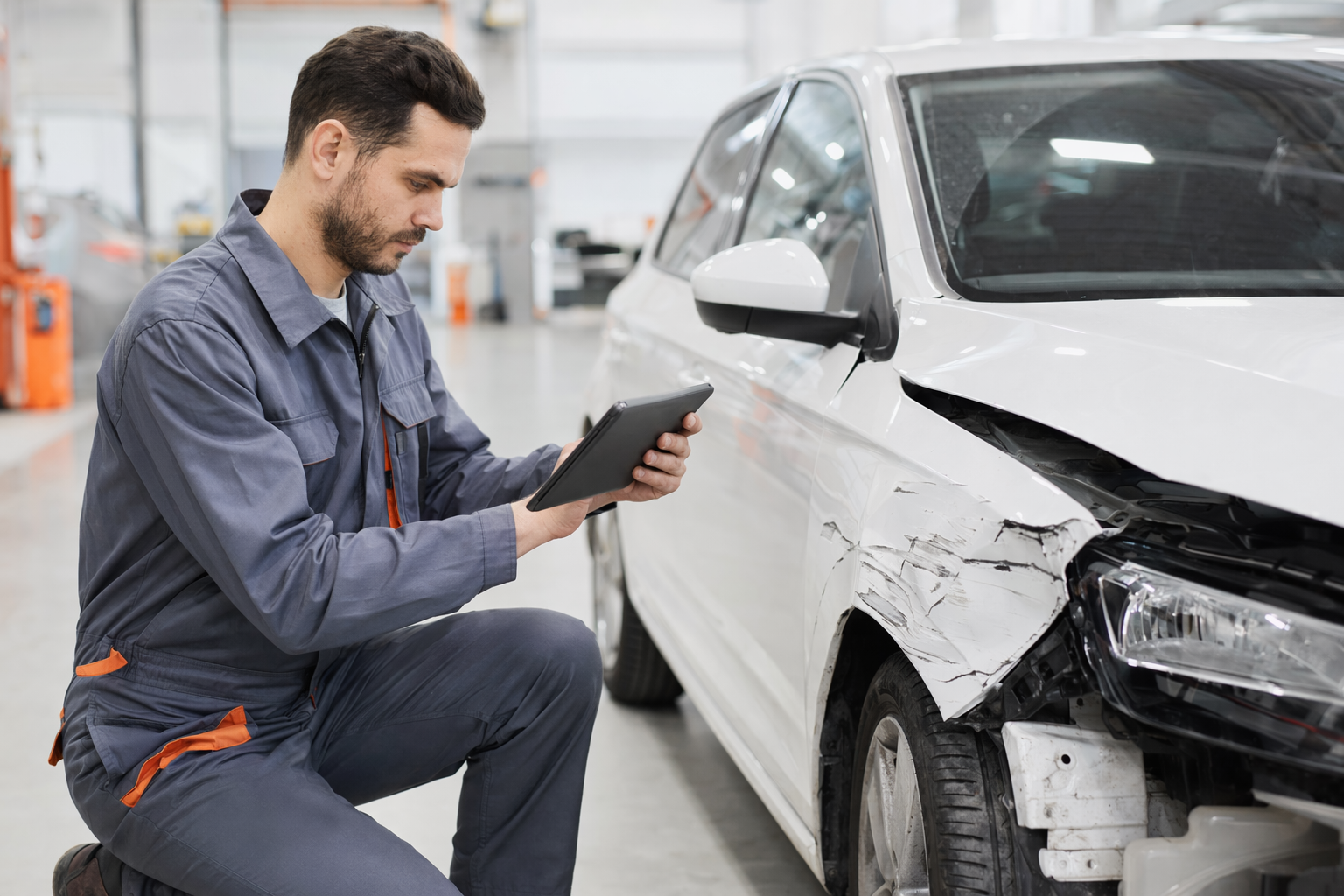
The frame is the main support structure on some vehicles. Many newer cars use a unibody, which means the body and structure are built together in one shell. When that structure bends, the car may not drive, protect, or align the way it should.
Frame and unibody straightening usually starts with a full measurement. Shops use tools to compare the damaged car with factory specs, which are the original measurements from the maker. If the structure is bent, they may use a frame machine or pulling system to bring it back into shape.
This work can involve:
- Measuring the body at key points.
- Pulling or straightening metal in small steps.
- Replacing damaged sections if they cannot be safely corrected.
- Welding or bonding structural parts when needed.
- Rechecking alignment after each step.
This is skilled work. Not every dent repair shop does it. Ask whether the shop has experience with your vehicle type, especially if it is newer, larger, or has advanced safety systems. If you want help finding a shop that handles structural work, you can get matched with a trusted auto body shop.
Choosing a collision repair shop
A good shop will explain the damage in plain English and give you a written estimate. You should be able to compare options and choose the one that feels right for you. CollisionLane is a free matching and information service, not a body shop or insurer, so you stay in control.
When you compare shops, look for:
- Written estimates, with labor, parts, paint, and materials listed.
- Experience with frame, structural, and safety-system repair.
- Clear communication about what is included and what may change.
- Photos or explanations of hidden damage and supplements.
- Willingness to answer questions before work starts.
- Proper equipment for measuring, welding, and recalibration if needed.
Helpful questions to ask:
- Have you repaired this type of damage before?
- Will you inspect for hidden damage after teardown?
- Do you use OEM, aftermarket, or used parts, and why? See OEM vs aftermarket vs used parts.
- Will you perform ADAS recalibration if needed?
- Can I get the estimate in writing before I approve anything?
It is smart to get more than one estimate when you can. Compare not just price, but also what each estimate includes. A lower price can mean fewer parts, less labor, or missed hidden damage. For a broader guide, see How to Choose a Trustworthy Auto Body Shop and Questions to Ask Before You Pick a Body Shop.
Typical cost ranges
Collision repair costs vary a lot. The final price depends on the type of damage, the vehicle, the parts needed, paint matching, and whether the structure or safety systems were affected. These are typical US ranges, not quotes:
- Small collision repair on one panel, about $300 to $1,200.
- Bumper repair or replacement, often $500 to $2,500 or more, especially with sensors.
- Fender, hood, door, or quarter-panel repair, often $800 to $3,500 per area.
- Frame or unibody straightening, often $600 to $2,500, but severe cases can be higher.
- Structural welding or section replacement, often $1,000 to $5,000+ depending on the vehicle and damage.
- Paint and refinishing after collision work, often $500 to $2,000+ for color match and blending.
- ADAS recalibration, often $150 to $600+ depending on the system.
A repair can also go up if hidden damage is found after teardown. That is common after a crash. The best way to avoid surprises is to get a written estimate, ask about possible supplements, and confirm the price before work starts.
If the repair looks expensive, compare the repair estimate with the car’s value. In some cases, the vehicle may be close to a total loss. Our guide Repair vs Total Loss: Which Is Better for You? explains the tradeoffs in plain language.
If you want help starting the process, you can also get matched with a trusted auto body shop or review How CollisionLane Works.
What to do next
If your car has crash damage, do not guess. Get a written inspection. Ask what is cosmetic, what is structural, and what safety systems may need attention. Then compare shops and choose the one you trust.
If you need help finding local options, CollisionLane can connect you with a trusted shop that works with collision, frame, bumper, paint, and glass damage. It is free, and you can still compare and choose.
Common questions
Can a car with frame damage still be repaired?
Often, yes, but it depends on how severe the damage is and where it is located. A shop should inspect the structure, measure it, and tell you whether straightening, section replacement, or another repair method is appropriate.
Do I need a repair shop that handles safety systems too?
If your car has airbags, radar, cameras, or other driver-assist features, it is smart to use a shop that can inspect and recalibrate those systems if needed. After a crash, those parts may need more than a visual check.
Why did my estimate go up after the shop started work?
Hidden damage is common after collisions. Once parts are removed, the shop may find more damage than first seen. That update is called a supplement. Ask for the added estimate in writing before approving extra work.