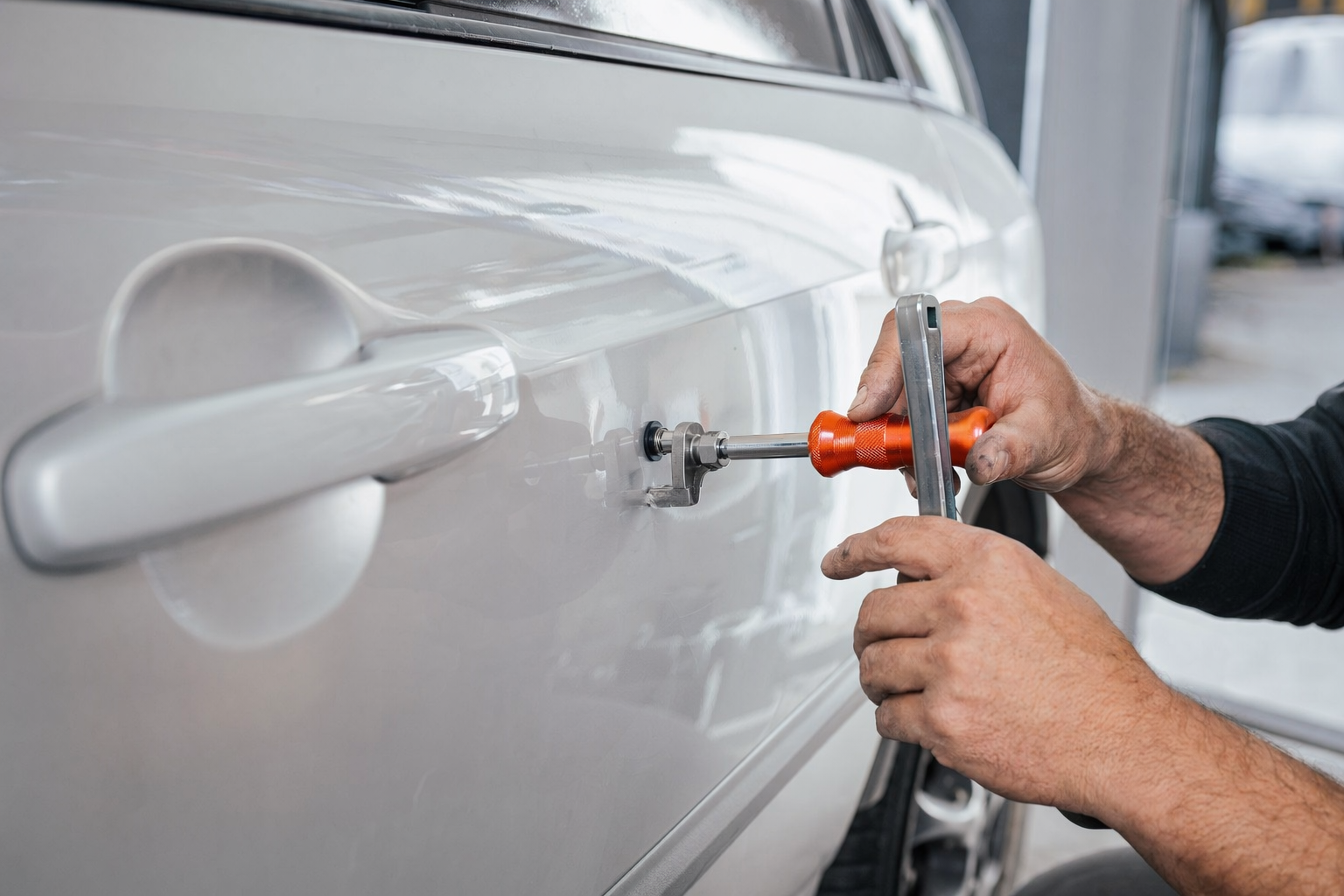
Door Ding Repair — Your Options
A door ding is a small dent on a car door, often from another door, a shopping cart, or a light impact in a parking lot. Some dings are only cosmetic, which means they affect how the car looks. Others can crack paint or bend the door edge.
Your main repair options are usually:
- Paintless dent repair, often called PDR. This is for dents where the paint is still intact.
- Traditional body repair. This may involve filling, sanding, repainting, and clear coat.
- Door panel replacement in rare cases, usually if the damage is deep or the metal is badly creased.
If you want a better idea of what kind of repair fits your damage, see Dent repair and PDR or Is PDR right for my dent?.

The short answer
If the ding is small and the paint is not cracked, PDR is often the fastest and least invasive option. If the paint is chipped, the dent is sharp, or the metal is stretched, a body shop may need to repair and repaint the area.
There is no one perfect fix for every door ding. A good shop should inspect the damage in person, explain the repair options, and give you a written estimate. Typical repair ranges can be small for light PDR work and higher if paint work is needed, but these are only typical ranges, not quotes. Always compare before you decide.
What you need to know
A door ding repair can seem simple, but the right method depends on a few things.
- Paint condition. If the paint is unbroken, PDR may work well.
- Dent shape. A shallow round ding is easier to fix than a sharp crease.
- Location. Edges, body lines, and reinforced areas are harder to repair.
- Access behind the panel. PDR needs tools and space behind the dent.
- Color match. If repainting is needed, the shop may need to blend paint so the door matches the rest of the car.
If the dent is only on one door and the paint is fine, many drivers choose PDR because it can preserve the original finish. If the door has scratches, chipped paint, or a larger impact mark, ask the shop whether the repair should include sanding, refinishing, or blending. You can also review How paint blending works if paint color is part of the repair.
If the ding happened in a crash, or you also have bumper, glass, or frame damage, the repair may be more than just a door dent. In that case, start with How CollisionLane works and consider a broader inspection through Get matched with a trusted auto body shop.
Steps to take
- Inspect the dent in good light. Look for cracked paint, scratches, chipped edges, or a sharp crease.
- Take clear photos. Get close-up shots and one wider shot of the whole door.
- Check whether the door opens and closes normally. If it does not, say that when you request an estimate.
- Ask for a written estimate. Ask what repair method they plan to use and whether paint work is included.
- Compare a few shops. Drivers should compare and choose. Ask about timing, warranty, and whether the final price can change if hidden damage is found.
- Confirm the price before work starts. Do not assume every estimate includes the same labor, materials, or paint steps.
If you are dealing with an insurance claim, keep your photos and estimate together. For a general walkthrough, see How the auto body insurance claim process works or How to file an auto body insurance claim.
Common mistakes
- Assuming every ding needs repainting. Some do not.
- Choosing a shop based only on the lowest number. The estimate may not include the same work.
- Not asking if the paint is cracked. That detail changes the repair method.
- Forgetting to ask about hidden damage. A small dent can hide a deeper issue.
- Approving work without a written estimate.
- Not comparing options. A driver can get matched with local shops and still decide which one to use.
A simple question helps: “What repair method do you recommend, and why?” That gives you a better answer than just asking for the cheapest fix.
Get matched with a shop
If you want help finding a local shop for a door ding, CollisionLane can match you with a trusted auto body shop near you. It is free, and it works in multiple languages.
You still stay in control. You can ask questions, get estimates, and choose the shop that feels right for your car and your budget. Start here: Get matched with a trusted auto body shop.
If you want more repair help, browse Auto body repair services or go back to Quick answers after an accident.
Common questions
Can a door ding be fixed without painting?
Yes, sometimes. If the paint is not cracked and the dent shape is suitable, paintless dent repair may work. A shop needs to inspect it first.
How do I know if my door ding needs more than PDR?
If the paint is chipped, the dent has a sharp crease, or the metal is badly stretched, the shop may need to use traditional repair and repainting instead of PDR.
Should I get more than one estimate for a door ding?
Yes. It is smart to compare written estimates, ask what each one includes, and confirm the final price before any work starts.