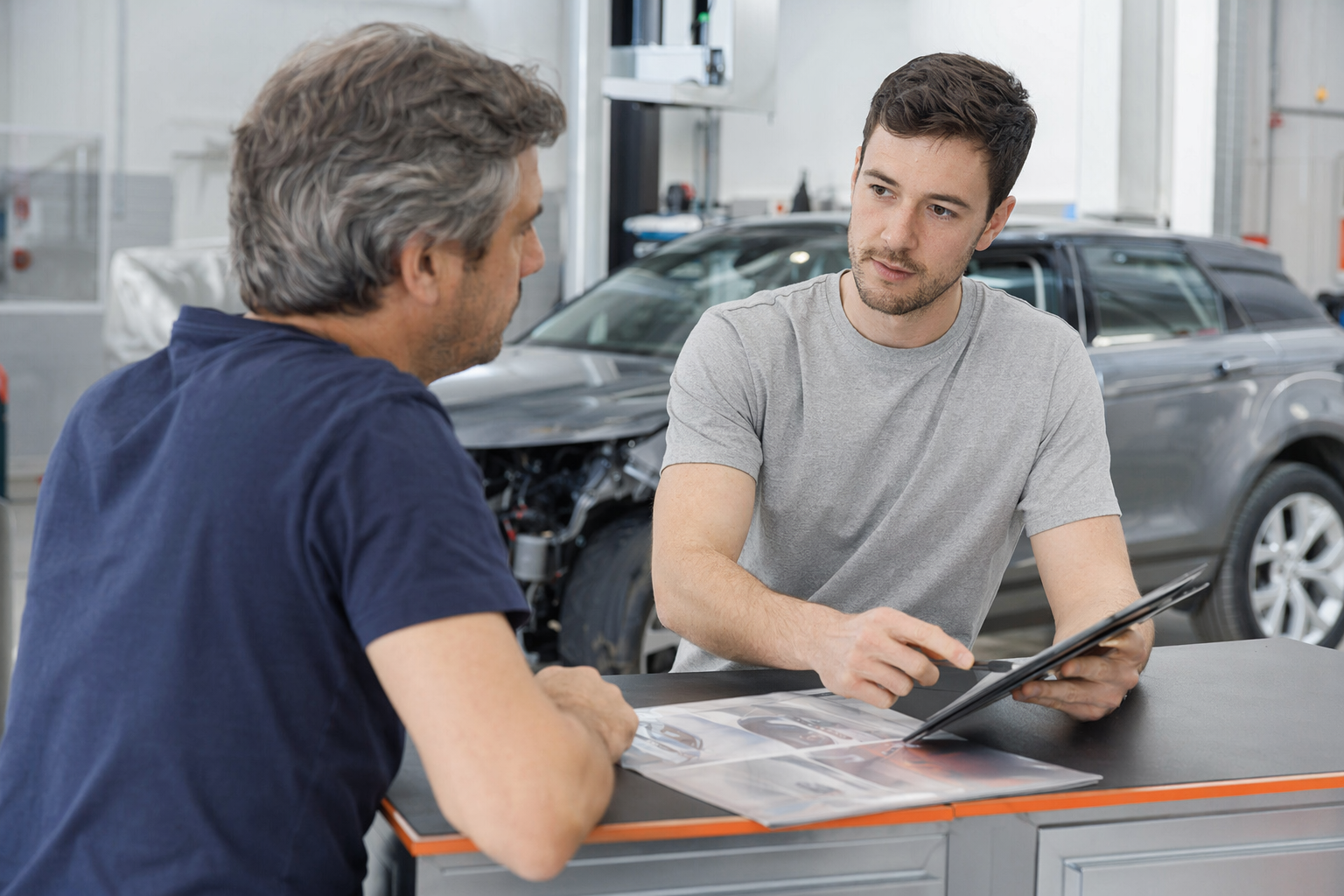
How to Choose an Auto Body Shop
Start with shops that look organized, answer questions clearly, and are willing to put things in writing. A trustworthy shop should explain what they will inspect, what parts they may use, and whether your car needs structural repair, paint work, bumper work, glass work, or sensor recalibration.
Good signs include:
- Written estimates, not just verbal quotes.
- Clear explanation of labor, parts, paint, and any possible extra charges.
- A clean shop with modern equipment and a front desk that does not rush you.
- Willingness to show certifications and photos of past work.
- A timeline that sounds realistic, not unrealistically fast.
If you want a place to start, you can use Get matched with a trusted auto body shop and compare options. CollisionLane is a free matching and information service, so you still choose the shop that feels right for you.

Why it matters
Not all damage is cosmetic. A dent can hide structure damage. A bumper can hold sensors. A windshield can affect driver-assistance systems. If a shop cuts corners, you may end up with poor paint match, warning lights, wind noise, alignment problems, or safety issues after the repair.
This matters even more after a moderate or severe crash. Frame or structural work, airbag-related work, and ADAS recalibration can affect how your car protects you later. If you are not sure what the damage means, review collision repair basics and Is My Car Safe to Drive After an Accident?.
It also matters for money. A fair repair may cost a few hundred dollars for a small dent or scratch, while bumper replacement, paint, or glass work can run into the hundreds or low thousands. Structural damage and complex repairs can be much more. These are typical ranges, not quotes. The best way to avoid surprises is to get a written estimate and confirm the price before work begins.
Step by step
Use this simple process to compare shops:
- Make a short list. Ask friends, your insurer, or a matching service for options. Then compare at least two or three shops.
- Check certifications. Look for training in collision repair, refinishing, welding, frame work, or glass and calibration work if needed. Certifications are not a guarantee, but they are a strong sign the shop invests in training.
- Read reviews carefully. Look for patterns, not one angry review. Pay attention to comments about communication, repair quality, delays, and whether the final bill matched the estimate.
- Ask what is included. Will they inspect hidden damage? Do they handle supplements, which are added estimates when new damage is found? Will they work with your insurer? Do they use new, OEM, aftermarket, or used parts? For more on that, see OEM vs aftermarket vs used parts.
- Ask about safety systems. If your car has airbags, sensors, cameras, or lane-assist features, ask if the shop can handle calibration or partner with a shop that can. See Do I Need ADAS Recalibration After Repair?.
- Get the estimate in writing. Compare labor hours, parts type, paint materials, and any fees. If you want help reading the document, use How to read an auto body repair estimate.
- Ask about warranty. A reputable shop should explain what they warranty, how long it lasts, and what it covers.
If you are unsure whether a repair is even the right choice, check Repair vs Total Loss and What Happens If My Car Is Totaled?.
Your rights as the owner
In general, you get to choose where your car is repaired. You also have the right to ask questions, compare estimates, and decide whether to approve the work. You do not have to agree to repairs you do not understand.
As the owner, you should usually:
- Receive a written estimate before work starts.
- Be told if the shop finds hidden damage.
- Approve major changes before extra work is done.
- Ask for old parts to be saved, if that is important to you and allowed in your situation.
- Know whether the shop is using new, used, OEM, or aftermarket parts.
If insurance is involved, the process can feel confusing. That is normal. For general educational help, see How the auto body insurance claim process works and Do I Have to Use My Insurer's Body Shop?. CollisionLane does not give legal advice, but we can help you understand the repair process and find a local shop.
Common mistakes
A lot of drivers choose too fast, especially after a stressful crash. Try to avoid these mistakes:
- Picking the first shop without comparing.
- Choosing only by the lowest price.
- Skipping the written estimate.
- Not asking whether safety systems need calibration.
- Ignoring reviews that mention delays, poor communication, or repeat problems.
- Failing to ask what parts will be used.
- Assuming a fast promise means better service.
- Letting the car be repaired before you understand the final cost.
A very low estimate can be a warning sign if it leaves out paint materials, hidden damage, or required safety work. A fair estimate should be detailed enough that you can see what you are paying for. If you are worried about a shop that seems sloppy or evasive, see How to Spot a Bad Auto Body Shop and Questions to Ask Before You Pick a Body Shop.
Also watch for a shop that pressures you to sign quickly, will not explain the repair plan, or says, “Don’t worry about it,” when you ask about safety items. That is not a confidence-building answer.
When to get matched with a shop
Get matched early if you are overwhelmed, if English is not your first language, if your car has complex damage, or if you just want a trusted starting point. Matching can save time when you need help after a crash, hail damage, bumper damage, paint damage, or glass damage.
It is especially helpful if:
- You do not know which shops handle your type of repair.
- Your car may need frame work, paint blending, bumper sensors, or glass replacement.
- You want help comparing local shops without calling many places yourself.
- You want a free, easy way to start in plain language.
You can also explore Auto body repair services and Guides for drivers after an accident to learn more before you decide. If you are ready, Get matched with a trusted auto body shop and then compare written estimates before work starts. That way, you stay in control.
Common questions
How do I know if an auto body shop is trustworthy?
Look for clear communication, written estimates, certifications, and reviews that mention quality and follow-through. A trustworthy shop explains the repair plan, answers questions, and does not pressure you to decide on the spot.
Is the cheapest estimate always the best choice?
No. A very low estimate can miss hidden damage, paint materials, parts, or safety work. Compare what is included, not just the final number. Ask for a written estimate and confirm the price before work begins.
What should I ask before leaving my car at a body shop?
Ask what parts they will use, whether hidden damage could change the price, how long the repair may take, and whether any sensors or cameras will need recalibration. Ask for everything important in writing.