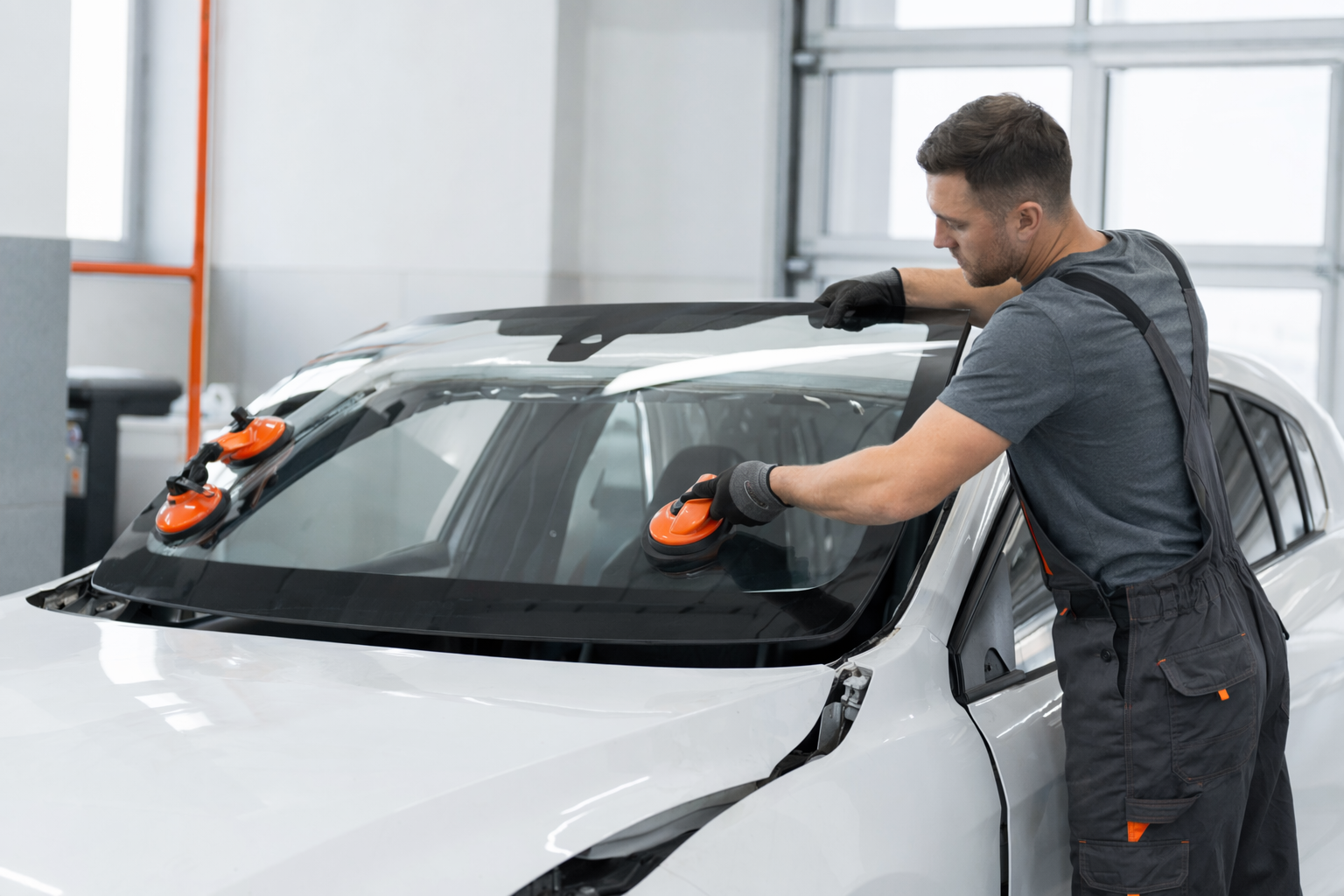
Repair vs replace auto glass
Not every chip or crack means full replacement. Small damage can sometimes be repaired if it is away from the driver’s view and not in a critical area. But after an accident, replacement is often the safer choice when the glass is:
- Cracked across the windshield
- Shattered or badly broken
- Damaged near the edge
- In the driver’s line of sight
- Hurt by impact from an airbag, body flex, or debris
A repair may work for a small chip or short crack. A replacement is usually needed when the crack is spreading, the glass is weakened, or the damage affects visibility. A qualified installer can tell you whether repair is still possible. If you want a broader look at repair choices after a crash, see Auto body repair services and How CollisionLane works.
If you are not sure whether the damage is safe to drive with, treat it as a safety issue. A cracked windshield can reduce visibility and can fail more easily in another impact.
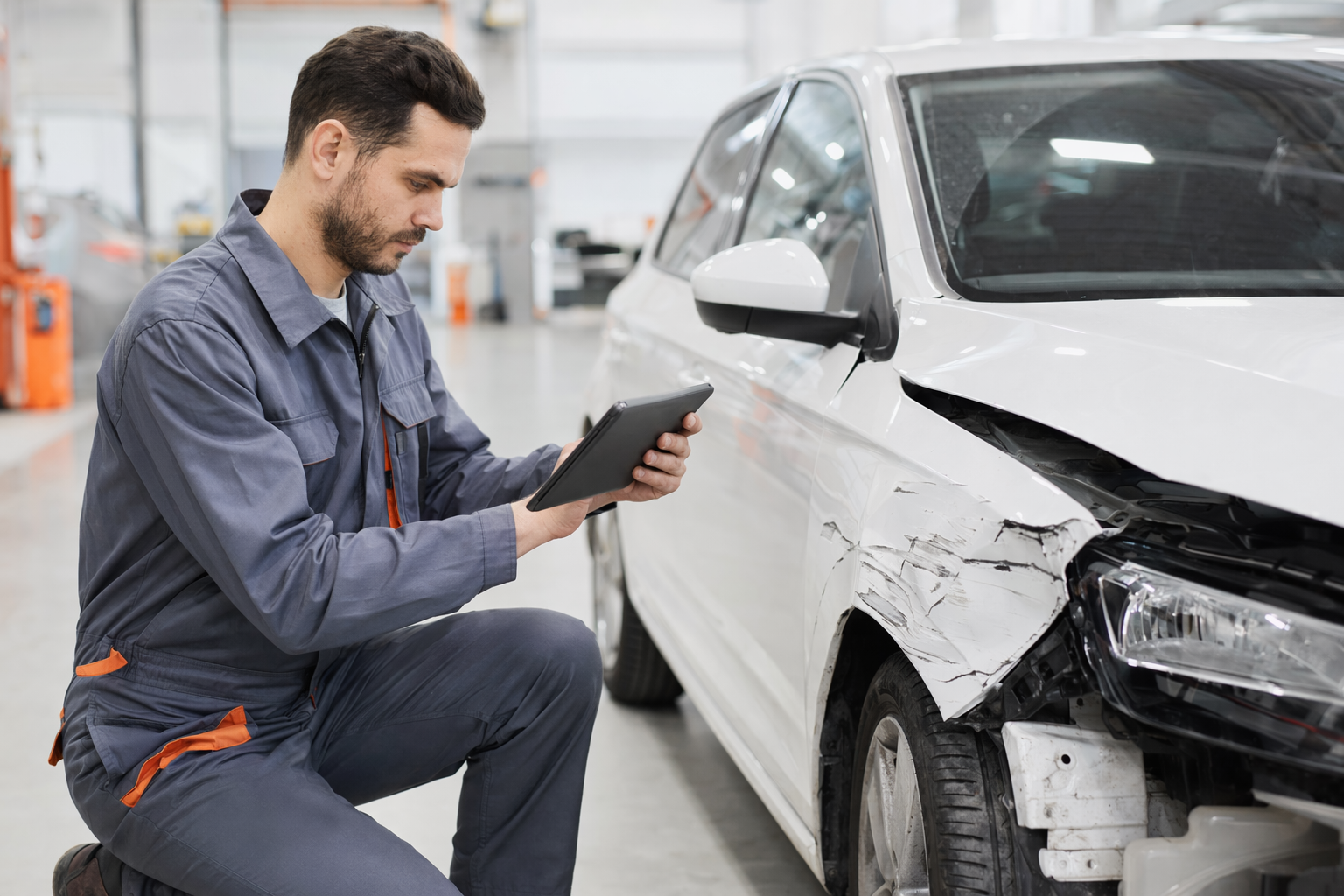
Windshield and ADAS camera recalibration
Many newer vehicles use ADAS, which stands for advanced driver-assistance systems. These are features like lane keeping, automatic emergency braking, forward collision warning, and adaptive cruise control. On many cars, a camera sits behind the windshield, so when the windshield is replaced, the camera may need recalibration.
Recalibration means the system is checked and reset so the camera can read lanes, signs, distance, and road position correctly. There are two common types:
- Static recalibration, done in a shop with special targets and tools.
- Dynamic recalibration, done while driving under specific conditions.
Some vehicles need one type. Some need both. Some also need a scan after the replacement to look for fault codes, which are stored error messages.
This step matters. If ADAS is not recalibrated when required, safety features may not work right. The installer should know your vehicle’s exact procedure, because the process varies by year, make, and model. Ask for this in writing before the job starts. If you want more detail, see Do I Need ADAS Recalibration After Repair?.
Also ask whether the shop uses OEM glass or aftermarket glass. OEM means original equipment manufacturer, the same source as the carmaker. Aftermarket means made by another company. Either may be acceptable on some vehicles, but the choice can affect fit, sensor setup, and price. For a deeper comparison, see OEM vs Aftermarket vs Used Parts and OEM vs Aftermarket vs Used.
Side and rear glass
Side windows, rear glass, quarter glass, and vent glass are different from the windshield. They usually do not need ADAS recalibration, because there is often no camera mounted to them. But they still need careful replacement.
Side and rear glass often break into many small pieces. That means the shop may need to clean out the door, track, or cargo area before installing the new glass. If the broken window is in a door, the regulator, which is the mechanism that moves the glass, may also need to be checked.
After a crash, side or rear glass damage can also come with other problems:
- Bent door frames or weather seals
- Water leaks or wind noise
- Broken defroster lines in rear glass
- Damage to tint, trim, or moldings
If the damage came with a door hit, bumper impact, or body damage, the installer may need to work with a body shop too. CollisionLane can help match you with a trusted local shop that can handle the full repair, not just the glass. You can start here: Get matched with a trusted auto body shop.
Insurance and glass coverage
Glass damage is often handled through auto insurance, but coverage depends on your policy and the cause of the loss. If another driver caused the crash, the claim may go through that driver’s insurance. If it was a single-car accident, your own policy may be involved.
Some policies include full glass coverage or a separate glass option. In some states and policies, windshield repair may have a lower deductible than full replacement. Others may still apply your collision or comprehensive deductible. Your insurer can explain your specific coverage.
A few general tips:
- Take photos of the damage before anything is removed.
- Ask the shop for a written estimate.
- Confirm whether calibration is included.
- Ask if the quote uses OEM or aftermarket glass.
- Ask what warranty is included for the glass and installation.
If you are filing a claim, keep all paperwork together. For a general walkthrough, see How the auto body insurance claim process works and How to File an Auto Body Insurance Claim.
CollisionLane is a free matching and information service. We do not decide claims or promise approval. We help drivers compare options and find a shop they can talk to directly.
Finding a qualified installer
Glass replacement is not only about putting in a new windshield. It is also about doing the job in the right order and checking the safety systems afterward. A qualified installer should be able to handle both the glass work and any needed calibration.
Look for a shop that can clearly answer these questions:
- Do you replace glass for my exact year, make, and model?
- Does my vehicle need ADAS recalibration after the windshield is replaced?
- Do you perform recalibration in-house, or do you send it out?
- Will you provide a written estimate before work starts?
- What brand of glass will be used?
- Will the price include moldings, adhesive, labor, scan, and calibration if needed?
- What warranty do you offer on the installation?
Good shops explain things in plain language. They do not rush you, and they do not hide extra charges. If your car has other crash damage, a body shop that understands collision repair can be helpful because the glass issue may be part of a larger repair. For more help choosing, see How to choose a trustworthy auto body shop and Questions to Ask Before You Pick a Body Shop.
If you are stressed and need a starting point, CollisionLane can match you with a local shop. You compare and choose. That keeps the decision in your hands.
Typical cost ranges
Glass repair and replacement costs vary a lot by vehicle, glass type, and whether calibration is needed. These are typical US ranges, not quotes:
- Small chip repair: about $50 to $150
- Standard windshield replacement: about $200 to $600
- Windshield replacement on many newer vehicles with sensors or rain cameras: about $300 to $1,000+
- ADAS recalibration: about $150 to $500+, sometimes more on complex vehicles
- Side window replacement: about $150 to $400
- Rear glass replacement: about $200 to $700+
Luxury vehicles, heads-up display windshields, acoustic glass, heated glass, or vehicles with more advanced driver-assist systems can cost more. Labor, adhesive curing time, glass brand, and local rates also affect price.
A low estimate is not always the best estimate. Ask what is included. A fair quote should list the glass, labor, seals or moldings, calibration if needed, and any extra fees. Before you approve anything, get the price in writing and confirm whether anything could change after teardown or inspection. For help comparing estimates, see How to read an auto body repair estimate and Auto Body Repair Cost Estimator.
What to do next if your glass was damaged in a crash
If your windshield, rear glass, or side window was damaged in a collision, take the next step before the problem gets worse.
- Take photos from outside and inside the car.
- Note whether the damage blocks your view or sets off warning lights.
- Check whether the car has ADAS features.
- Ask for a written estimate that includes calibration if needed.
- Compare shops before you approve the work.
If you need help right away, use Get matched with a trusted auto body shop or read After-an-Accident Checklist.
Common questions
Can a cracked windshield be repaired after an accident, or does it need replacement?
Sometimes a small chip or short crack can be repaired. If the crack is long, spreading, in the driver’s view, or the glass is badly damaged, replacement is usually the safer choice. A shop should inspect it and tell you which option fits your car.
Does windshield replacement always require ADAS recalibration?
No, but many newer cars do need it because a camera or sensor is mounted behind the windshield. The need depends on the vehicle and the safety features it has. Always ask the installer to check your exact model’s requirements.
Is rear glass replacement different from windshield replacement?
Yes. Rear glass usually does not need ADAS recalibration, but it can involve defroster lines, trim, and cleaning broken glass from the vehicle. If the crash also damaged the body, a body shop may need to inspect the surrounding area too.