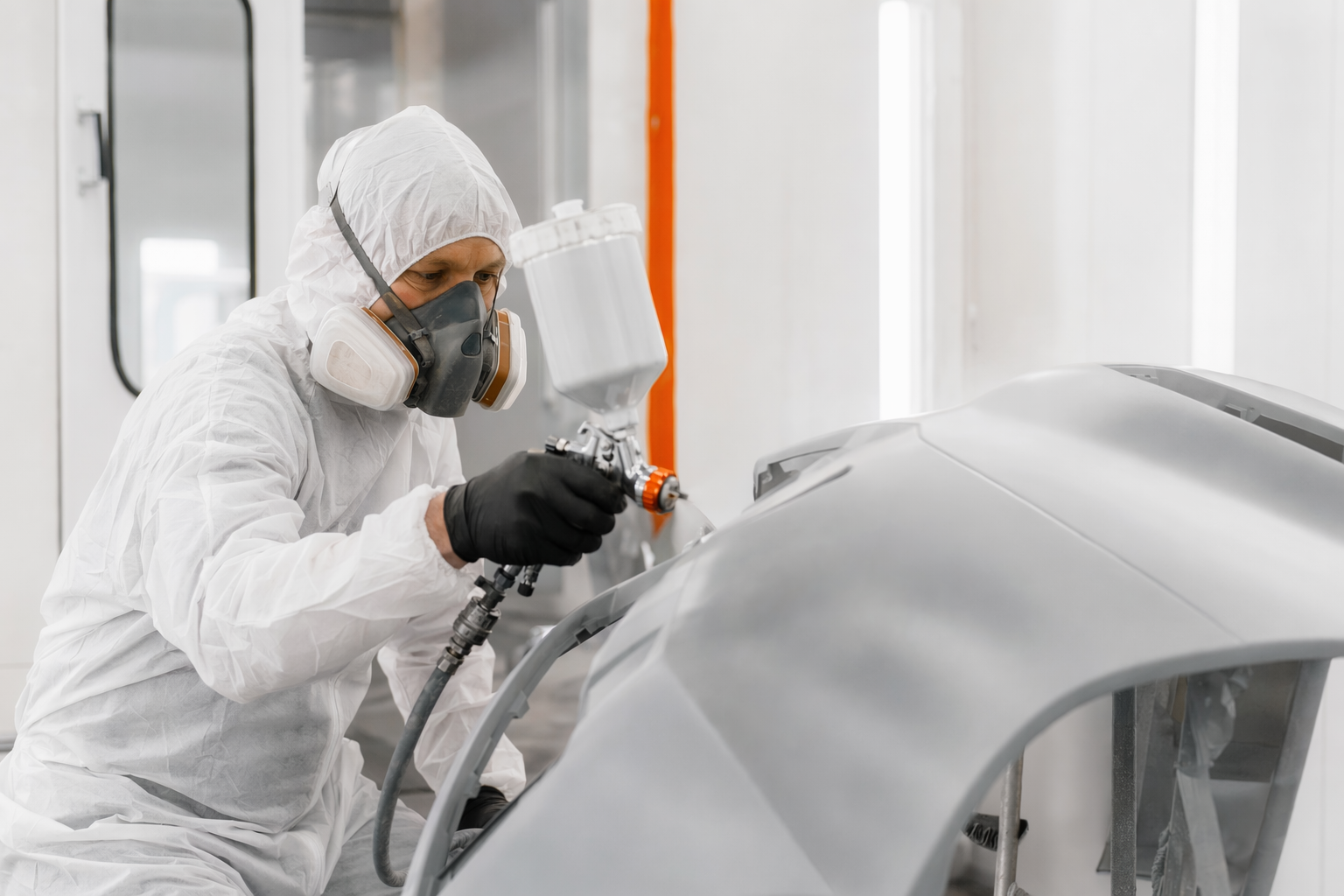
How auto refinishing works
Auto painting, also called refinishing, is the process of restoring the outer finish after repair work. A shop may sand the damaged area, fill small imperfections, apply primer, spray color, and then finish with clear coat.
If the repair is tied to a crash, the paint work often comes after the body work is done. That means dents are fixed first, panels are aligned, and any replacement parts are fit before color goes on. If the shop is also handling collision repair, you can learn more on our collision repair service page.
A simple repaint may only involve one panel. A larger repair may require several steps so the new paint sits flat and blends into the old finish. If you want a broader overview of available services, see auto body repair services.
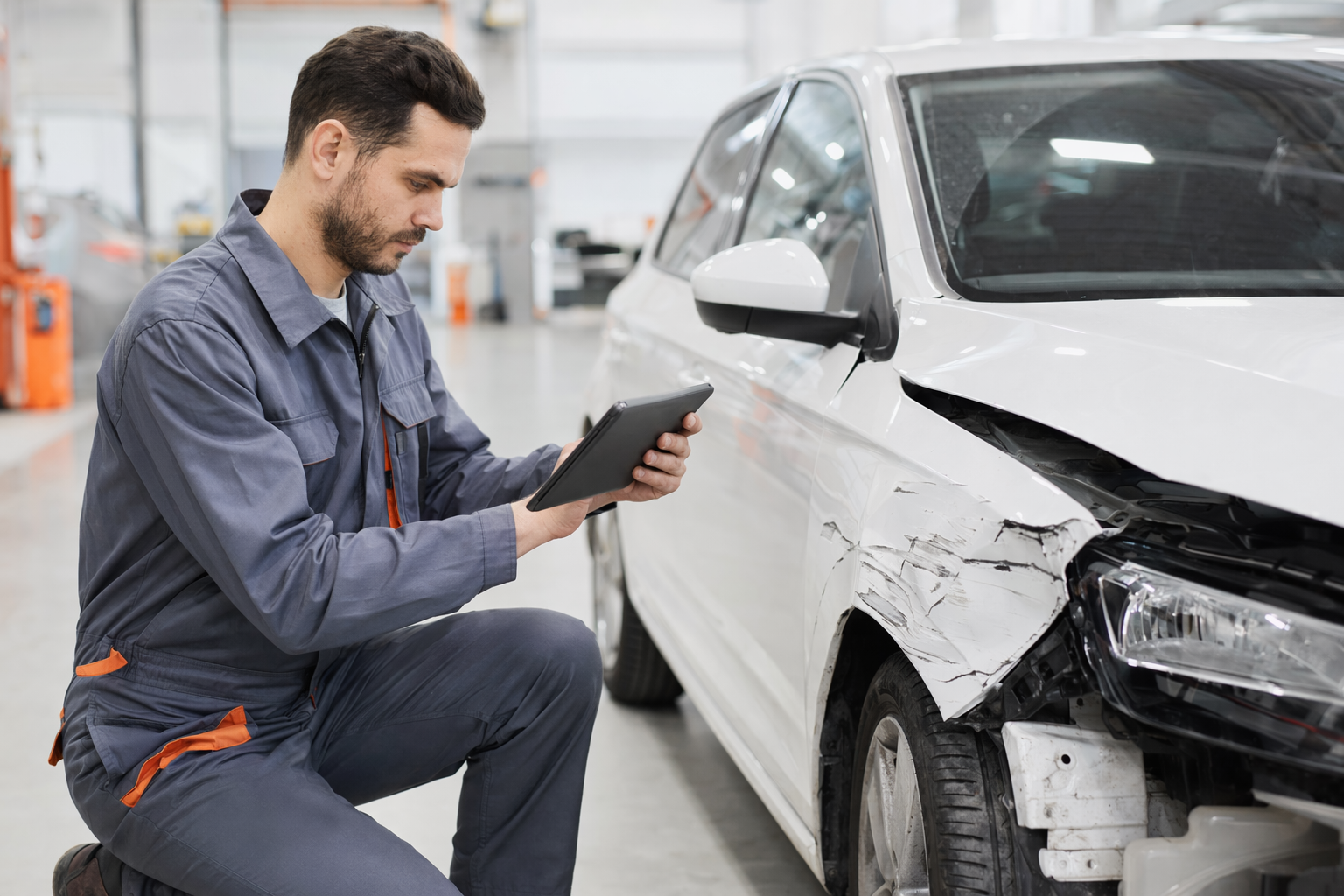
Color matching and computerized formulas
Matching your car’s color is one of the hardest parts of a quality paint job. Even cars with the same factory color code can look different because of sun fade, age, prior repairs, and how the paint was sprayed at the factory.
Most shops use computerized paint-mixing systems. They look up the factory formula by your vehicle’s year, make, model, and color code. Then the painter may adjust that formula by eye or with test spray cards to get closer to the actual color on your car.
That said, a computer formula is only a starting point. A good match also depends on:
- The condition of the existing paint
- Whether the car has faded from sun exposure
- The angle, light, and texture of the finish
- The skill of the painter and the shop’s process
If you are worried about whether the repaired area will match well, this guide may help: Will the Paint Match My Car Exactly?.
Blending vs full-panel repaint
Shops often choose between blending and repainting the full panel. These are different ways to make the new paint look natural.
Blending means spraying the repaired panel and lightly extending color into the nearby panel so the eye does not catch a hard line. This is common when the original color is hard to match exactly or when the car has some fade.
Full-panel repaint means painting the entire panel from edge to edge. This can be a cleaner choice when the damage is larger, the old finish is badly faded, or the panel already has past repair work.
In general, blending is used to improve the visual match. Full-panel repainting is used when a full, even finish is the better choice. A trustworthy shop should explain why it chose one method over the other. For more on that decision, see How Paint Blending Works.
If you are comparing estimates, ask whether the price includes blending, adjacent-panel work, and color match time. That can change the final cost a lot. Our repair estimate guide explains line items in more detail.
Clear coat and protection
Clear coat is the transparent top layer over the color coat. It gives the paint gloss, depth, and protection.
Why it matters:
- It helps protect against UV rays, which can fade paint
- It adds shine and a smoother look
- It helps guard the color coat from moisture and light scratches
- It can improve durability when applied correctly
If clear coat is thin, uneven, or not cured properly, the finish may look dull, peel, or fail early. That is why paint work should be done in a clean space with proper prep and drying time.
After repair, many shops also recommend a short care period before washing or waxing. If you want to protect new paint after the job, see How to care for new auto body paint and repairs.
Spotting a quality paint job
You do not need to be a painter to notice good work. You can check a few simple things before you pick up the car.
Look for:
- Even color. The repaired area should not look obviously lighter, darker, or more orange, blue, or gray than the rest.
- Smooth finish. The surface should feel and look even, not rough, gritty, or wavy.
- No obvious tape lines. You should not see hard edges where the paint stops unless the repair was intentionally done that way.
- Good panel alignment. Doors, bumpers, hoods, and fenders should fit correctly after the repair.
- Clean edges and trim. Overspray, which is paint on areas that should stay clean, should be minimal.
- Proper clear coat shine. The repaired section should have a gloss that looks close to the surrounding panels.
You can also ask the shop:
- Will you blend into adjacent panels?
- Do you use computerized color formulas?
- Will you show me the repaired area in daylight before I leave?
- What is covered if the color does not look right?
If you want help choosing a trustworthy shop, our guide to choosing a body shop and questions to ask before you pick a body shop are good next steps.
CollisionLane can help you get matched with a trusted local shop, but you still compare and choose. Use Get matched with a trusted auto body shop if you want help after a crash, dent, bumper scrape, or paint issue.
Typical cost ranges
Paint prices vary a lot by damage size, color, panel count, prep work, and whether blending is needed. These are typical US ranges, not quotes.
Common examples:
- Small spot repair or paint touch-up: about $150 to $500
- Single panel repaint: about $300 to $1,000+
- Bumper repaint: about $300 to $800+
- Blend into a neighboring panel: often $150 to $400 extra, sometimes more
- Multiple panels with refinishing: about $1,000 to $3,500+
- Custom or difficult color matching: can cost more
Prices rise when the shop must remove trim, repair dents, fix rust, or repaint more than one part to get a better match. Pearl, metallic, and tri-coat colors can also cost more because they are harder to match.
If the paint damage happened after a collision, the estimate may also include body labor, materials, and related repair work. Our auto body repair cost estimator can give you a rough idea, but a written estimate from a shop is the best next step.
Before work starts, always ask for a written estimate and confirm what is included. If you are comparing repair choices after a crash, you may also find How CollisionLane works helpful.
Common questions
Will my car’s paint match exactly after repair?
Often it can come very close, but an exact match is not always possible. Fade, age, lighting, and previous repairs can all affect how the color looks. A good shop will use color formulas, spray samples, and blending when needed to improve the match.
What is the difference between blending and repainting a full panel?
Blending feathers new color into a nearby panel so the repair looks natural. Repainting the full panel covers the entire part edge to edge. The best choice depends on the damage, the paint color, and how faded the original finish is.
Is clear coat really necessary?
Yes, in most modern paint jobs. Clear coat adds shine and helps protect the color layer from sun, moisture, and light wear. Without it, the finish usually will not last or look right for long.