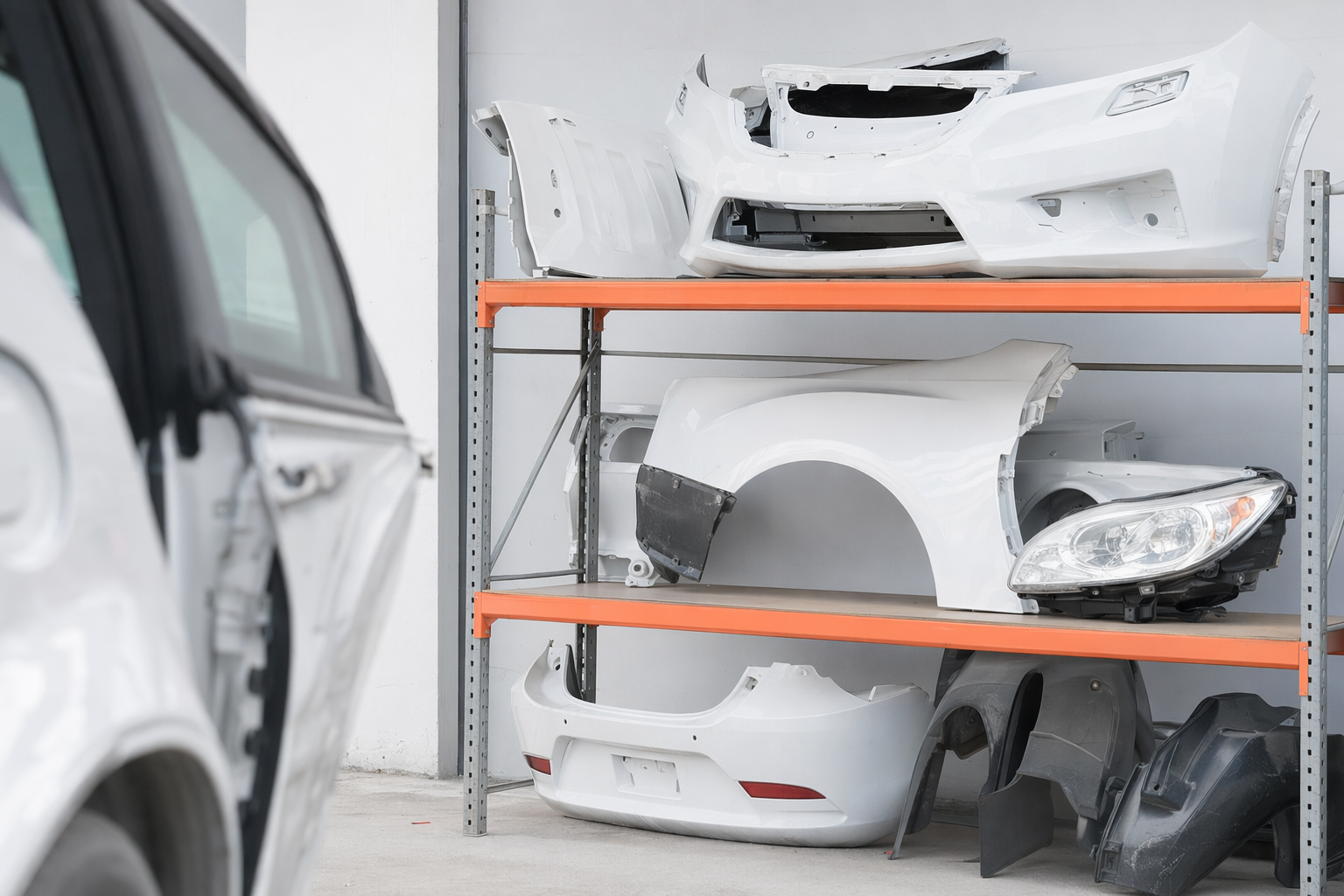
OEM vs Aftermarket vs Used Parts
After a collision, a shop may replace damaged parts with one of three types.
- OEM means Original Equipment Manufacturer. It is a new part made by, or for, the car maker.
- Aftermarket means a new part made by another company.
- Used means a part taken from another vehicle, often from a salvage yard.
There is no single best answer for every repair. Some parts need perfect fit and exact function. Others are mainly cosmetic, like a trim piece. A good shop will explain the tradeoffs in plain language and give you a written estimate. If you want help finding a shop, CollisionLane can get you matched with a trusted auto body shop.

Option A explained, OEM parts
OEM parts are often the easiest to understand. They are designed to match your car’s original shape, mounts, and finish. That can matter for bumpers, sensors, lights, panels, and other parts that must line up well.
Why drivers choose OEM:
- Best chance of a direct fit
- Often preferred for newer cars or complex repairs
- Can help with color match and sensor alignment in some cases
Possible downsides:
- Usually cost more than aftermarket or used parts
- May not be needed for every repair
- Availability can vary by model
Important note, OEM does not automatically mean perfect repair outcome. The quality of the work still depends on the shop, the estimate, and how the part is installed and painted. For repair basics, see collision and frame repair and how repair estimates are explained.
Option B explained, aftermarket or used parts
Aftermarket parts are new, but not made by the car maker. Used parts come from another car, and they can be a lower-cost option when the condition is good.
Why these options can make sense:
- Lower typical parts cost, though prices vary
- Useful for older cars or minor repairs
- Can help keep a repair closer to budget
Possible downsides:
- Fit can be less exact, so extra labor may be needed
- Finish or alignment may not be as clean without adjustment
- Used parts may have wear, hidden damage, or limited availability
Used parts are usually more common for non-safety items, like brackets, trim, or some body panels. For parts tied to safety, sensors, or crash structure, the shop may recommend something different. If your bumper was hit, this guide on bumper repair and replacement can help. If glass was damaged, see windshield and auto glass replacement.
How to decide
The best parts choice depends on the repair, your car, and your budget. Here is a simple way to think about it.
1. Ask what part is being replaced.
- Safety parts and parts that affect sensors usually need more care.
- Cosmetic parts may have more options.
2. Ask why the shop is recommending that part.
- Good shops explain fit, safety, availability, and cost.
- Ask for the reason in writing on the estimate.
3. Compare the total repair plan, not just the part price.
- A cheaper part can still cost more if it needs extra labor.
- Paint, blending, and calibration can change the total.
4. Check what your insurer will cover.
- Policies and claim handling can differ.
- Keep it general, and ask your insurer or adjuster about any limits.
5. Confirm before work starts.
- Ask for a written estimate.
- Ask if the shop needs to order the part first.
- Ask whether the price could change if hidden damage is found.
If you want a broader overview of the process after a crash, see guides for drivers after an accident and how the insurance claim process works.
Get matched with a shop
A smart parts choice starts with a shop that explains your options clearly. You should not feel rushed, confused, or pressured.
CollisionLane is a free matching and information service. We do not do the repairs ourselves. We help drivers connect with local auto body shops and understand the repair process in plain English.
If you are comparing estimates, these questions can help:
- Is this part OEM, aftermarket, or used?
- Why do you recommend that option?
- Will it affect safety systems, fit, or paint match?
- What is the typical range for this repair, not a quote?
- Can you put the full plan in writing before starting?
You can also read how to choose a trustworthy body shop and questions to ask before you pick a body shop. When you are ready, get matched with a trusted auto body shop.
Common questions
Is OEM always better than aftermarket or used parts?
Not always. OEM is often the best fit for many repairs, but some aftermarket or used parts can be a reasonable choice for non-safety items. The right answer depends on the part, the car, and the repair plan.
Will my insurance cover OEM parts?
It depends on your policy and the claim. Some policies allow OEM in certain situations, while others may prefer aftermarket or comparable parts. Ask your insurer and the shop to explain the difference in writing.
Are used parts safe after a collision?
Used parts can be fine for some repairs, especially cosmetic ones, if the part is in good condition. For safety-related parts, sensors, or structural items, the shop may recommend a different option.