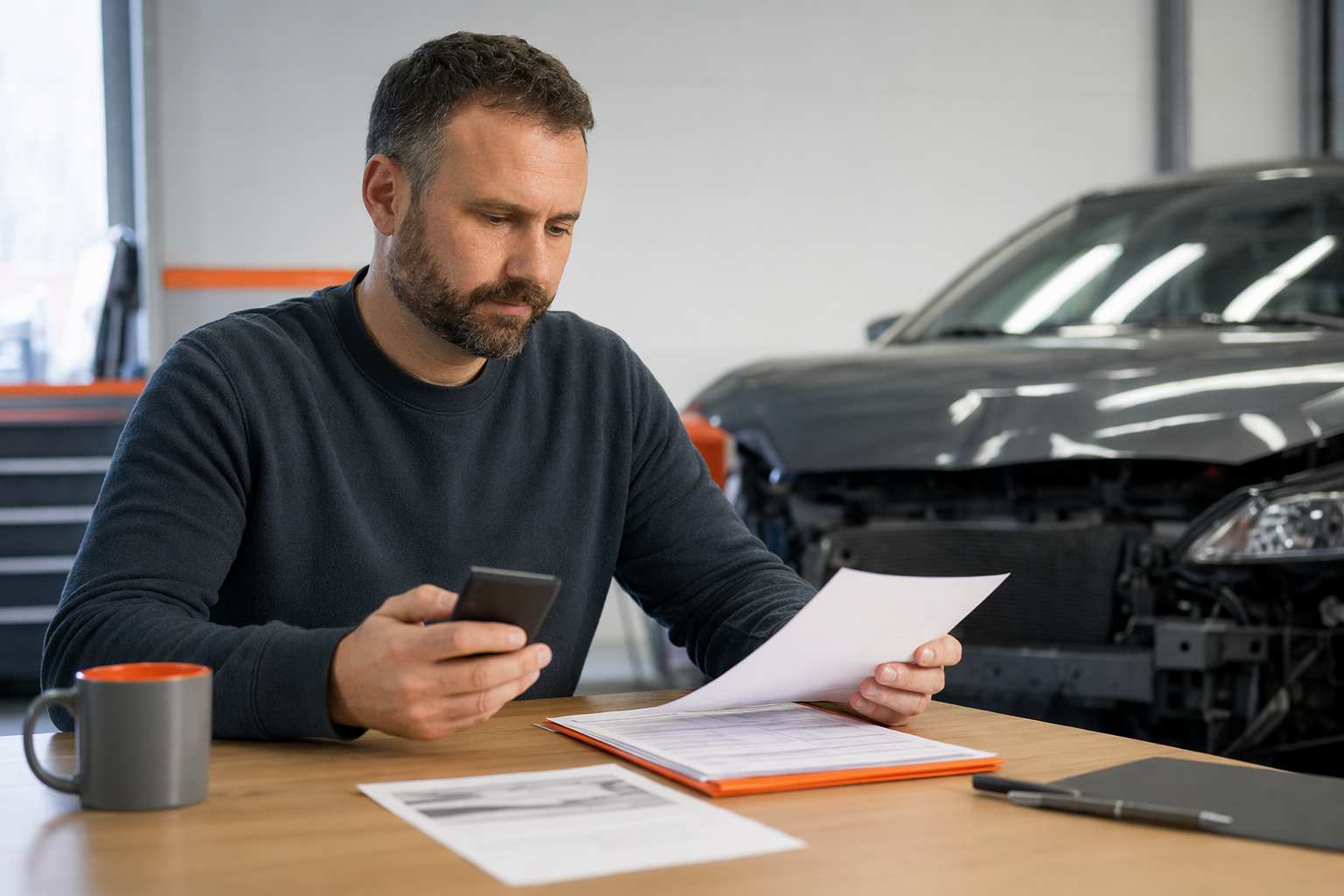
The Auto Body Insurance Claim Process
The auto body insurance claim process is the path from accident to repaired car. It usually starts when you report the damage, then an adjuster or claims rep reviews the loss. After that, a body shop writes an estimate, the insurer reviews it, and repairs begin once the work is approved.
In simple terms, the claim process is about three things:
- Showing what happened.
- Showing what the damage will cost to fix.
- Getting the repair approved so the shop can start.
If your car only has light damage, the repair might be a few hundred dollars to about $2,500 in typical ranges. Moderate collision repairs often fall around $2,500 to $7,500. More serious structural, frame, airbag, or multiple-panel damage can go much higher, sometimes $10,000 or more. Those are typical ranges, not quotes. Every car and crash is different.
If you want help understanding the repair side of the process, see How CollisionLane works and Auto body repair services.

Why it matters
This process matters because the first estimate is not always the full story. Hidden damage is common after a crash. A bumper cover may look fine, but the reinforcement, sensors, brackets, or absorber behind it can be broken. A dented panel may also hide damage to trim, lights, wiring, or alignment parts.
If the estimate is too low, the repair can stall. If the insurer later finds more damage, the shop may need to send a supplement, which is an added request for more parts or labor. That can add time, but it is a normal part of collision repair.
Understanding the claim process helps you:
- Avoid delays.
- Ask better questions.
- Compare estimates more fairly.
- Keep control of repair quality.
- Reduce surprises about cost, deductible, and timing.
If you are trying to understand costs better, you may also like How to read an auto body repair estimate and Auto Body Repair Cost Estimator.
Step by step
Here is the usual flow after an accident.
1. Make sure everyone is safe. If anyone is hurt, get medical help right away. If the car is unsafe to drive, do not push it. For damage that may involve airbags, steering, wheels, or frame issues, a quick safety check matters. See Is my car safe to drive after an accident?.
2. Report the crash. Contact the insurance company to start the claim. Be ready with the date, location, photos, and a short description of what happened. Keep it simple and factual.
3. Get damage documented. Take clear photos of the whole car, license plate, close-ups of damage, and any warning lights. If the car is drivable, do not wash off paint transfer or broken glass before you document it.
4. Choose where the car is inspected. In many cases, you can get your own estimate from a body shop. You do not always have to use the insurer’s first suggestion. If you are wondering about this, see Do I Have to Use My Insurer's Body Shop? and Can I Get My Own Body Shop Estimate?.
5. Get a written estimate. A shop will list parts, labor, paint, materials, and any needed diagnostics. For newer cars, this may include scanning systems and ADAS recalibration, which means camera and sensor setup after repair. These costs vary, but scans and recalibration can add a few hundred dollars or more in typical cases.
6. The insurer reviews the estimate. The adjuster may approve it, question items, or ask for more photos. Sometimes the insurer and shop agree quickly. Other times the process takes several back-and-forth steps.
7. Approve repairs and pay your share. If you have a deductible, that is usually your out-of-pocket share on a covered claim. Deductibles commonly range from about $250 to $1,000, though policies vary. Ask the shop to confirm the amount before work starts.
8. The shop repairs the car. The work may include body repair, panel replacement, paint, bumper repair, glass replacement, or frame work. You can read more about common repair types in Collision and frame repair after a crash and Bumper repair and replacement.
9. Supplements may happen. If hidden damage appears, the shop sends a supplement to the insurer. This is common. It does not always mean something went wrong. It usually means the full damage was not visible at the start. Learn more in What Is a Supplement in Collision Repair?.
10. Final review and pickup. Before you leave, check the repair, ask about warranty coverage, save your paperwork, and confirm whether any follow-up items remain. Ask for the final invoice and keep it with your claim file.
If you need help staying organized, try the Insurance Claim Tracker.
Your rights as the owner
You are the vehicle owner, and you should stay involved in the repair decision. In general, you have the right to ask questions, compare shops, and get a written estimate before work begins.
Common owner rights and best practices include:
- You can ask for a copy of the estimate.
- You can ask what parts are being used, such as OEM, aftermarket, or used parts.
- You can ask whether any safety-related systems need scanning or calibration.
- You can ask the shop to call you before extra work is done.
- You can ask for written approval on major changes.
- You can review the repair before paying the final balance.
If you want to compare part types, see OEM vs aftermarket vs used parts and OEM vs Aftermarket vs Used Parts.
You also have a practical right to choose a shop that feels trustworthy. A clear estimate, good communication, and proper documentation matter. If you want help picking a shop, read How to choose a trustworthy auto body shop or use Get matched with a trusted auto body shop.
Common mistakes
A few mistakes can slow down the claim or create extra stress.
- Starting repairs before approval. This can create payment issues.
- Ignoring hidden damage. A car that looks minor may still need more than surface repair.
- Not getting estimates in writing. Verbal numbers are easy to misunderstand.
- Not asking about the deductible. Know your out-of-pocket amount before work starts.
- Choosing only by the lowest price. The cheapest estimate is not always the best repair plan.
- Skipping photos and paperwork. Keep records of the damage, estimate, claim number, and final invoice.
- Not asking about timing. Some repairs take days, others take weeks. Parts delays are common.
- Assuming the first estimate is final. Supplements are often needed after teardown, which is when the shop removes damaged parts to see what is underneath.
If you are worried about a low first estimate, you may find this helpful: When the First Estimate Was Too Low. For timing questions, see How long does collision repair take?.
When to get matched with a shop
Getting matched with a shop can save time if you do not know where to start, if English is not your first language, or if you want help after a stressful crash. It is also useful when you need a shop that can handle a specific repair, like bumper work, frame repair, paint matching, or glass replacement.
You may want matching help if:
- You are unsure which shops are trustworthy.
- You want a shop that works with insurance claims every day.
- Your estimate seems too low or unclear.
- The car has hidden damage or safety concerns.
- You need a shop that can explain the process in plain English or another language.
- You want to compare a few shops before deciding.
CollisionLane is a free matching and information service. We do not do the repairs ourselves. We help drivers get connected with a trusted local auto body shop, then you compare and choose. If you are ready, Get matched with a trusted auto body shop. If you still need a quick overview of next steps after a crash, see What to Do Right After a Car Accident and Quick answers after an accident.
Common questions
Do I have to wait for the insurance company before getting a body shop estimate?
Usually you can get your own written estimate from a shop while the claim is being opened or reviewed. It is smart to confirm the estimate process with the insurer, then keep copies of everything.
What is a supplement in a collision repair claim?
A supplement is an extra request for more labor, parts, or materials after the shop finds hidden damage. It is common in collision repair, especially after teardown shows damage that was not visible at first.
Can the repair cost change after the first estimate?
Yes. The first estimate may miss hidden damage. That is why written supplements are common. The final cost depends on what the shop finds, what parts are needed, and what the insurer approves.