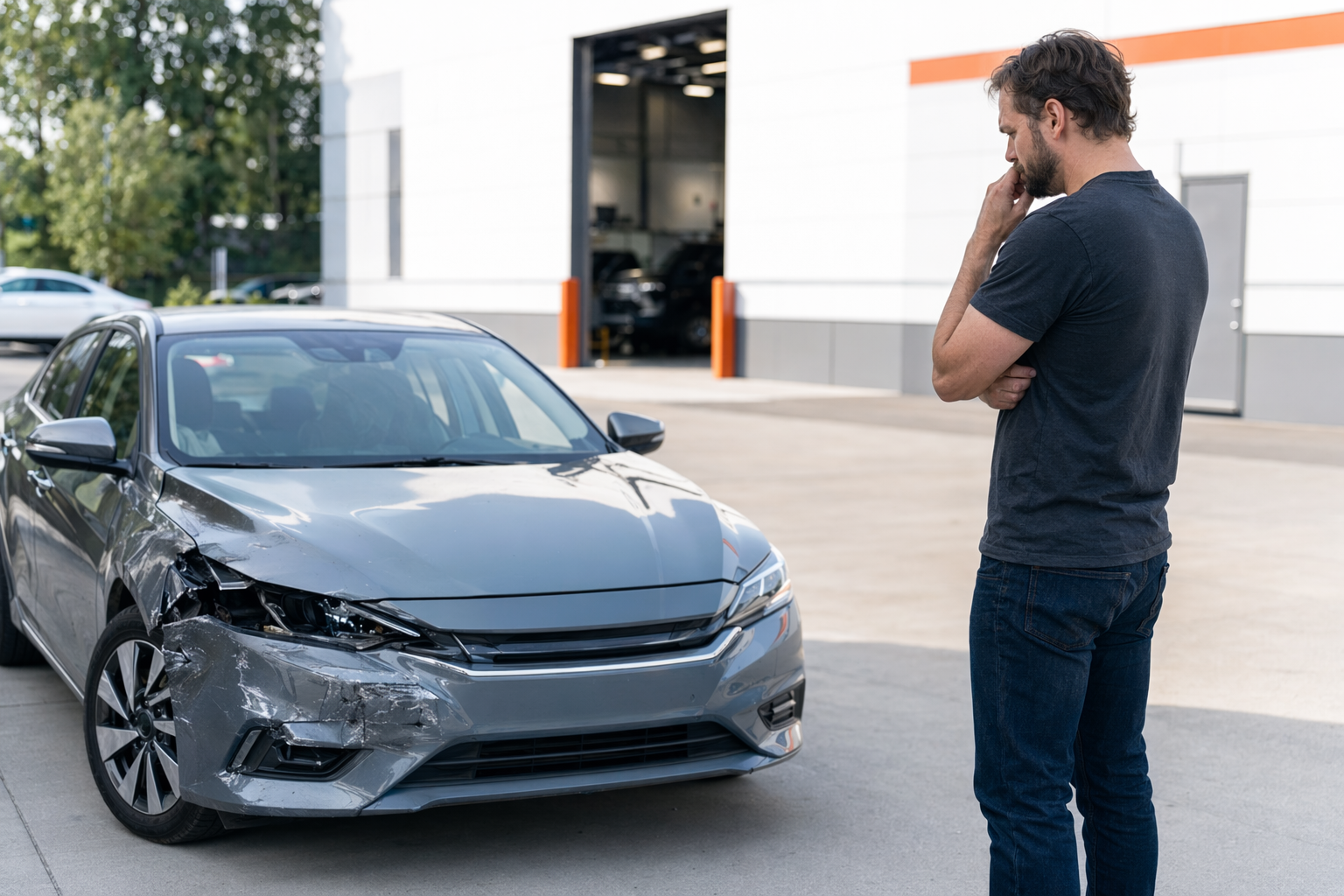
Repair vs Total Loss: Which Is Better for You?
There is no single best choice for every driver. In plain terms, repair is better when the car can be fixed safely at a reasonable cost. Total loss is better when the damage is so large that repair costs are close to, or more than, the car’s actual cash value, which is the market value before the crash.
A repair may make sense if:
- The damage is mostly cosmetic, like dents, paint, a bumper, or glass.
- The frame or structure is not badly damaged.
- The car is worth more than the repair cost.
- You want to keep driving the car for a while.
A total loss may make sense if:
- The damage is severe.
- Airbags, frame parts, or multiple systems are involved.
- The car is older or has a low market value.
- Repair would cost too much compared with the car’s value.
If you want a simple next step, get matched with a trusted auto body shop for a written estimate. You compare and choose. CollisionLane is free, and it is not a body shop or insurer.
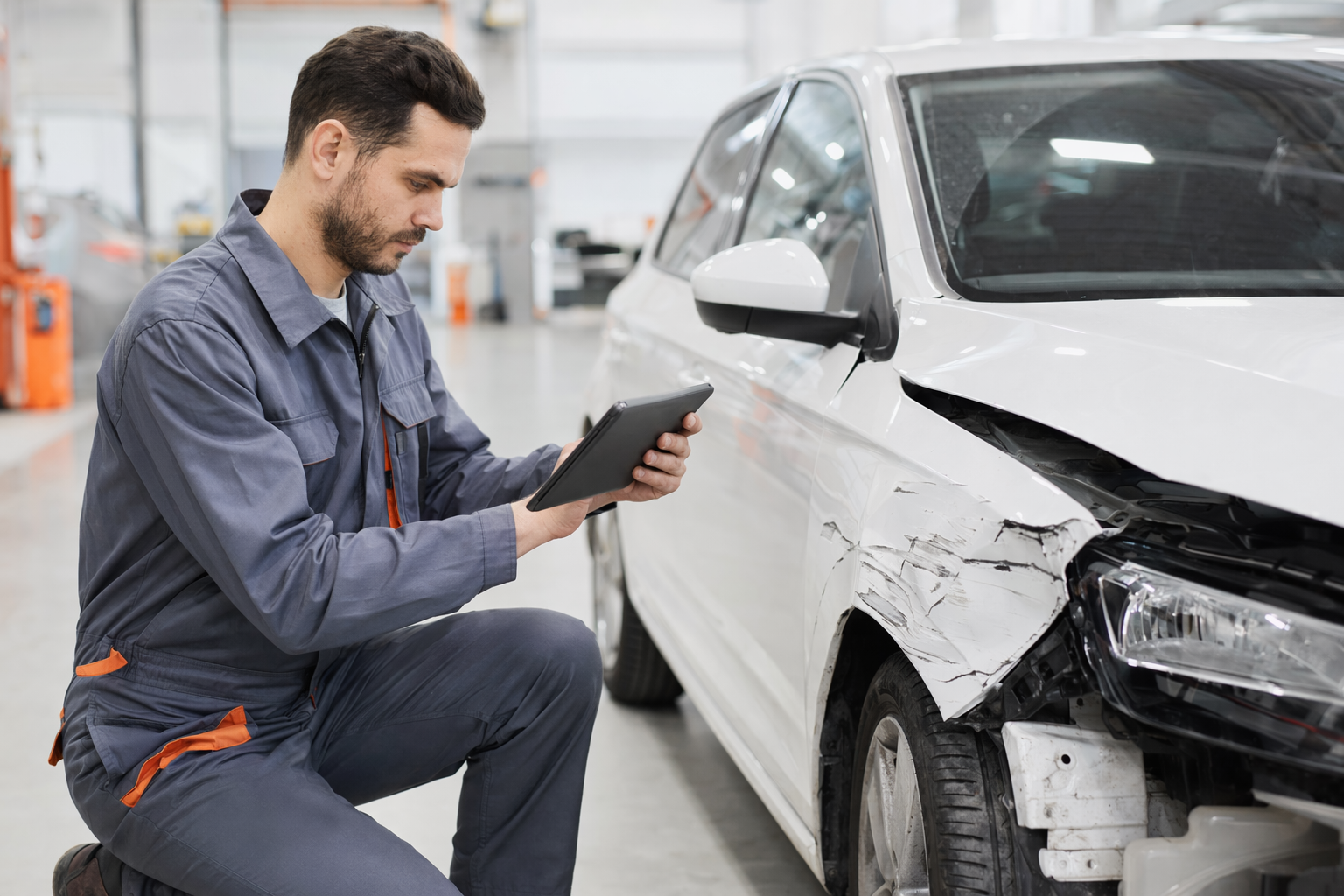
Option A explained
Repair means a shop fixes the damage and returns the car to safe driving condition. Depending on the crash, that can include body work, paint, bumper replacement, glass replacement, alignment, sensor checks, or structural repair.
Typical repair costs can range widely. Small dents or bumper scuffs may be a few hundred dollars. Bigger collision repairs can reach several thousand dollars or more. These are typical ranges, not quotes.
Repair may be the better path when the car:
- Is mechanically and structurally sound.
- Has damage that is limited to one area.
- Is newer or still has strong resale value.
- Can be repaired with clear, itemized estimates.
Ask for a written estimate before work starts. A good estimate should explain parts, labor, paint, and any likely supplements. A supplement is an added charge if hidden damage is found after teardown. For more detail, see How to read an auto body repair estimate.
Option B explained
Total loss means the insurance company decides the car is not worth repairing, or not worth repairing at the estimated cost. This is usually based on the actual cash value of the car versus the cost of repair and related expenses.
In simple terms, if the repair bill is very high, the insurer may choose to total the car instead of paying for repairs. That can happen even when the car still looks fixable from the outside.
A total loss may be the better option when:
- The car has major structural damage.
- The repair estimate is very high.
- The car is older, has high mileage, or has lower value.
- Safety systems, frame parts, or multiple panels are involved.
A totaled car is not always the end of the road for the owner. Some drivers replace the car. Some ask about keeping the vehicle, if allowed. For a general overview, read Total loss explained and What happens if my car is totaled?.
How to decide
Start with safety first. If the car has airbag deployment, frame damage, leaking fluids, steering problems, or warning lights, do not assume it is safe to drive. A shop can inspect it and tell you what needs attention. See Is my car safe to drive after an accident?.
Then compare these points:
1. Repair estimate. Ask for a written estimate.
2. Car value. Think about the car’s age, mileage, and condition.
3. Safety. Ask whether the damage affects structure, airbags, or driver-assist systems.
4. Time. Repairs can take days or weeks, depending on parts and damage.
5. Your budget. If you have a deductible, ask how it may affect your out-of-pocket cost.
Also think about what matters most to you. If you want to keep a car you know well, repair may feel better. If the car is old, worth less, or needs major work, total loss may be simpler.
If you are unsure, get more than one estimate. Compare them in writing. You can also use How CollisionLane works to see how matching is free and how you can reach local shops that handle collision repair, bumper repair, paint, or glass work. We help you find options, and you decide.
Get matched with a shop
You do not have to guess from photos alone. A local body shop can inspect the car, explain the damage, and give you a written estimate. That helps you understand whether repair is realistic or whether the car is likely to be totaled.
CollisionLane is a free matching and information service. We do not repair cars, make insurance decisions, or give legal advice. We help drivers find trusted local shops and compare options.
If you want to move forward, get matched with a trusted auto body shop. If you want to learn more first, browse Guides for drivers after an accident or our Auto body repair services.
Common questions
Can a car be repaired even if the insurance company wants to total it?
Sometimes, but it depends on the insurance process and the vehicle’s value, damage, and location rules. A shop can still give you an estimate, which helps you understand the repair side of the decision.
Is a totaled car always unsafe to keep or repair?
Not always, but a totaled car has usually had damage severe enough that the insurer thinks repair is not economical. If you are considering repairs or keeping the car, get a careful inspection first and ask about safety, structure, and hidden damage.
What should I get before I decide repair or total loss?
Get a written estimate, a clear explanation of the damage, and an idea of the car’s value. If possible, compare more than one estimate so you can make a calmer decision.