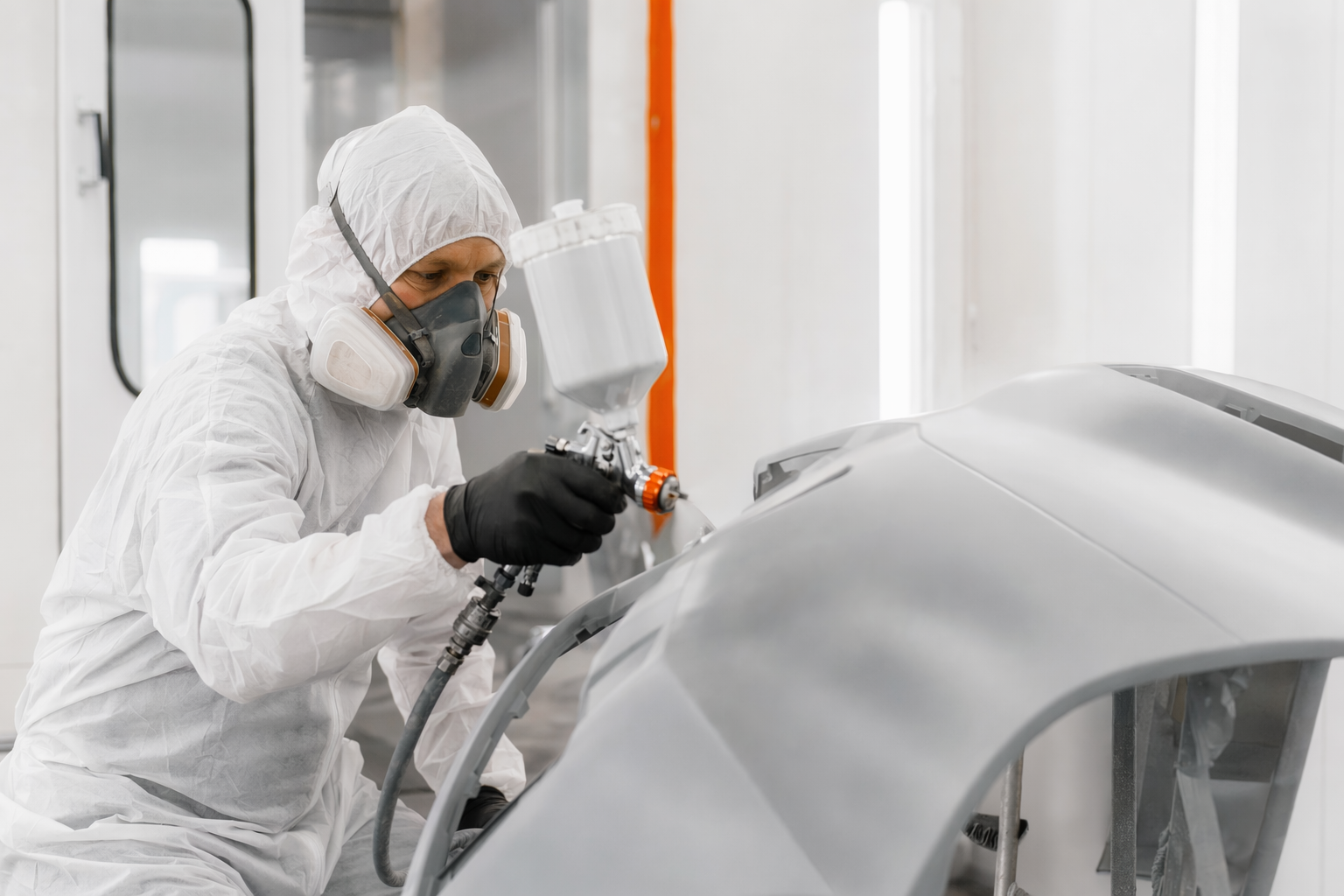
Caring for New Paint & Repairs
After a collision repair, the paint and clear coat need time to settle and cure. Curing means hardening fully. That can take days or even weeks, depending on the repair and the materials used.
A good body shop should give you care instructions. Follow those directions first. If you did not get them, ask for them in writing.
Common care steps usually include:
- Wash gently, not immediately. Many shops suggest waiting about 7 to 14 days before a full wash, but follow the shop’s exact advice.
- Use mild soap and clean water.
- Dry with a soft microfiber towel, not rough cloths.
- Keep bird droppings, bug splatter, and tree sap off the surface. Clean them soon, but gently.
- Avoid wax, sealant, ceramic coatings, and polishing until the shop says it is safe. That is often 30 to 90 days, but it depends on the paint system.
- Do not use automatic car washes with brushes right away. Those can scratch fresh paint.
- Park in shade when possible. Fresh paint can be sensitive to heat and strong sun early on.
If the repair also involved bumper work, dent repair, or glass replacement, the same idea applies. The repaired area may need a little extra care while adhesives, paint, and sealants finish setting. If you are still comparing repair options, see our auto body repair services and auto body painting and color matching pages.

Why it matters
New paint looks great at first, but it can be easier to damage before it fully cures. Scratches, swirl marks, stains, and hard water spots can show up fast if you treat it like normal paint too soon.
Good care matters for two reasons:
- It helps the repair last. Fresh paint that is cleaned gently and kept away from harsh chemicals usually holds up better.
- It helps you protect the warranty. Many shops offer a warranty on paint and workmanship. A warranty is the shop’s promise to fix certain problems caused by the repair itself, not by outside damage.
Typical repair warranties vary. Some cover paint peeling, cracking, or workmanship issues for a set period. Some are limited. Some do not cover damage from misuse, road debris, automatic car wash brushes, poor home polishing, or later accidents. Always read the paperwork before you leave the shop.
This is also why it helps to keep your final invoice, estimate, and care instructions together. If you ever need to ask a question later, those papers show what was done and what the shop said to do. If you are still early in the process, our repair estimates explained guide can help you understand the paperwork.
Step by step
Here is a simple care plan you can follow after paint or body work:
- Ask for written aftercare instructions before you leave.
- Keep the car dry if possible for the first day or two, unless the shop says otherwise.
- Avoid washing for about 7 to 14 days, unless the shop gives a different timeline.
- Skip wax, polish, and sealant until the shop says the finish is fully ready.
- Use only soft cloths and mild soap when you do wash it.
- Check the repaired area in good daylight for spots, lines, color mismatch, peeling, or rough texture.
- Save your receipts and photos.
- Go back promptly if something looks wrong.
If your repair included a bumper or panel replacement, ask whether clips, sensors, or trim were removed and reinstalled. Sometimes a small part needs a quick adjustment after the first few days.
A few cost-related notes can help too. If you plan to add paint protection later, products like a professional wax or coating can range from about $50 to $300 for basic protection, and more for premium services. That is only a typical range, not a quote. For larger refinishing work, repainting a panel can often run about $300 to $1,000 or more per panel, depending on damage, color, and labor. Always get written estimates and confirm the price before work starts.
Your rights as the owner
As the car owner, you have the right to understand what was repaired, what parts were used, and what warranty comes with the work. You also have the right to ask questions before and after the repair.
In general, it is smart to ask:
- What exactly is covered under the warranty?
- How long does the coverage last?
- Does the warranty cover paint peeling, color fade, or clear coat failure?
- Does it cover labor and materials, or only part of the job?
- What could void the warranty?
- Who do I contact if I see a problem later?
Keep in mind, a repair warranty is not the same as insurance. It usually covers the shop’s work, not every future issue on the car. It also does not replace the need to inspect the repair soon after pickup.
If you are unsure whether the finish looks right, contact the shop quickly. Small problems are often easier to address early. If you need help finding a shop to inspect or redo work, CollisionLane can get matched with a trusted auto body shop. We are a free matching and information service. We are not a body shop, insurer, or law firm.
Common mistakes
These are the mistakes that often cause problems after new paint or body repair:
- Washing the car too soon.
- Using a rough sponge, old towel, or brush.
- Going through an automatic car wash too early.
- Applying wax or polish before the paint has cured.
- Ignoring small chips, bubbles, or peeling.
- Letting bird droppings or sap sit on the paint.
- Using strong cleaners, solvents, or abrasive products.
- Forgetting to read the warranty terms.
- Not taking photos if something looks off.
A common mistake is assuming a small paint defect will go away on its own. It usually does not. If you notice a rough edge, dust in the paint, a line where the colors do not blend well, or a part that looks different in the sun, call the shop.
Another mistake is not comparing repair options. For example, some damage may be a simple paintless dent repair, while other damage needs refinishing. If you are not sure what type of work you need, our guide to choosing a trustworthy body shop can help you ask better questions before you commit.
When to get matched with a shop
Get help right away if you notice any of these after repair:
- Paint peeling, bubbling, or cracking
- Big color mismatch
- Overspray, which is paint where it should not be
- A bad smell, sticky finish, or uneven texture that does not improve
- Loose trim, sensor issues, or warning lights after the repair
- Water leaks after glass, bumper, or panel work
- A shop that is hard to reach or unclear about the warranty
You should also get matched if you never received a written estimate, do not know what warranty you have, or need a second opinion on whether the repair looks complete.
CollisionLane helps drivers compare options and connect with local auto body shops. That can be useful if you want a shop that handles paint, dent repair, bumper repair, or collision work in one place. Start with how CollisionLane works or get matched.
If you want to check repair costs before choosing a shop, try our repair cost estimator. Remember, estimates are typical ranges, not quotes. The final price depends on the car, the damage, the paint system, and labor time.
Common questions
How long should I wait before washing my car after new paint?
Many shops suggest waiting about 7 to 14 days before a full wash, but the exact timing depends on the paint system and repair. Follow the shop’s written instructions first.
Can I wax my car after body repair?
Usually not right away. Wax, polish, sealant, and ceramic coatings may need to wait until the paint is fully cured. Ask the shop when it is safe to apply them.
What if the paint color does not match after repair?
Contact the shop as soon as you notice it. Check the car in daylight and take photos. A good shop can tell you whether it needs adjustment or a return visit under the repair warranty.