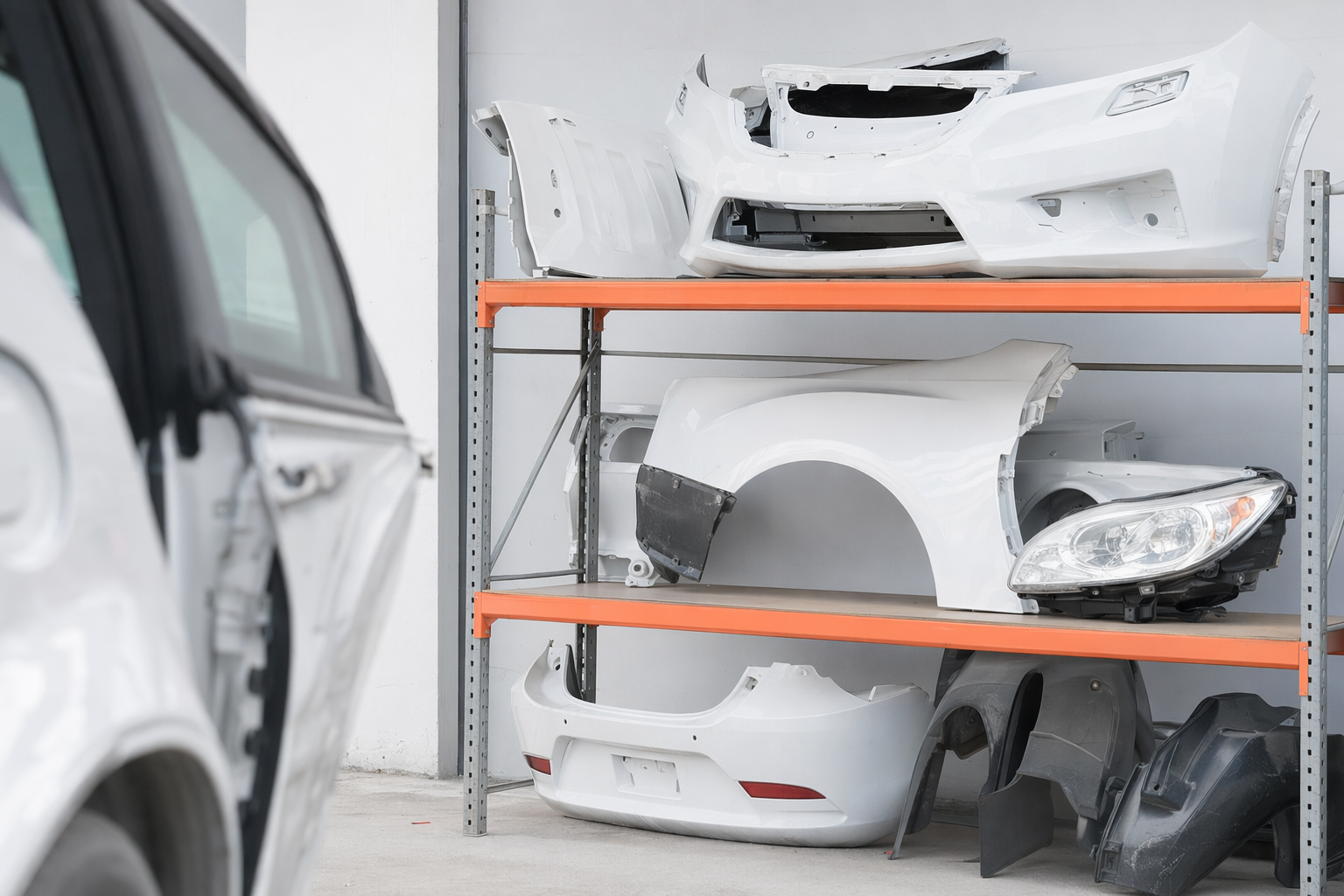
OEM vs Aftermarket Parts
OEM means Original Equipment Manufacturer. It is a part made by, or for, the car maker. It is usually the same type of part your car had before the crash.
Aftermarket means the part is made by another company, not the car maker. Some aftermarket parts fit well and work fine. Others may need more adjustment to fit right.
Used parts are removed from another vehicle. You may also hear recycled or salvage parts. These are often cheaper, but condition can vary because they were already used.
Here is the simple idea:
- OEM, same source as the original vehicle brand.
- Aftermarket, new part from a third-party maker.
- Used, part taken from another car.
Typical US price ranges can vary a lot by vehicle and damage. A bumper cover might run about $200 to $1,000 for the part alone. An OEM version is often higher than an aftermarket one. Used parts can be cheaper still, but only if the shop can find one in good condition. These are typical ranges, not quotes.
If you want a broader repair overview, see collision and frame repair and how to read a repair estimate.

Why it matters
The part choice can affect more than price.
It can affect:
- Fit, meaning how well the part lines up with the car.
- Safety, especially near airbags, sensors, bumpers, lights, and structure.
- Appearance, such as gaps, texture, and paint match.
- Warranty, because some parts come with their own warranty, and some shops warranty their work.
- Repair time, because a part may need to be ordered, adjusted, or replaced again if it does not fit well.
This matters most for parts tied to safety or electronics. For example, a bumper may hold sensors. A headlamp may affect alignment and visibility. A cheap part that does not fit right can create extra labor later, which may add to the total repair cost.
That does not mean OEM is always required, or that aftermarket is always bad. It means the part should match the repair need. A good shop should explain the tradeoff in plain language.
If your repair involves sensors or calibrations, read do I need ADAS recalibration and when a bumper needs replacing.
Step by step
Use this simple process before you approve repairs.
1. Ask what part type is listed.
- OEM, aftermarket, or used.
- Ask if the estimate includes brand names or part numbers.
2. Ask why that part was chosen.
- Is it for cost, availability, or fit?
- Is the part cosmetic only, or tied to safety?
3. Ask about warranty.
- Does the part have its own warranty?
- Does the shop warranty labor if the part fails to fit or perform properly?
4. Ask about related work.
- Will the car need paint, blending, calibration, or extra labor?
- Will a used or aftermarket part need more prep work before install?
5. Compare written estimates.
- Ask for a written estimate from more than one shop if you can.
- Make sure you are comparing the same part type and the same repair scope.
6. Confirm before work starts.
- Ask the shop to call you before changing the part type.
- Get the price change in writing.
7. Keep photos and paperwork.
- Save the estimate, repair order, and final invoice.
- Take photos before and after the repair.
If you are still sorting out the next step, start with how CollisionLane works or get matched with a trusted auto body shop.
Your rights as the owner
You usually have the right to ask questions and choose what works for you. In many cases, you can ask for a written estimate, ask what part type is being used, and ask for a different shop if you want one.
A few important points:
- You do not have to agree to a repair you do not understand.
- You can ask for OEM, aftermarket, or used parts to be explained before approval.
- You can ask whether the insurer’s payment estimate is based on a certain part type.
- You can choose a shop that explains the options clearly.
Rules can vary by state, policy, and repair situation. CollisionLane does not give legal advice, so if you have a coverage dispute or a question about your claim, your insurer, policy documents, or a qualified professional may be the right place to check.
For general help with the claim process, see how the auto body insurance claim process works and do I have to use my insurer’s body shop.
Common mistakes
People under stress often approve the wrong thing too fast. Try to avoid these mistakes.
- Saying yes without asking what part type is used.
- Comparing estimates that are not the same scope.
- Assuming the cheapest part is the best choice.
- Not asking whether a sensor, camera, or light needs calibration after install.
- Not checking whether the part comes with a warranty.
- Letting a shop start work before you understand the price change.
- Forgetting that used parts can have wear, missing clips, or hidden damage.
Another common issue is paint. A part may fit, but still need blending to match the rest of the car. That can add cost. If color match is a concern, see will my car be the same color and how paint blending works.
If the estimate seems too low, a better second look can help. See when the first estimate was too low or use the repair cost estimator.
When to get matched with a shop
Get matched when you want a local shop that can explain parts clearly and give you a written estimate you can compare. That is especially helpful if:
- You are new to the US and the repair process feels confusing.
- Your car has airbags, ADAS, cameras, or sensors.
- The insurer suggested one part type, but you want to understand other options.
- You need a body shop that can explain things in simple English or another language.
- You want help finding a trusted shop after a crash, dent, bumper issue, or glass damage.
CollisionLane is a free matching and information service. We are not an auto body shop, insurer, or law firm. We help you understand the options and connect with a local shop, then you compare and choose.
If you are ready, get matched with a trusted auto body shop.
Common questions
Is OEM always better than aftermarket?
Not always. OEM is made by or for the car maker, but a good aftermarket part can be fine for some repairs. The right choice depends on the part, the vehicle, the damage, and the shop’s explanation.
Are used parts safe to use after a collision?
Sometimes, yes, but it depends on the part and its condition. Used parts can save money, but they may have wear, hidden damage, or fit issues. Ask the shop to explain the condition before you approve it.
Can I ask the shop to use a different part type?
You can ask. It is smart to ask for the reason behind the recommendation, the price difference, and whether the change affects warranty, fit, or calibration. Get any change in writing before work starts.