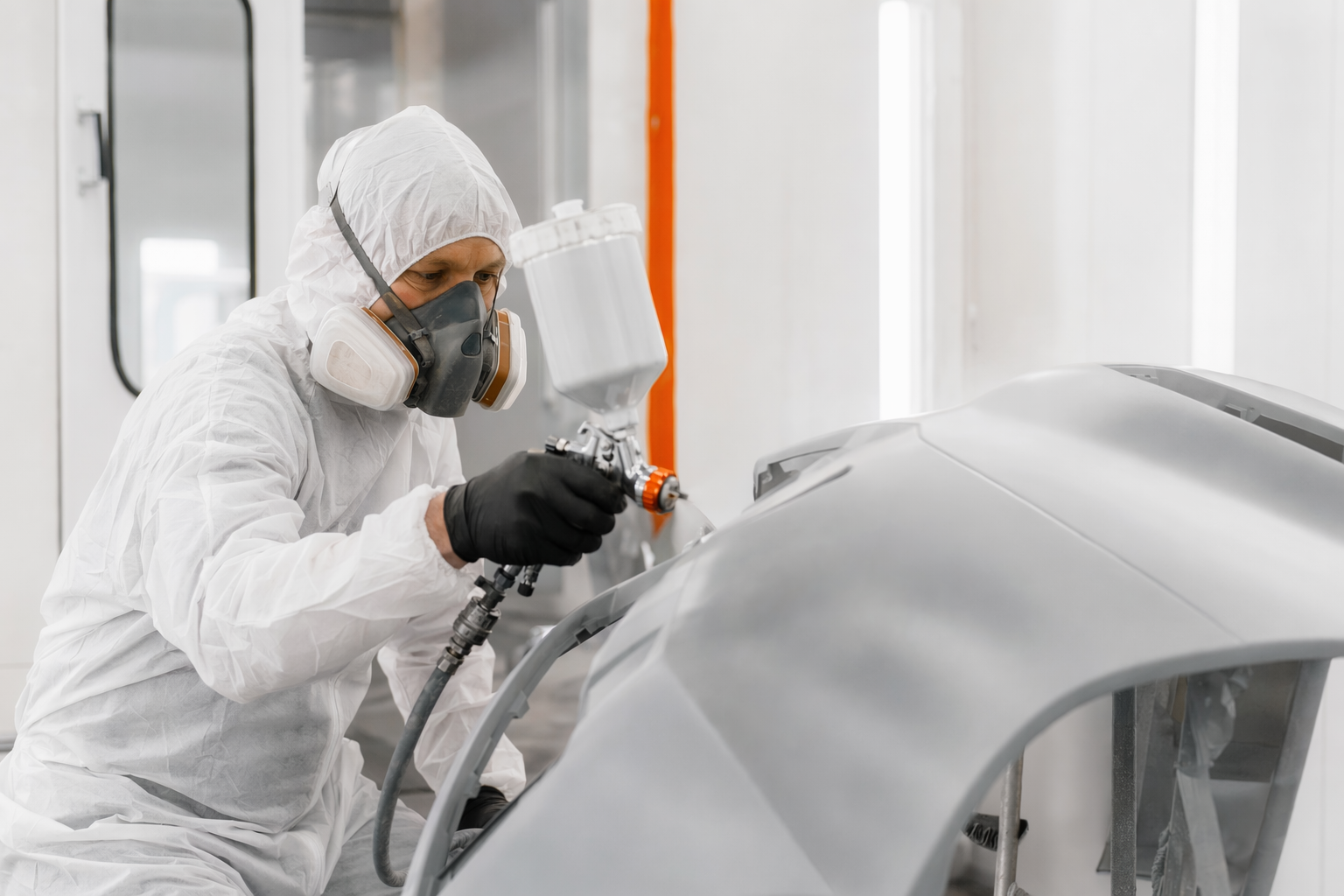
Will the Paint Match My Car Exactly?
If your car was painted at the factory, the new paint may not match it perfectly in every light. That does not always mean the repair is bad. Cars fade over time from sun, weather, washing, and age. Even the same color code can look a little different from panel to panel.
A skilled auto body shop can usually get a close match. They may also blend the new paint into nearby panels so the eye does not catch a hard line. If you want a deeper plain-language look at the process, see auto body painting and color matching and How Paint Blending Works.
The short answer
No, the paint may not match exactly in every case. But it should be close enough that the repair looks natural to most people.
A few things affect the result:
- The age of your car’s paint
- Sun fade and weather exposure
- The type of paint and clear coat used
- Whether the shop blends the repair into nearby panels
- The quality of the color match process
If the car is new, the match is often easier. If the car is older, has been repainted before, or has heavy sun damage, matching can be harder. That is normal. It does not automatically mean the shop did something wrong.
What you need to know
Paint matching is part art, part science. Shops use your car’s paint code as a starting point, but that code is not the whole story. Two cars with the same code can still look different because paint ages differently.
Here is what usually happens:
1. The shop finds the paint code.
2. They compare the current color to the original formula.
3. They test the color on a spray card or sample panel.
4. They adjust the mix if needed.
5. They may blend paint into adjacent panels for a smoother look.
Sometimes, blending is the best way to hide small differences. That means the repair area and the nearby panel are refinished together so your eye sees one smooth color transition.
If your repair also involves dents, bumper work, or collision damage, the paint step may be part of a larger repair. You can read more about collision and frame repair and bumper repair and replacement.
If insurance is involved, remember that a low estimate may not include everything needed for a proper finish. If a shop finds more damage after work starts, they may need to write a supplement, which is an added estimate for newly found repairs. See What Is a Supplement in Collision Repair?.
Steps to take
If you want the best chance of a good match, take these steps:
- Ask the shop how they match paint.
- Ask whether they will blend nearby panels.
- Ask if they use a spray-out card or sample test.
- Ask to see written estimates before work starts.
- Ask what happens if the color looks off after repair.
- Ask whether the repair includes clear coat, which is the protective top layer.
You can also compare shops before you choose. CollisionLane is a free matching and information service, so you can get matched with a trusted auto body shop and then compare your options. If you want help knowing what to ask, use our Body Shop Question Sheet or read Questions to Ask Before You Pick a Body Shop.
If you are still early in the process, our Quick answers after an accident page and What to Do Right After a Car Accident can help you stay organized.
Common mistakes
A few common mistakes can lead to disappointment:
- Choosing a shop only because it is the fastest or cheapest
- Not asking whether the shop will blend the paint
- Assuming the paint code alone guarantees a perfect match
- Not checking the car in daylight after the repair
- Picking up the car without asking about warranty or finish care
Also, do not expect a perfect match on very old paint. That is not always realistic. The better goal is a close, smooth match that does not stand out.
After the repair, take a slow look in natural light. If something looks off, speak up right away. A good shop should be willing to explain the result and discuss next steps.
Get matched with a shop
If you have a dent, bumper scuff, scrape, or collision repair and you are worried about color, we can help you find a local shop that does this kind of work every day.
CollisionLane is free. We do not do the repairs ourselves. We help match drivers with local auto body shops, and you choose the one you want. That way, you can get written estimates, compare options, and confirm the price before work starts.
If you want to move forward, get matched or learn more about How CollisionLane works.
Common questions
Can a body shop match old car paint exactly?
Sometimes it can look exact to the eye, but not always under every light. Old paint fades and changes over time, so a close match is usually the realistic goal.
Why does my repaired panel look a little different in sunlight?
Sunlight can reveal small differences in shade, texture, or gloss. This can happen even with a good repair, especially if the car’s paint is older or has faded.
Is blending necessary for a good color match?
Not always, but it helps in many repairs. Blending can make the new paint look smoother next to the original paint and reduce visible differences.