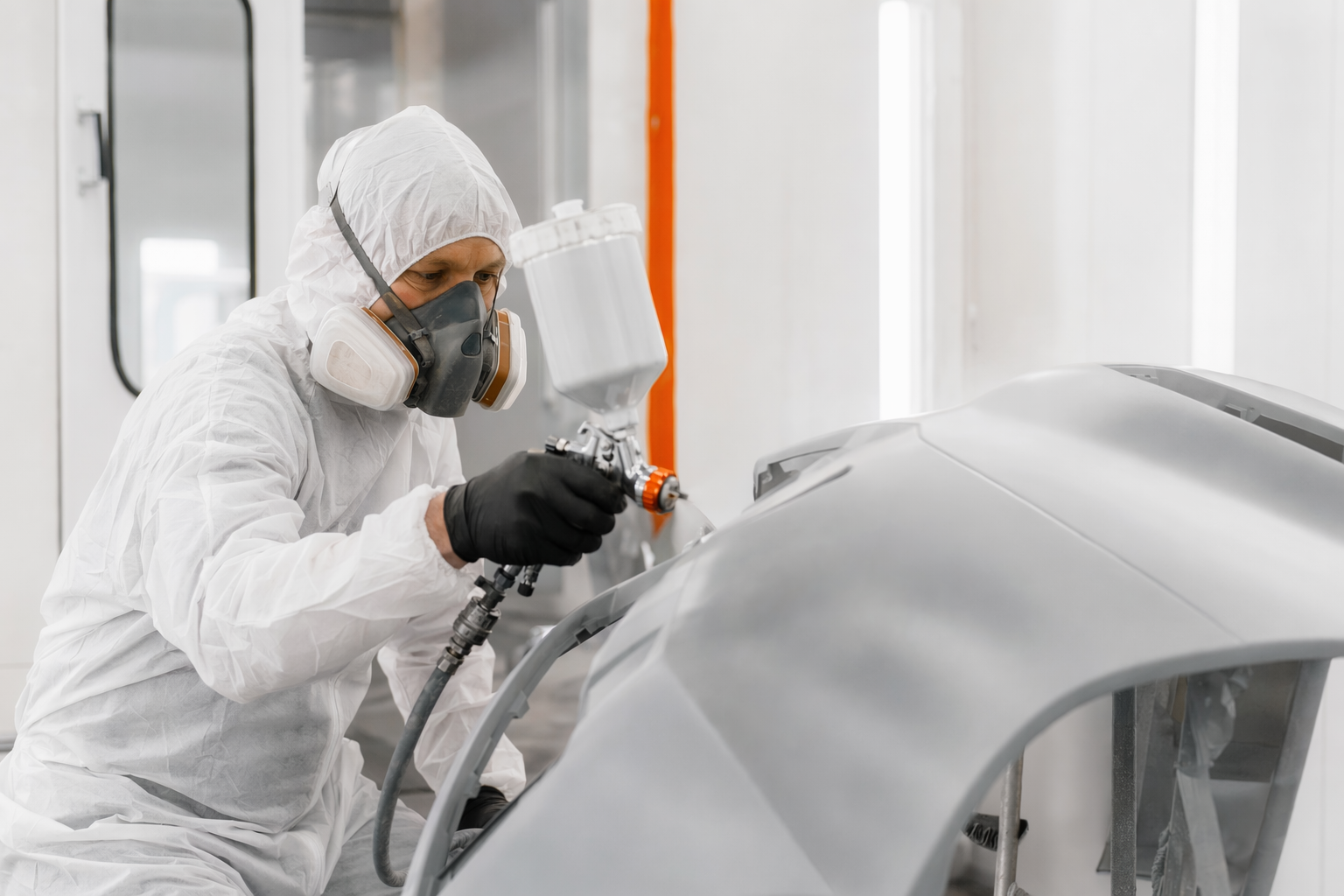
How Paint Blending Works
Paint blending is a refinishing step. Refinishing means repainting a repaired area so it matches the rest of the car. A shop may spray the repaired panel, then lightly fade the color into the next panel, like the front door, rear door, fender, or quarter panel.
Why do this? Car paint changes over time. Sun, weather, washing, and age can make the old paint look a little different from fresh paint. Even if the paint code is correct, the new color can still look slightly off next to the original finish. Blending helps reduce that difference.
This is especially common when:
- A panel was replaced or repaired after a crash.
- The damage is near a visible edge, like a door or bumper.
- The car has metallic, pearl, or hard-to-match colors.
- The repair includes clear coat, the glossy protective top layer.
Blending is not the same as repainting the whole car. It is a targeted way to make the repair look closer to the surrounding panels. For more on the painting process, see auto body painting and color matching and how CollisionLane works.

The short answer
Paint blending helps a repaired area look like it belongs on the car. A shop uses it when a perfect panel-to-panel match is unlikely, or when a visible mismatch would stand out.
Here is the simple idea. The shop paints the damaged area, then softens the color transition into nearby panels. That makes the eye less likely to catch the repair line.
Blending can improve appearance, but it is not magic. The final result still depends on the shop’s skill, the paint system, the condition of the old paint, and how much damage the car had. CollisionLane is a free matching and information service, not a body shop, so we do not promise a specific result or price. If you want help finding a local shop, you can get matched with a trusted auto body shop.
What you need to know
A few basics can help you ask better questions and avoid surprises.
- Paint code is only the starting point. The paint code tells the shop the formula, but it does not always create an exact visual match.
- Older paint may have faded. A car that is parked outside, or has had repairs before, may need more blending than a newer car.
- Metal, pearl, and tri-coat colors are harder. These finishes can shift depending on light and spraying technique.
- The clear coat matters. If the glossy top layer is not applied and finished well, the repair can look dull or uneven.
- Blend areas can expand. A shop may need to blend into one or more nearby panels to make the repair look right.
- Blending may affect cost. Typical paint and refinish pricing can vary a lot by damage, color, and labor. Always ask for a written estimate, and confirm the price before work starts.
If you are also dealing with insurance, paint blending may appear on the estimate as part of refinishing, paint materials, or related labor. If a line item is unclear, ask the shop to explain it in plain language. This guide on repair estimates can help you read the paperwork.
If you want to know whether the whole repair should be painted or just blended, the safest move is to ask the shop to show you the plan before you approve the work.
Steps to take
If you are facing a paint repair, these steps can help:
- Take photos of the damage in good light.
- Ask the shop whether blending is needed, and why.
- Ask which panels will be painted and which will be blended.
- Ask if the shop uses a paint code match, a computerized color formula, or both.
- Ask for a written estimate that lists paint and refinish work.
- Confirm whether the shop will contact you before extra work is added.
- Compare at least two estimates if you have time.
- Choose the shop you trust, not just the lowest number.
If you are new to accident claims, the process can feel confusing. These pages may help: how to file an auto body insurance claim and can I get my own body shop estimate?.
If you need a local shop, CollisionLane can get you matched for free. Drivers compare and choose. The shop should inspect the car, explain the repair plan, and give you a written estimate before any work begins.
Common mistakes
A few mistakes can lead to poor color matching or a frustrating repair.
- Assuming the paint code alone guarantees a perfect match.
- Skipping the written estimate.
- Not asking which panels will be blended.
- Choosing a shop only because it is the cheapest.
- Not checking whether the car has special paint, such as metallic or pearl.
- Letting the work start before the scope is clear.
- Ignoring questions about finish, clear coat, or possible extra labor.
Another common mistake is expecting the repaired panel to look identical in every kind of light. Paint can look different in sun, shade, garage light, or under streetlights. A good shop should aim for a close match and a smooth finish, but no one should promise a perfect result every time.
If you want a fuller overview of paint work, see auto body painting and color matching and will the paint match my car exactly?.
Get matched with a shop
If you need paint blending after a crash, CollisionLane can help you find a local auto body shop that handles collision repair and refinishing. We are free. We are not a shop, insurer, or law firm.
A good next step is to compare written estimates, ask how the shop handles blending, and confirm the price before work starts. If you are ready, get matched with a trusted auto body shop or browse auto body repair services.
Common questions
Does every paint repair need blending?
No. Small repairs on less visible areas may not need it. A shop may recommend blending when the color is hard to match, the panel is very visible, or the old paint has faded.
Is paint blending the same as repainting the whole car?
No. Blending is more limited. The shop fades the new paint into nearby panels so the repair looks smoother, instead of repainting every panel on the vehicle.
Can paint blending fix a bad color match?
It can help reduce a visible difference, but it is not a guarantee. The final look depends on the paint, the car’s age, and the shop’s process. Always ask for a written estimate and confirm the plan before work begins.