Is My Car Safe to Drive After an Accident?
A car may look drivable after a collision and still be unsafe. Damage can hide in the bumper, suspension, steering, wheels, glass, sensors, or frame. That is why the question is not just, “Does it start?” The real question is, “Can it stop, steer, and protect me if I drive it again?”
If the crash was more than a very light tap, it is wise to have the car checked by a qualified auto body shop before you keep driving. CollisionLane is a free matching service, so we help you connect with a local shop that can inspect the damage and explain your options. You can also read Is your car safe to drive after a collision? for a deeper safety checklist.
The short answer
Usually, only drive the car if there are no safety warning signs and it handles normally. If anything feels off, do not assume it is safe.
Do not drive if you notice:
- Leaking fluids under the car
- Airbag warning light or airbags that deployed
- Steering wheel that pulls, shakes, or sits crooked
- Broken wheel, tire damage, or a flat
- Bent hood, fender, bumper, or parts dragging on the road
- Broken windshield or major glass damage
- Smoke, burning smell, or unusual noises
- Dashboard warnings for brakes, ABS, engine, or stability control
- Visible damage near the frame, suspension, or wheels
If the car was hit hard enough to push the wheel, tire, or door out of line, that is a strong sign it should be inspected before driving. If you need a body shop, get matched with a trusted auto body shop.
What you need to know
Some damage is easy to see. Some is not. A small-looking impact can affect systems you depend on every day.
Here are the main things to think about:
- Steering and alignment. If the car pulls to one side, the wheel feels loose, or the steering is not centered, there may be suspension or alignment damage.
- Tires and wheels. A bent rim, bulging tire, or sidewall crack can fail without warning.
- Brakes. If the pedal feels soft, the brake light is on, or stopping takes longer than normal, do not drive.
- Airbags and seat belts. If airbags deployed, or the airbag light stays on, the car may need safety-system repair.
- ADAS. This stands for advanced driver-assistance systems, like lane assist, blind-spot monitoring, and automatic braking. After a crash, these systems may need inspection or recalibration, which means resetting them so they work correctly.
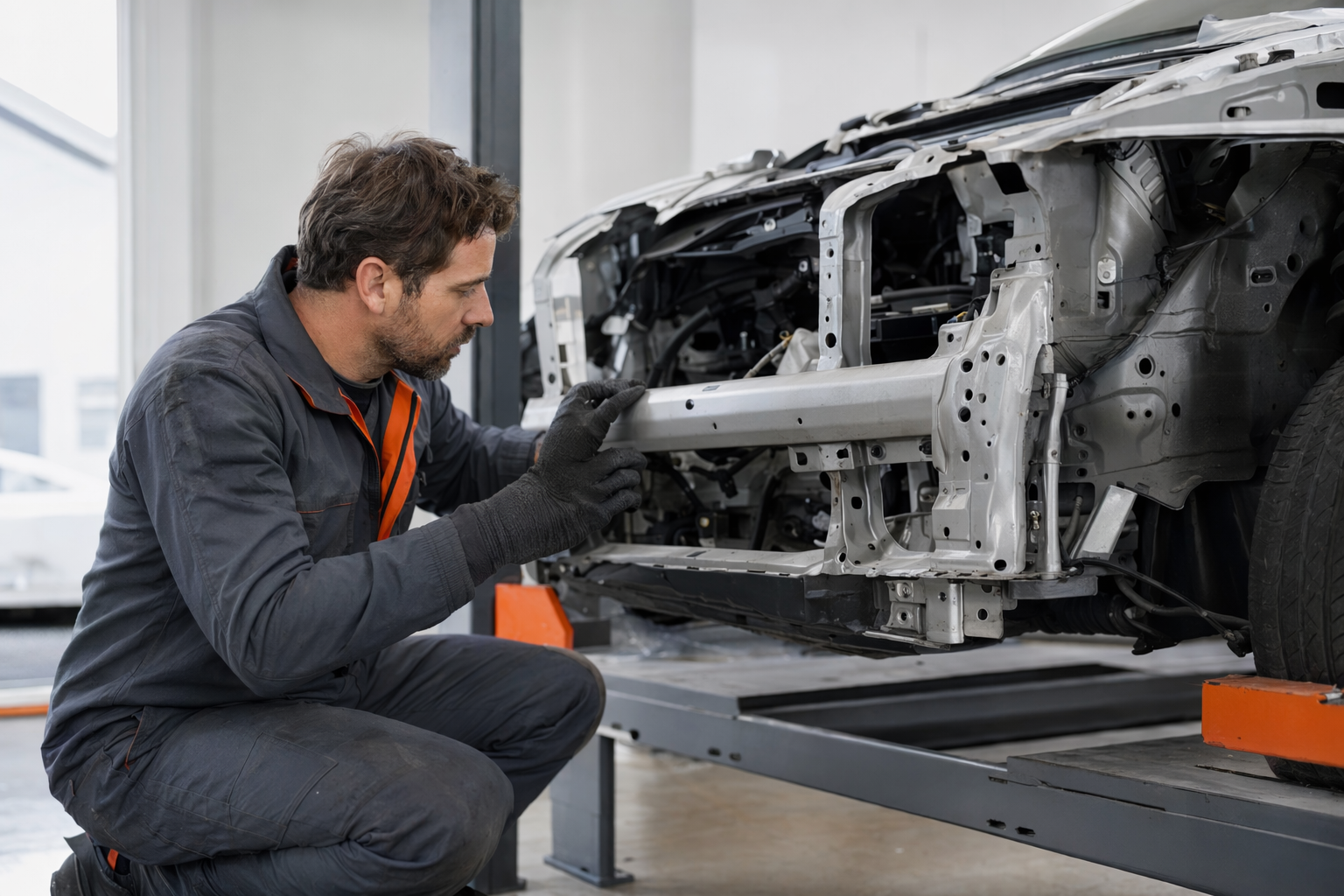
- Frame or structural damage. The frame is the car’s main support structure. If it is bent, the car may not protect you properly in another crash.
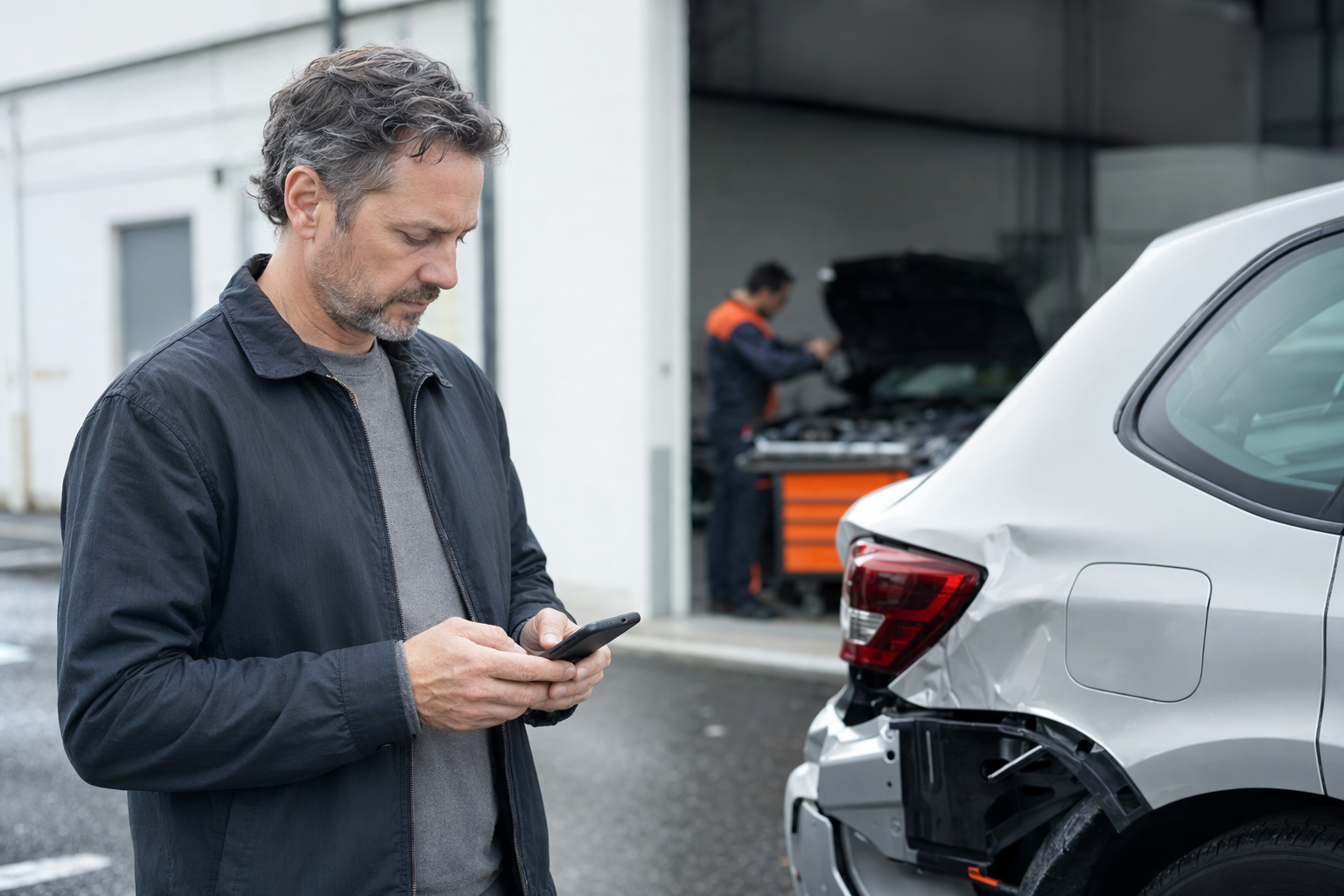
If your car only has a dent, small bumper crack, or glass chip, it still may be drivable. But even then, it is smart to confirm the damage is limited and that no hidden parts are affected. For repair options, see auto body repair services.
Steps to take
If you are not sure the car is safe, use this simple order:
- Stop and look for obvious danger. Check for leaking fluids, smoke, loose parts, flat tires, or broken glass.
- Check the dashboard. Look for warning lights, especially airbag, brake, engine, ABS, and stability control lights.
- Test how it feels. In a safe place, notice whether steering, braking, and acceleration feel normal.
- Do not drive if anything feels wrong. Have it towed or park it until it is inspected.
- Take photos. Save pictures of all visible damage before repairs start.
- Get a written estimate. Ask a shop to explain what is damaged, what is safe to drive, and what should wait.
- Compare shops and confirm price first. Drivers should always get a written estimate and confirm the price before work begins.
If you are also dealing with an insurance claim, our insurance claim process guide explains the steps in plain language. If you are still early in the process, what to do right after a car accident can help you stay organized.
Common mistakes
A lot of drivers make the same mistakes after a crash, especially when they are stressed.
- Driving too soon because the car still starts
- Ignoring a warning light because it only stayed on for a few seconds
- Thinking a small bumper hit cannot cause hidden damage
- Not checking tires, wheels, and wheel alignment
- Forgetting that airbags or sensors may need inspection after impact
- Skipping photos and records
- Choosing the first shop without getting a written estimate
- Assuming an estimate is final before the shop inspects the car fully
A low-looking repair estimate does not always mean the final cost will stay low. Hidden damage can show up once the car is taken apart. That is normal in collision repair. It is one reason to work with a shop that explains things clearly. For help choosing, see how to choose a trustworthy body shop.
Get matched with a shop
If you are unsure, the safest next step is to have a body shop inspect the car before you keep driving it. CollisionLane helps drivers find a local shop for collision, dent, bumper, paint, and glass repair. We are free. We are not a shop, insurer, or law firm.
Here is the simple path:
- Tell us what happened
- Get matched with a local shop
- Ask for a written estimate
- Confirm the repair plan and price before work starts
If you want help now, get matched with a trusted auto body shop. If you have questions about the process, visit How CollisionLane works or Contact CollisionLane.
Common questions
Can I drive my car home after a minor accident?
Maybe, but only if the car starts, stops, and steers normally, with no fluid leaks, tire damage, warning lights, or loose parts. If you are unsure, have it inspected first.
What damage means I should not drive at all?
Do not drive if there are fluid leaks, airbag deployment, steering problems, brake issues, a flat or damaged tire, smoke, strong noises, or visible frame or wheel damage.
If the car looks okay, do I still need an inspection?
Often yes. Some collision damage is hidden. A shop can check for safety issues that are not obvious from the outside, especially after a hit to the front, rear, wheels, or underbody.