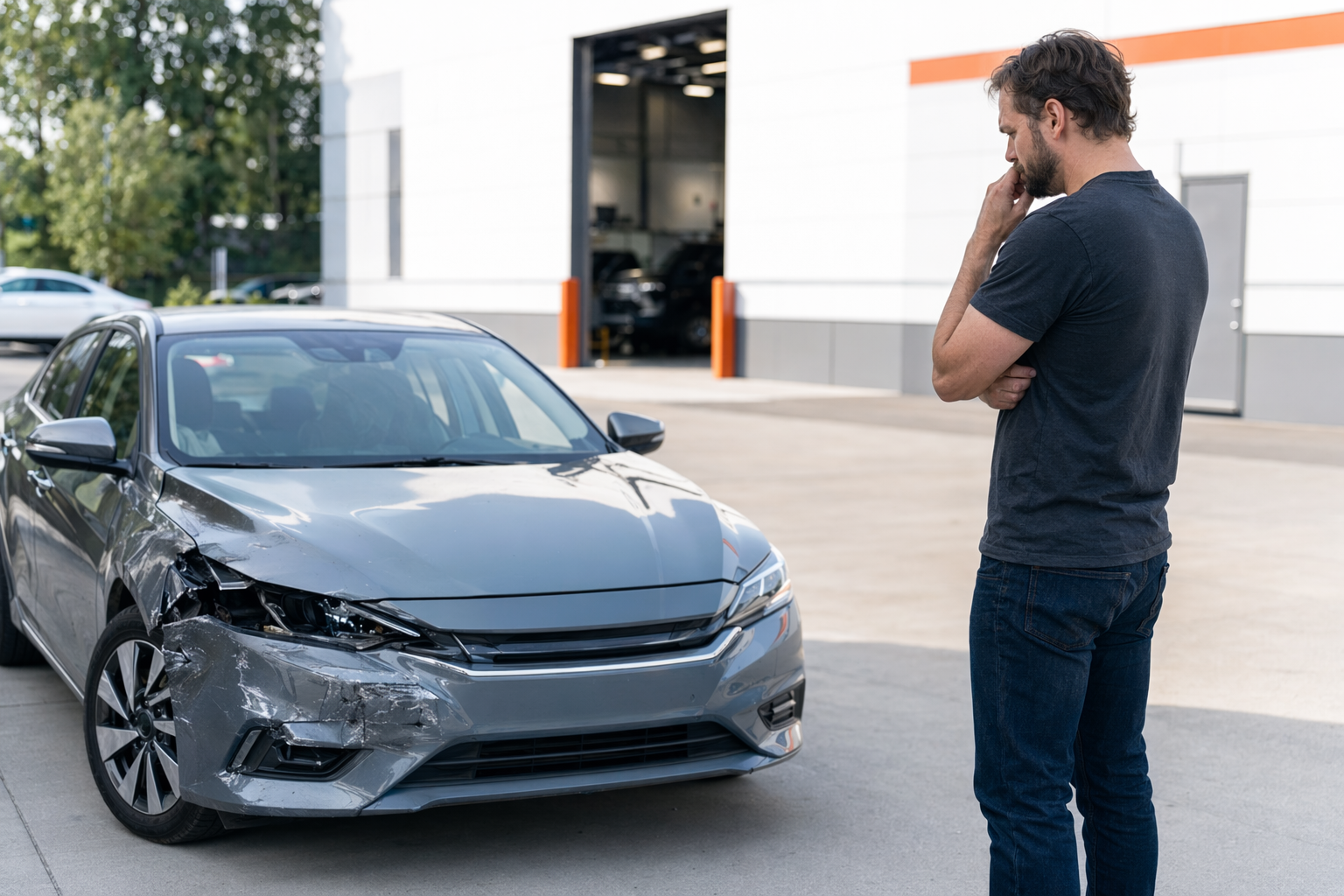
What Happens If My Car Is Totaled?
A totaled car means the insurance company decides it does not make financial sense to repair it. This is often called a total loss.
That does not always mean the car is crushed or impossible to fix. It means the estimated repair cost, plus related costs, is high compared with the car’s actual cash value, or ACV. ACV is the car’s market value before the crash, based on age, mileage, condition, and similar cars in your area.
If your car is totaled, the insurer may offer a settlement based on that value, minus any deductible if it applies. If you still owe money on a loan or lease, the payment may go to the lender first. If you own the car outright, the payment usually goes to you.
If you want a plain overview of the process, see Total loss explained and Repair vs Total Loss: Which Is Better for You?.
The short answer
Usually, the insurer pays the car’s value, not the repair bill. Then one of three things happens:
- You accept the settlement and give up the car.
- You keep the car, if the insurer allows it, and take a reduced payout.
- You ask questions, provide documents, or discuss the value if something looks off.
The exact result depends on your policy, the damage, and your state rules. CollisionLane does not give legal or insurance advice, but we can help you understand repair choices and connect you with a trusted local shop through Get matched with a trusted auto body shop.
What you need to know
A total loss decision is usually about money and safety, not just appearance.
Here are the main things that matter:
- Repair estimate vs. car value. If the estimate is high compared with the ACV, the car may be totaled.
- Hidden damage. A shop may find more damage after teardown, which can raise the estimate.
- Safety systems. Airbags, sensors, and frame damage can make repair more complex.
- Title rules. If the car is totaled and later repaired, it may get a salvage or rebuilt title, depending on the situation and state rules.
- Loan or lease balance. If you owe more than the settlement, you may still owe the difference.
If you are unsure whether the damage is repairable, a shop can give a written estimate and explain what they see. A good estimate helps you compare options before you decide. You can also review How to read an auto body repair estimate and What Is a Supplement in Collision Repair?.
Steps to take
If your car may be totaled, keep things simple and organized.
- Get the car checked. If it is not safe to drive, do not push it.
- Take photos. Save wide shots and close-ups of the damage.
- File the claim. Follow your insurer’s process and keep notes.
- Ask for the valuation details. Find out how the insurer decided the car’s value.
- Get a written estimate from a shop. Even if the car may be totaled, a shop can help confirm the damage and find hidden issues.
- Ask about your options. You can ask what happens if you keep the car, what paperwork is needed, and how the payment is handled.
- Compare before you agree. Confirm the numbers in writing before you sign anything or hand over the car.
If you still need a repair opinion, How CollisionLane works explains how free matching works. We help you get connected with a local body shop, and you compare and choose.
Common mistakes
A totaled car case can move fast, so avoid these common mistakes:
- Signing too quickly. Read the settlement details before you agree.
- Not asking how the value was figured. You can ask what comparable cars were used.
- Skipping your own photos and records. Keep everything in one place.
- Ignoring personal items. Check the car carefully before it is moved.
- Assuming you have no choices. You may still be able to ask questions, get more documentation, or keep the car in some cases.
- Skipping a shop opinion. A written estimate can show whether the car is truly a total loss or if repair is still worth discussing.
If you want help finding a local shop for an estimate, you can use Get matched with a trusted auto body shop or start with Auto body repair services.
Get matched with a shop
If your car may be totaled, a local shop can still be useful. They can inspect the damage, explain what is repairable, and give you a written estimate. That helps you make a calmer decision.
CollisionLane is a free matching and information service. We are not a body shop, insurer, or law firm. We help drivers, including new immigrants and non-native English speakers, connect with trusted local auto body shops in their language.
When you reach out, be ready to share:
- your car’s year, make, and model
- photos of the damage
- whether the car is drivable
- any claim or estimate details you already have
Then compare the options, ask for written estimates, and confirm price before work starts. If you are ready, Get matched with a trusted auto body shop.
Common questions
If my car is totaled, do I still need a body shop estimate?
Often, yes. A written estimate can help confirm the damage, show hidden issues, and give you a second set of eyes before you accept a settlement.
Can I keep my car if it is totaled?
Sometimes, yes. In some total loss cases, the insurer may let you keep the car for a reduced payout, but the rules and paperwork depend on the situation and state.
Will a totaled car always be repaired or scrapped?
No. A totaled car may be settled as a total loss, kept by the owner, or bought by a salvage buyer. The path depends on the insurer’s decision and the car’s condition.