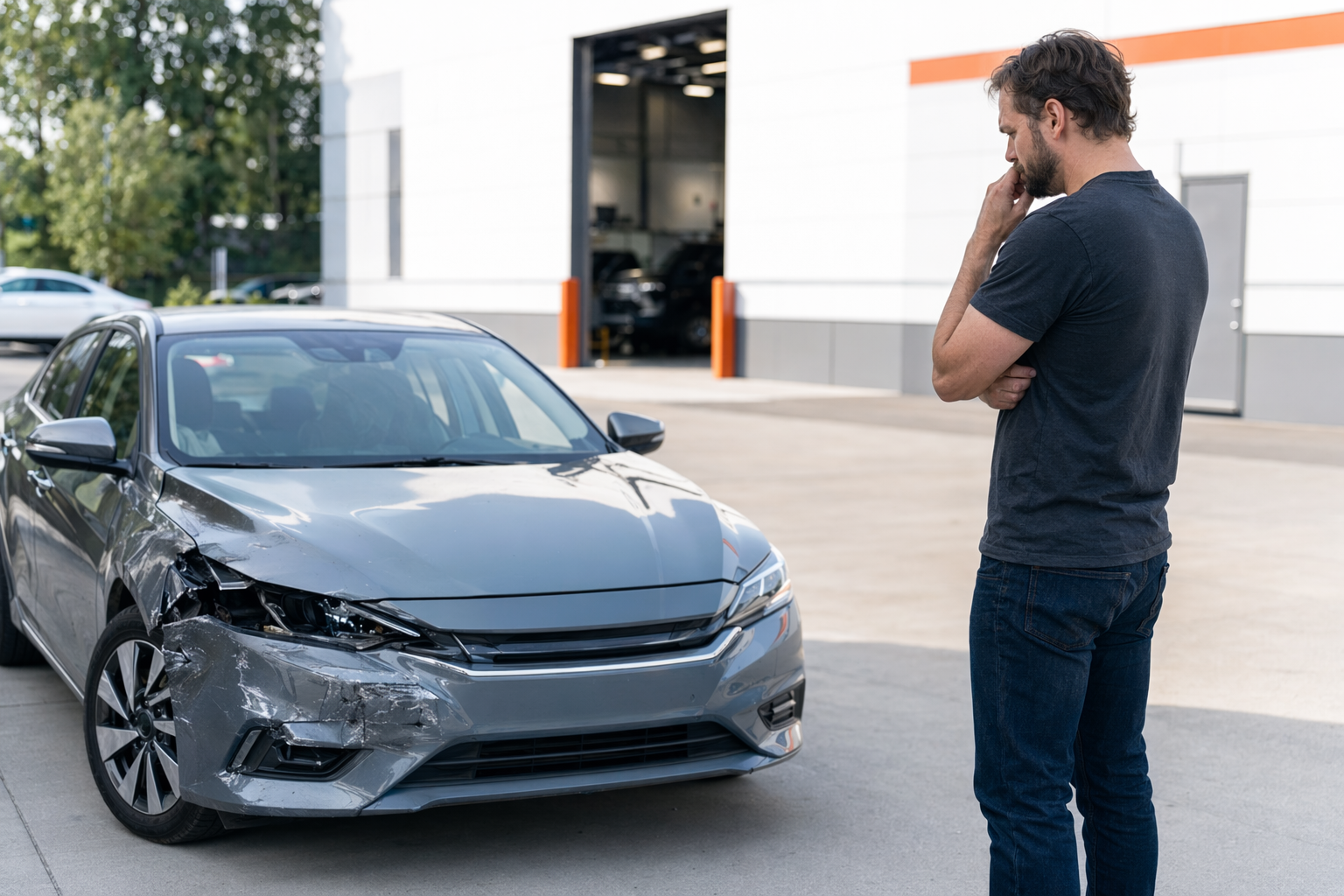
What “Total Loss” Means
A car is usually called a total loss when the cost to repair it is close to, or more than, what the car was worth right before the crash. That value is often called actual cash value, or ACV. It is the car’s market value, not what you paid for it years ago.
Each insurer uses its own process. Some states also have rules for total-loss thresholds, which are the point where a repair becomes a total loss under state law or insurer policy. In many cases, if repairs plus other costs, like towing or storage, get too high, the insurer may decide not to repair the car.
Typical repair bills can range widely. A bumper and paint job might be in the low hundreds to a few thousand dollars. Frame damage, airbag work, or hidden structural damage can push costs into the many thousands. When the numbers get close to the car’s value, a total-loss decision becomes more likely.
For a deeper look at value, see Understanding Actual Cash Value (ACV).

Why it matters
A total-loss decision changes what happens next. Instead of approving repairs, the insurer may offer a payout based on the car’s ACV, minus your deductible if it applies.
That matters because the payout may be different from what you expected. It may be enough to replace the car with a similar used vehicle, or it may not cover every loan balance, upgrade, or recent repair you paid for. If you still owe more on the loan than the payout, that gap can be stressful.
It also affects time. A repair claim can mean days or weeks in a shop. A total-loss claim can move faster in some cases, but it still needs paperwork, title handling, and agreement on value.
If you are trying to decide whether repair or total loss makes more sense, this comparison can help: Repair vs Total Loss: Which Is Better for You?.
Step by step
Here is the usual flow after a serious crash:
- The insurer inspects the car. An adjuster looks at visible damage and sometimes asks for a shop estimate.
- The insurer compares repair cost to value. They look at repair labor, parts, paint, safety items, towing, and hidden damage.
- They may send the car to a shop for a deeper look. Some damage is hidden until the car is disassembled.
- The insurer decides repair or total loss. If repair cost is too high, they may declare the car totaled.
- You get a settlement offer or repair path. If it is totaled, they usually explain the payout based on ACV.
- You decide your next move. You may accept the offer, ask questions, or discuss whether the car can be kept depending on your state and the insurer’s process.
If you have not yet filed a claim, this guide may help: How the auto body insurance claim process works.
If the car is still being evaluated, a shop estimate can still matter. A written estimate helps you understand whether there is hidden damage and whether the first number is too low. Learn more in How to read an auto body repair estimate.
Your rights as the owner
In general, you have the right to understand how the insurer reached its number. You can ask for the valuation details, the comparable vehicles used to set ACV, and the repair estimate they relied on.
You also usually have the right to ask questions if you think the value is too low. Common reasons people push back include:
- The insurer used the wrong trim level or mileage.
- Recent upgrades or options were missed.
- Comparable cars in your area are priced higher.
- The estimate missed hidden damage.
If you want to keep the car after it is totaled, ask the insurer how that works in your state. The process can vary. The title status, inspection rules, and payout will depend on local rules and insurer procedures. We are not a law firm, so for legal questions, it is best to check your state and your claim paperwork.
If your car has safety or structure issues, do not drive it just because it still starts. Learn more here: Is your car safe to drive after a collision?.
Common mistakes
A total-loss claim can move fast, so it helps to slow down before you agree to anything.
Common mistakes include:
- Accepting the first value without checking the details.
- Forgetting to remove personal items before the car is towed or released.
- Assuming the first estimate includes every hidden issue.
- Not asking whether storage or tow charges are already adding up.
- Not getting a written explanation of the offer.
- Thinking you must choose the first shop or the insurer’s first option.
Another mistake is waiting too long to get a repair opinion when the car might still be repairable. A good body shop can spot hidden damage after teardown, and that can change the picture. If you need help finding one, you can Get matched with a trusted auto body shop.
It also helps to keep every document in one place. Photos, estimate pages, claim emails, and tow receipts can make the process easier to follow. Our After-an-Accident Checklist can help you stay organized.
When to get matched with a shop
Get matched with a shop if you want a repair opinion before you accept a total-loss decision, or if the insurer’s estimate seems too low. This is especially useful when the damage may be partly hidden, like:
- Frame or structural damage
- Airbag deployment
- Suspension damage
- Cooling or radiator damage
- Bumper damage with sensors
- Glass damage with camera or ADAS, that is advanced driver assistance system, parts
A shop can inspect the car, explain visible and hidden damage, and give you a written estimate. That does not guarantee the car will be repaired, and it does not replace your insurer’s decision. But it can help you compare your options and avoid being rushed.
CollisionLane is a free matching and information service, not a body shop, insurer, or law firm. We help drivers compare and choose a local shop after a crash. If you want that help, start here: Get matched with a trusted auto body shop.
Common questions
Does total loss mean my car cannot be repaired?
Not always. It means the insurer believes repair cost is too close to the car’s value. A shop may still be able to repair it, but the insurer may choose to total it instead.
How does the insurer decide my car’s value?
They usually look at actual cash value, or ACV. That is the car’s market value before the crash, based on things like year, mileage, condition, trim, and local comparable vehicles.
Can I challenge a low total-loss offer?
You can usually ask for the valuation details and point out missing information, such as trim, options, mileage, or comparable cars. A written shop estimate can also help if damage was missed.