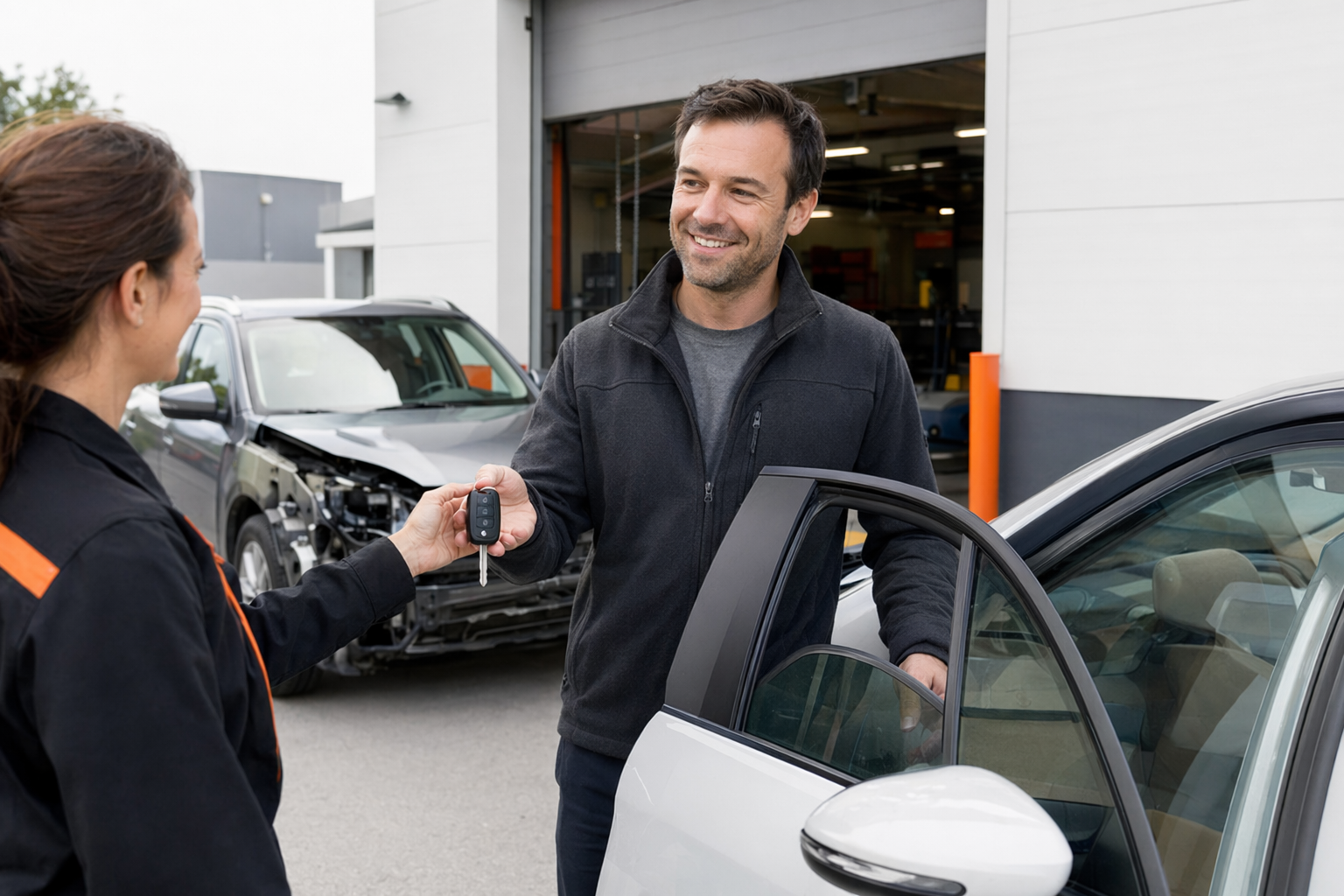
Rental Cars & Loaners During Repair
After a crash, you may have three main ways to stay on the road.
- Rental car coverage. This is money from an insurance policy that helps pay for a rental car while your vehicle is being repaired.
- Shop loaner car. Some body shops have a loaner car you can use, but not all do. A loaner is a car the shop lets you borrow.
- Paying out of pocket. If coverage is limited or missing, you may need to pay some or all rental costs yourself.
Typical rental car costs in the US are often about $40 to $100 per day, sometimes more with taxes, fees, and insurance add-ons. A policy may cover a set daily amount, such as $30 to $60 per day, with a cap on the total number of days or total dollars. These are typical ranges, not quotes.
Loaner cars may be easier because you do not need to rent from a company, but there are still limits. The shop may require you to be on the repair order, have a valid license, and sign a use agreement. Some loaners are first come, first served.
If your car needs a collision repair service, a bumper repair, auto painting, or glass replacement, the repair time can range from a day or two to several weeks. That is why transportation plans matter early.

Why it matters
A car accident does not only affect the vehicle. It affects your daily life.
If you cannot drive, you may miss work, school, medical visits, or child care. That can turn a repair delay into a real stress problem.
Rental coverage can reduce out-of-pocket costs, but only if you understand the limits. For example, a policy may say it covers a rental only while the car is in the shop for a covered repair, and only up to a certain number of days. If parts are delayed, your rental time may not be unlimited.
This is also important if you are waiting on an insurance decision. A repair may start only after an estimate, approval, and parts order. If you want a clearer picture of that process, see how the auto body insurance claim process works and how long collision repair takes.
Knowing your rental or loaner options early helps you compare shops, plan your budget, and avoid surprise charges.
Step by step
Use this simple order after a collision:
- Check if the car is safe to drive. If there is frame damage, airbag deployment, broken glass, or fluid leaks, do not assume it is safe. If needed, get a tow.
- Ask about transportation right away. Before you leave the shop, ask whether they offer a loaner car. If not, ask whether they work with rental companies.
- Read your policy for rental coverage. Look for the daily limit, maximum days, and whether coverage applies if you were at fault, not at fault, or using a claim through another driver.
- Confirm what starts the clock. Some policies count days only after the repair begins. Others may start after the claim is approved or after the car enters the shop.
- Get the repair timeline in writing. Ask the shop for an estimated start date, parts order status, and expected finish date. Repair timelines can change, but written notes help.
- Ask how extensions are handled. If parts are backordered or supplements are needed, ask who requests more rental days and how you will be notified.
- Keep every receipt. Save rental agreements, fuel receipts if required, and any messages about delays.
If you are still choosing a shop, a free match can help. You can get matched with a trusted auto body shop and compare options before repairs begin.
Your rights as the owner
As the vehicle owner, you usually have the right to ask questions and choose the repair path that makes sense for you. In general, you can:
- Ask for a written estimate before work starts.
- Ask whether the shop offers a loaner or can help with rental coordination.
- Ask how long the shop expects your car to be there.
- Ask what happens if the repair takes longer than planned.
- Ask for clear communication about parts delays or extra damage found during teardown.
If you are comparing shops, you can also ask whether they explain rental timing clearly. A good shop should be able to tell you what they need from you and what you should expect.
Important: collision repair and rental rules can depend on the insurance policy, the claim, and the shop agreement. CollisionLane does not give legal or insurance advice. We are a free matching and information service, and we help drivers find local shops and understand the process.
For more repair planning help, see repair estimates explained and questions to ask before you pick a body shop.
Common mistakes
These are the mistakes that cause extra cost or delay:
- Assuming a loaner is guaranteed. Many shops do not have one, or they have limited availability.
- Not checking the daily cap. A policy may cover some rental cost, but not the full amount.
- Waiting to ask about rental coverage. Ask early, before the shop starts work.
- Forgetting the total day limit. Even if the daily rate is covered, the number of covered days may run out.
- Ignoring repair delays. Parts shortages, hidden damage, or supplements can extend the stay.
- Not confirming who pays if the claim is denied or limited. Always ask before you sign a rental agreement.
- Skipping written estimates. If you do not have the repair plan in writing, it is harder to track time and cost.
A small example: if your rental is $55 per day and your policy covers $35 per day for 10 days, you may owe the difference plus taxes and fees. That is why it helps to confirm the exact limit before you take the car.
When to get matched with a shop
Get matched early if you want help comparing shops that can explain repair time, rental timing, and communication clearly.
It is especially smart to get matched when:
- You need a quick estimate.
- Your car has visible damage, but you are not sure how long repairs will take.
- You do not know whether a loaner is available.
- You want a shop that can work with your insurance process.
- English is not your first language and you want a simpler way to start.
CollisionLane is free. We help you connect with a local auto body shop and understand your options. You compare and choose. That way, you can ask about collision repair services, timeline, rental support, and written estimates before work begins.
If you are ready, get matched with a trusted auto body shop.
Common questions
Does insurance always pay for a rental car after an accident?
No. Rental coverage depends on the policy and the claim. Some policies include it, some do not, and many have daily and total dollar limits. Check the coverage details before you agree to a rental.
Can a body shop give me a loaner car?
Sometimes. Some shops offer loaners, but many do not. Availability is often limited, and you may need a valid license and a signed agreement. Always ask early.
What if my repair takes longer than the rental coverage?
Then you may have to pay extra days yourself unless more coverage is approved. Delays can happen because of hidden damage, parts shortages, or supplements. Ask the shop how they handle extensions and keep updates in writing.