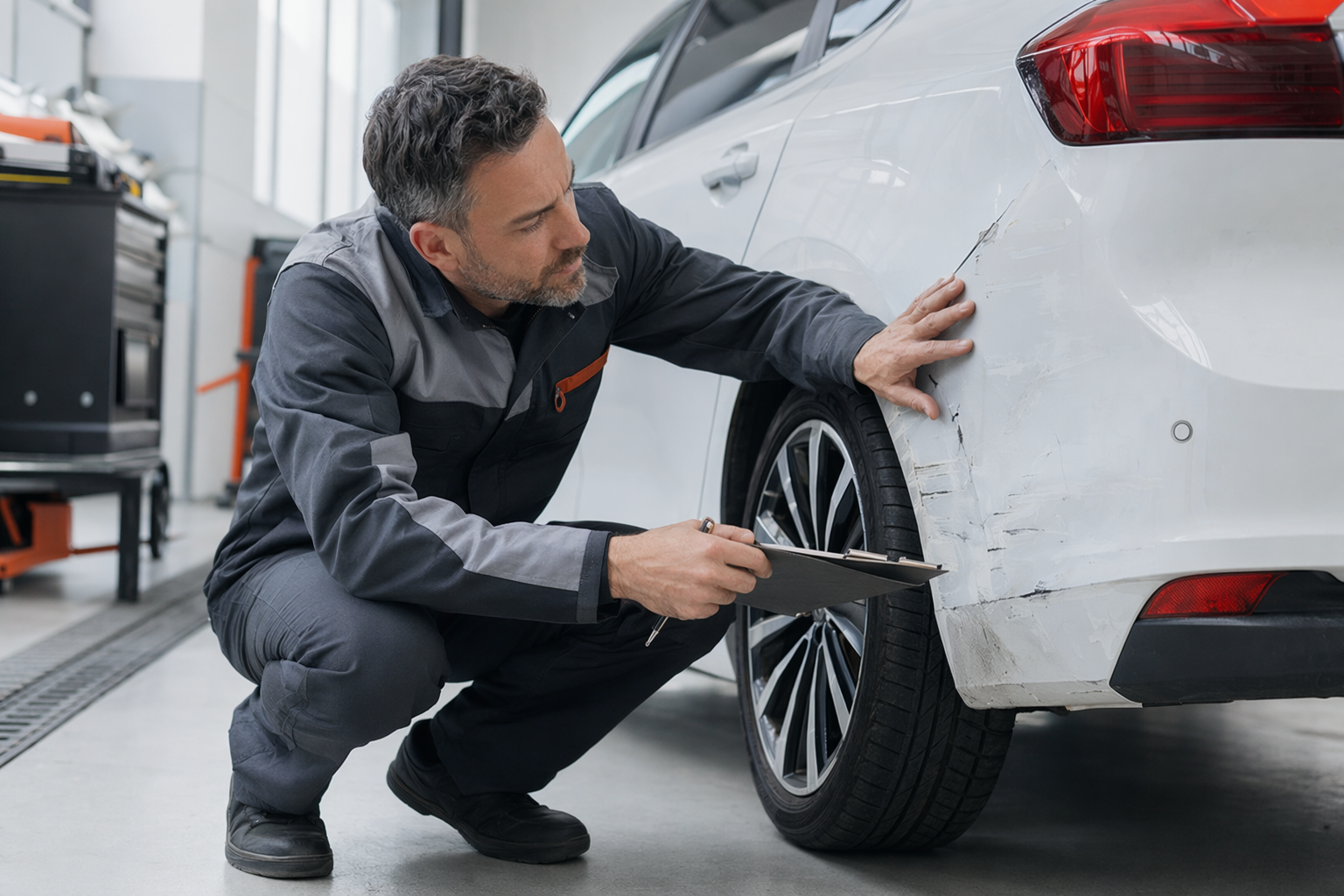
How Long Does Collision Repair Take?
There is no single answer. The repair time depends on what was hit, how deep the damage goes, and whether parts are available. A bumper scuff is usually faster than frame damage, airbag work, or a repair that needs paint matching.
A shop may also find hidden damage after it starts taking the car apart. That can change the timeline. This is common in crash repairs, and it is one reason written estimates can change later. For a plain-language guide to that, see How to read an auto body repair estimate.
If you are trying to figure out what kind of repair you may need, the service pages can help. See collision repair, bumper repair, dent repair, auto painting, and glass replacement.

The short answer
Here is the general range many drivers see, but these are typical ranges, not quotes:
- Small dents or light cosmetic damage: about 1 to 3 days
- Bumper repair, minor paint work, or a small panel repair: about 3 to 7 days
- Moderate collision repair with parts and refinishing: about 1 to 2 weeks
- Larger crash repairs, frame work, or repairs with delayed parts: about 2 to 6 weeks or more
A repair can take longer if the shop is busy, if special parts must be ordered, or if the insurer needs time to review the estimate. If you are also dealing with a claim, this guide may help: How the auto body insurance claim process works.
What you need to know
Several things affect repair time.
- Damage type. A dent, bumper crack, broken glass, or paint scratch is usually faster than structural damage.
- Hidden damage. A car can look “fine” on the outside and still have broken brackets, sensors, or frame damage underneath.
- Parts availability. OEM parts, aftermarket parts, or used parts can all have different wait times. For a quick breakdown, see OEM vs aftermarket vs used parts.
- Paint and blending. Color matching and curing time can add days. If you want to understand that step, read How paint blending works and Will the paint match my car exactly?.
- Safety checks. Some repairs need ADAS recalibration, which means adjusting driver-assist systems like cameras and sensors. That can add time. See Do I need ADAS recalibration after repair?.
- Shop schedule. Good shops are often booked. A busy shop may start your car later, even if the repair itself is not major.
If your car has frame damage, airbags deployed, or glass and sensor work together, expect a longer timeline. If you want a deeper safety view, read What is frame damage and why it matters and Is my car safe to drive after an accident?.
Steps to take
To avoid delays, keep the process simple and organized:
- Get a written estimate from a few shops if you can.
- Ask what is included, what may change, and whether parts are in stock.
- Ask the shop how long the repair will likely take, and what could make it longer.
- Confirm whether the shop needs insurer approval before it starts work.
- Ask for updates if new damage is found or if parts are delayed.
- Confirm the final price before work starts, if possible.
If you want help choosing a shop, CollisionLane can match you with a trusted local auto body shop for free. Start here: Get matched with a trusted auto body shop. You can also use Questions to ask before you pick a body shop and the Body Shop Question Sheet to stay organized.
If you are still early in the process, the After-an-Accident Checklist can help you keep track of what to do next.
Common mistakes
A few simple mistakes can slow everything down.
- Choosing a shop without asking about timeline and parts.
- Assuming the first estimate is the final one.
- Not asking about hidden damage or supplements, which are added repair items found later. Learn more in What is a supplement in collision repair?.
- Waiting too long to report damage or start the claim process.
- Not confirming whether safety systems, glass, or paint work are part of the repair plan.
- Picking a shop only because it is the first one you found, instead of comparing options.
If you feel rushed or confused, slow down and ask for the estimate in writing. If something does not make sense, ask the shop to explain it in plain language. For more help on red flags, see How to spot a bad auto body shop.
Get matched with a shop
If you need repair help now, CollisionLane can make the next step easier. We are a free matching and information service, not a body shop, insurer, or law firm.
We help drivers in the US, including new immigrants and non-native English speakers, find a local shop and compare options in plain language. You can learn more about How CollisionLane works or go straight to Get matched.
The fastest way to avoid surprises is to compare a few written estimates, ask about timing up front, and choose the shop that feels clear and trustworthy.
Common questions
Why does my collision repair take longer than the first estimate said?
The shop may find hidden damage after taking the car apart, parts may be backordered, or the insurer may need to review extra items. This is common in collision repair, so the first timeline is often only an estimate.
Can a small dent or bumper repair be done the same day?
Sometimes, yes. Very small cosmetic repairs can be fast, but it depends on the damage, the paint work needed, and the shop’s schedule. Ask the shop for a written time estimate before you leave the car.
Does insurance approval slow down the repair?
It can. Some repairs can start quickly, but others need claim review or approval before work begins. The exact process depends on your claim and your shop, so it helps to ask both sides what needs to happen next.