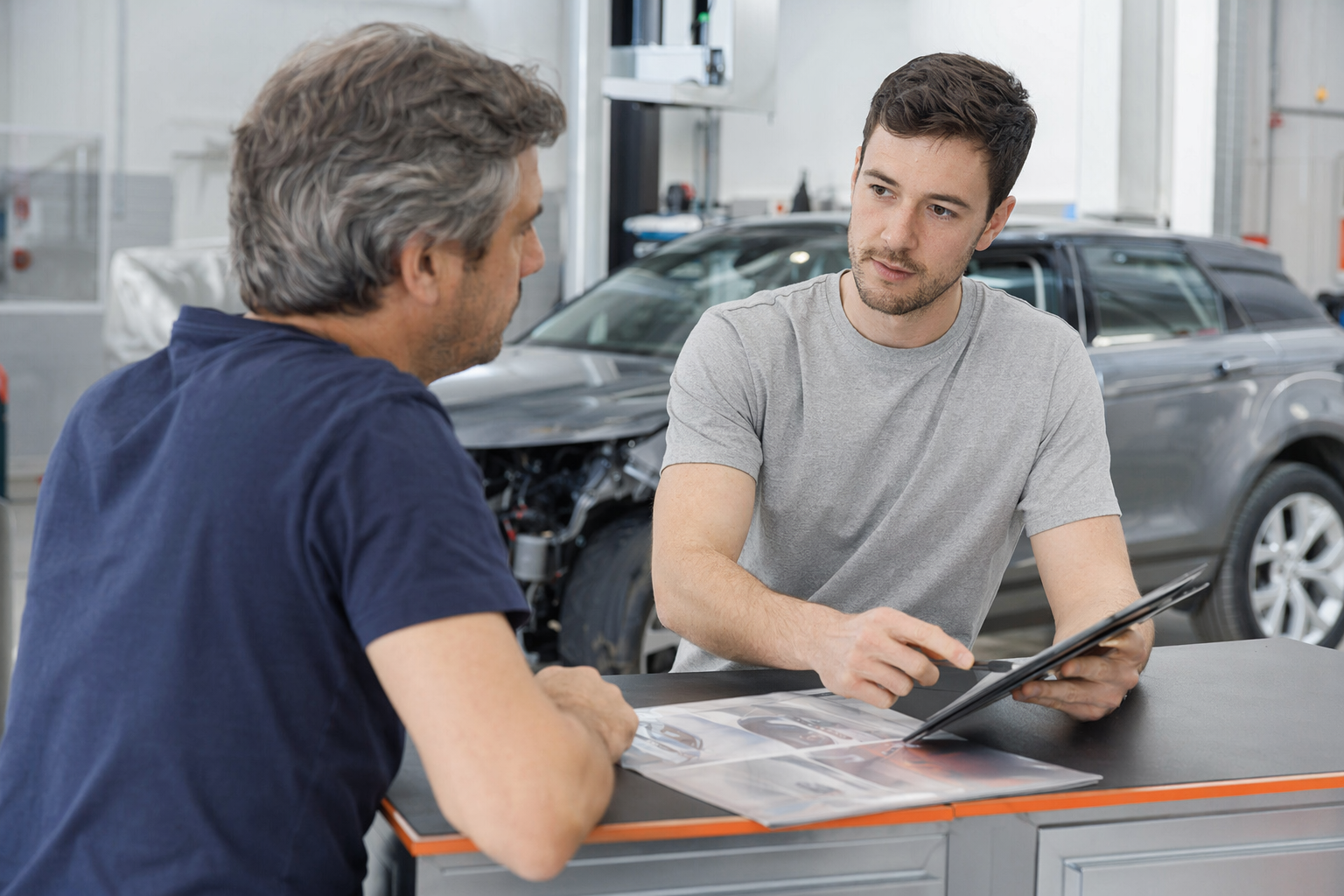
Do I Have to Use My Insurer's Body Shop?
If you just had a crash, this is a common question. Your insurer may suggest a shop in its network, but a suggestion is not always a rule. Many drivers can choose a different shop.
That said, every policy is different. Your claim, your coverage, and where you live can affect the process. So the safest move is to read your policy and ask your insurer how the claim will work. Keep it simple. Ask, “Do I have to use your shop, or can I choose my own?”
If you want help sorting through options, CollisionLane can match you with a trusted local shop for free. You can also read How CollisionLane works or go straight to Get matched with a trusted auto body shop.

The short answer
Short answer, usually you can choose. Insurers can recommend a shop, but they do not always get to decide for you.
Why this matters:
- You may want a shop that works on your car type.
- You may want to compare estimates.
- You may want better communication or a closer location.
- You may want a shop that explains repairs in plain language.
Do not assume the insurer’s first choice is your only choice. Compare shops first when you can. A good place to start is How to choose a trustworthy auto body shop.
What you need to know
A body shop is the place that handles collision repair, like dents, bumpers, paint, glass, and frame damage. An insurer may have preferred shops, also called network shops. Those shops may be familiar with the claim process, but that does not automatically make them the best fit for your situation.
A few important points:
- Your coverage matters. If the other driver is paying, or if your policy has special rules, the process may be different.
- Estimates can differ. One shop may find hidden damage that another shop missed. That is normal after a crash.
- Price is not the only factor. Ask about parts, labor, timing, warranties, and whether paint matching is included. For estimate basics, see How to read an auto body repair estimate.
- You can ask questions. A trustworthy shop should explain what needs repair, what can wait, and what is a typical range, not a quote.
- Insurers and shops are different. The insurer handles the claim. The shop handles the repair. CollisionLane is a free matching and information service. We are not a body shop, insurer, or law firm.
If your car has frame damage, bumper damage, glass issues, or airbag concerns, make sure the shop checks the full repair, not just the visible damage. Start with Auto body repair services if you want to see common repair types.
Steps to take
Here is a simple way to move forward after a collision:
- Check your safety first. If the car may not be safe to drive, do not push it. Get it looked at before you keep driving. See Is my car safe to drive after an accident?.
- Call your insurer and ask about shop choice. Ask if you must use a network shop or if you may choose any licensed shop.
- Get a written estimate. Ask for a written estimate from the shop you want. If possible, get more than one estimate.
- Ask what is included. Parts, labor, paint, blending, calibration, and taxes can change the total. Ask before work starts.
- Confirm approval before repair. Do not assume work begins just because a shop looked at the car.
- Keep records. Save photos, claim numbers, estimates, and messages.
If you need help with the next step, use After-an-Accident Checklist or go to How to File an Auto Body Insurance Claim.
Common mistakes
A lot of stress after a crash comes from moving too fast. Try to avoid these mistakes:
- Picking the first shop without comparing. A quick choice can lead to missed options.
- Not getting a written estimate. Verbal numbers can change later.
- Ignoring hidden damage. A dent or bumper hit can also affect sensors or structure.
- Not asking about parts. Ask whether the estimate uses OEM, aftermarket, or used parts. For a plain comparison, see OEM vs aftermarket vs used parts.
- Starting repair before you agree on the cost. Always confirm the estimate and ask about supplements, which are added charges when more damage is found later. See What is a supplement in collision repair?.
- Assuming the insurer’s shop is the only safe option. Good shops exist outside insurer networks too.
If you are not sure which shop to trust, look for clear communication, written estimates, and a shop that answers questions without pressure. You can also use Questions to Ask Before You Pick a Body Shop.
Get matched with a shop
You do not have to figure this out alone. CollisionLane helps drivers find local auto body shops and compare options in plain language. The service is free, and it is designed for drivers who want a calmer, simpler next step.
If you want to move forward now:
- Get matched with a nearby shop.
- Compare written estimates.
- Choose the shop that feels right for your car and your budget.
Start here: Get matched with a trusted auto body shop. If you want a quick overview first, visit Quick answers after an accident.
Common questions
Can my insurer force me to use their body shop?
Usually, no. In many cases, the insurer can recommend a shop, but you may still have the right to choose another one. Check your policy and ask your insurer how your claim works.
Will using my own shop delay the claim?
Sometimes the process can take a little more coordination, but that does not mean you must use the insurer’s shop. Ask both sides what they need, and keep your written estimate and claim number handy.
Should I compare more than one shop?
Yes, if you can. Comparing written estimates can help you understand price, parts, timing, and what repairs are included. It can also help you feel more confident before work starts.