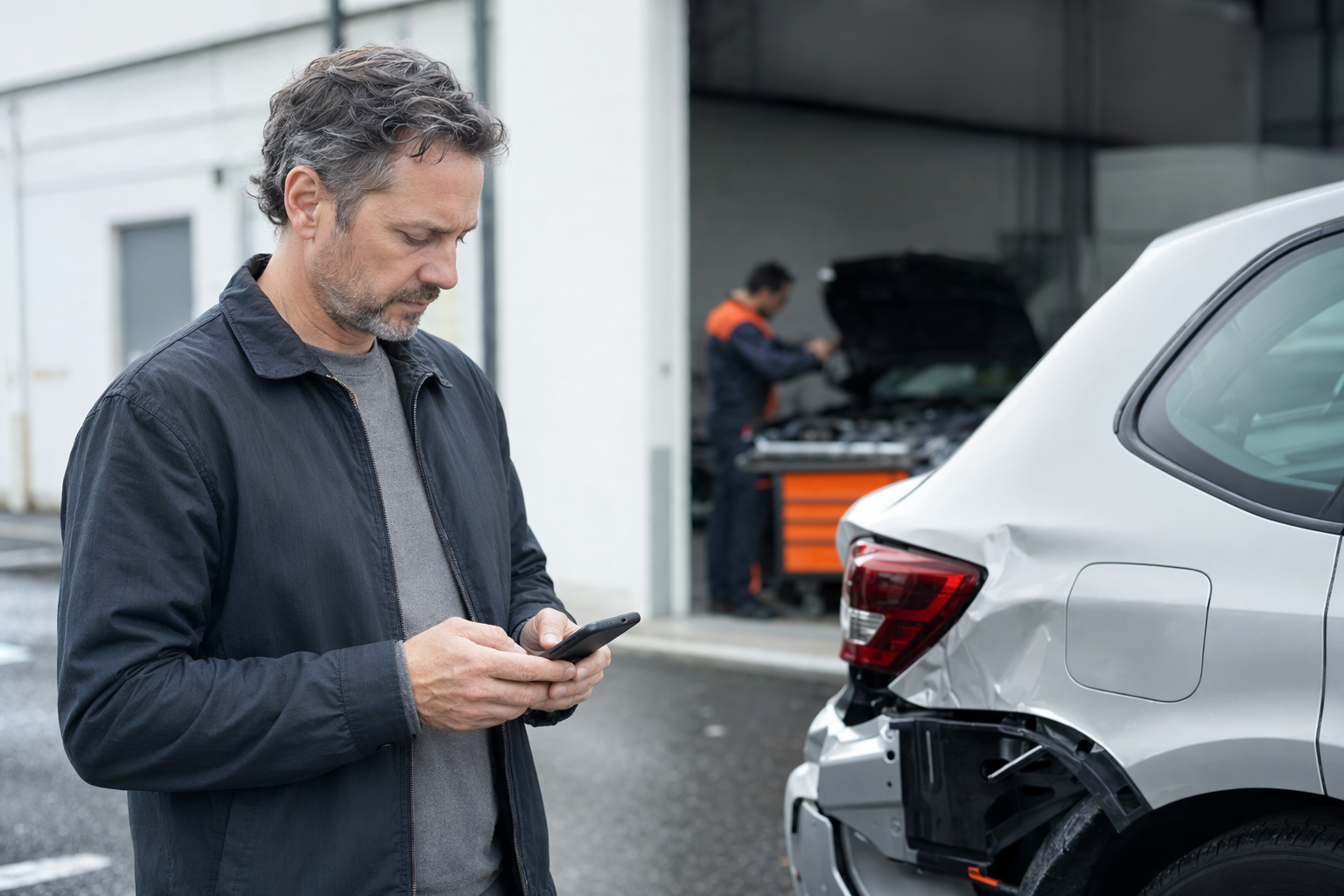
What to Do Right After a Car Accident
A car accident is stressful. The first minutes can feel confusing. Keep it simple. Focus on safety, documentation, and next steps.
If the car can still be moved and it is safe to do so, pull over away from traffic. Turn on your hazard lights. Check for injuries. If anyone may be hurt, call emergency services right away.
Then start gathering the basics. Take photos of the vehicles, the damage, the road, the signs, and any skid marks or debris. Get the other driver’s name, phone number, license plate, insurance information, and the location of the crash. If there are witnesses, ask for their contact information too.
CollisionLane is a free matching and information service. We are not a repair shop, insurer, or law firm. We help drivers understand what to do next and get connected with a trusted local body shop.
The short answer
After a crash, do these three things first:
- Check for injuries and move to safety if you can.
- Document the accident with photos and basic information.
- Get a written repair estimate before you approve any work.
If the damage is more than a small dent or scratch, or if you are not sure the car is safe, have it inspected before driving it much. For help understanding what repair may involve, see Collision and frame repair and Is my car safe to drive after an accident?.
What you need to know
Not every crash looks serious at first. A bumper can hide damage behind it. A crack in the glass can spread. A small hit can also affect sensors, alignment, or the frame, which is the car’s main structure.
That is why a quick visual check is not enough. A body shop can inspect for hidden damage and explain what needs repair now, and what can wait. If your windshield, bumper, paint, or dent damage is the main issue, you can also review the related service pages for more detail:
- Bumper repair and replacement
- Windshield and auto glass replacement
- Dent removal and PDR
- Auto body painting
If you plan to file a claim, our insurance claim process guide explains the usual steps in plain language. It is general information, not legal or insurance advice.
Steps to take
Use this simple order after the crash:
- Check for danger. If smoke, fuel smell, fire risk, or serious injury is present, call emergency services.
- Move to a safe spot. If the car still drives and it is safe, move out of traffic.
- Take photos. Get wide shots and close-ups of damage on all cars involved.
- Exchange information. Name, phone, insurance, plate number, and driver details.
- Write down what happened. Time, place, weather, direction of travel, and what you saw.
- Report the crash if needed. Some situations may require a police report. Follow local rules and your insurer’s instructions.
- Do not approve repairs too fast. Ask for a written estimate. Confirm price, parts, timing, and any warranty before work starts.
- Choose a shop you trust. Compare options. You do not need to pick the first one you hear about.
If you want help finding a nearby shop, use Get matched with a trusted auto body shop. You can also read How CollisionLane works to see how the free matching process works.
Common mistakes
A bad first step can make the rest harder. Try to avoid these common mistakes:
- Leaving the scene before everyone is safe and information is exchanged.
- Skipping photos, then trying to remember details later.
- Assuming the damage is only cosmetic, meaning only surface damage.
- Driving a car that may have hidden damage, leaking fluids, or safety system problems.
- Accepting the first estimate without comparing it.
- Authorizing work before you understand the price and the scope of repair.
- Forgetting to ask whether the shop can work with your insurance claim.
It also helps to keep your paperwork together. Save photos, estimates, claim numbers, and shop messages in one place. If you want a simple way to stay organized, our After-an-Accident Checklist can help.
Get matched with a shop
Once the immediate safety steps are done, the next move is to find a shop that can inspect the damage and give you a written estimate. That estimate should explain the work, parts, labor, and any possible extras if hidden damage is found later.
CollisionLane can connect you with a local auto body shop in your language. It is free to use. You compare and choose. The shop should confirm pricing before work starts, and you should feel comfortable asking questions.
If you are still deciding whether to repair or replace a damaged part, or whether the car may be a total loss, these guides may help:
When you are ready, start with Get matched with a trusted auto body shop.
Common questions
Should I drive my car after a collision if it still starts?
Only if it seems safe. If there is smoke, fluid leaking, broken glass, warning lights, steering problems, or airbag deployment, do not assume it is okay. Have it inspected first.
Do I need a police report right after a car accident?
It depends on the situation and local rules. In many cases, a report is helpful for records and a claim. If there are injuries, major damage, or a dispute, contact local authorities.
Can I get a repair estimate before I file a claim?
Yes, in many cases you can. A written estimate helps you understand the damage and compare options. It is also smart to confirm the final price before any work starts.