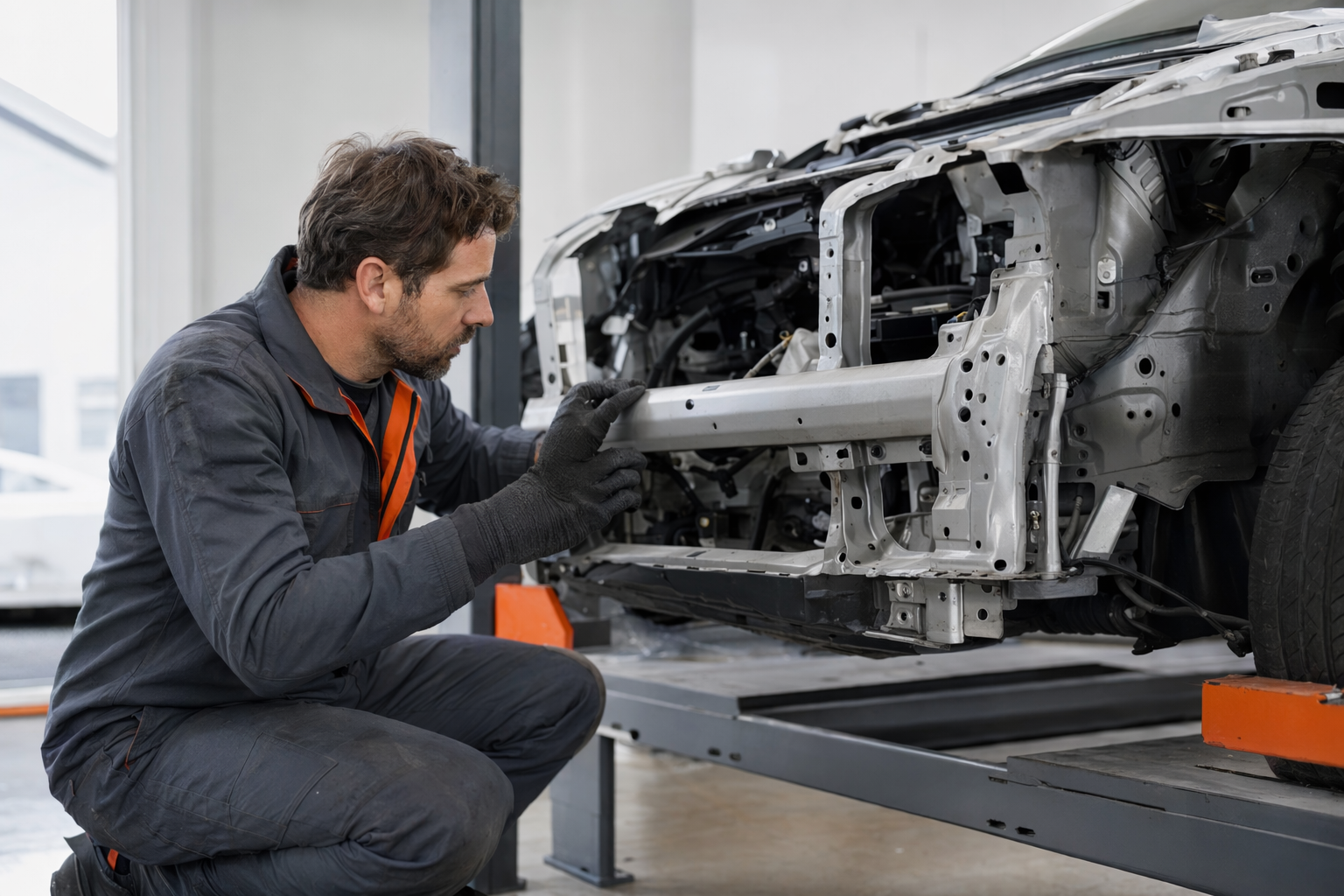
Do I Need ADAS Recalibration After Repair?
If your car has ADAS, short for advanced driver-assistance systems, you may need recalibration after repair. That is true even if the damage looks small. Bumper work, windshield replacement, frame repair, wheel alignment, suspension work, and some paint or body repairs can affect cameras and sensors.
You may need it if the repair touched:
- Front or rear bumper covers
- Windshield or windshield-mounted cameras
- Side mirrors with cameras
- Grilles, emblems, or radar areas
- Wheels, suspension, or steering parts
- Body panels near sensors or brackets
A repair shop should check the manufacturer repair procedures, which are the instructions made for your car. If the procedures call for recalibration, the shop should do it or arrange it with a qualified provider. For a related topic, see /services/glass-replacement/, since windshield work often involves recalibration.
The short answer
Often, yes. If your car has ADAS, ask the shop whether recalibration is needed before you approve the repair.
Do not guess based on how the car drives. Some systems can seem fine but still be out of line. That can affect safety features like lane keeping, emergency braking, blind spot alerts, or backup warnings.
A good shop will tell you whether the car needs a static recalibration, dynamic recalibration, or both. Static means the car is set up in the shop with special targets and tools. Dynamic means the car is driven under certain conditions so the system can relearn and test itself. Not every car needs the same process.
What you need to know
ADAS parts are sensitive. A sensor can be moved only a little and still need adjustment. After repair, the system may need to be checked because of:
- New parts or removed parts
- Changes to bumper height, glass position, or panel fit
- Wheel alignment changes
- Airbag or structural repair nearby
- Battery disconnects or fault codes in some vehicles
Recalibration is not a luxury add-on. On many cars, it is part of a proper repair. Still, not every accident repair requires it. The need depends on your exact year, make, model, and what was repaired.
Also, insurance coverage can vary. Some policies may cover recalibration when it is tied to a covered repair, but do not assume. Ask for a written estimate. If the estimate is missing calibration or scan work, ask the shop to explain why. You can also learn more about the repair process in /guides/repair-estimates-explained/ and /guides/safety-after-collision/.
Typical calibration and diagnostic costs can vary a lot by vehicle and location, often from a few hundred dollars to more than $1,000 in some cases. That is a typical range, not a quote.
Steps to take
Here is the simplest way to handle it:
- Tell the shop every system that seems affected, like lane assist, parking sensors, or a cracked windshield.
- Ask, "Does this car need ADAS recalibration after the repair?"
- Ask for the answer in writing on the estimate.
- Confirm whether the shop does the calibration in-house or sends it out.
- Ask if a post-repair scan will be done. That is a check for stored trouble codes.
- Get the final price approved before work starts.
- Test the warning lights and driver-assist features before you leave.
If you are still choosing where to go, CollisionLane can help you get matched with a trusted auto body shop. It is free, and you can compare and choose.
If you want a bigger picture of the repair path, see /how-it-works/ or our /services/ page.
Common mistakes
A few simple mistakes can cause delays or extra cost:
- Assuming only major crashes need recalibration
- Replacing a windshield without asking about camera calibration
- Skipping a post-repair scan
- Picking a shop that does not work on your car’s ADAS system
- Not getting the calibration listed on the estimate
- Driving with warning lights on and hoping they clear on their own
Another common mistake is thinking the repair is finished when the metal or paint work is done. On many cars, the electronic systems still need to be checked. If a shop says calibration is not needed, ask how they confirmed that. A trustworthy shop should be able to explain it in plain English.
If you want help choosing a shop, this guide may help: /guides/choosing-a-body-shop/.
Get matched with a shop
You do not need to figure this out alone. CollisionLane is a free matching service, not a body shop, insurer, or law firm. We help drivers find a local auto body shop that can review the damage and tell you whether ADAS recalibration is needed.
Use get matched with a trusted auto body shop to start. You can also visit CollisionLane’s help section for more simple answers after a crash.
Before you approve any work, get a written estimate and confirm the final price and what is included. That helps you compare shops and choose the one that fits your car and your budget.
Common questions
Does every bumper repair need ADAS recalibration?
No. Not every bumper repair needs it. But if the bumper has sensors, radar, or camera-related parts, the shop should check the manufacturer instructions to see if recalibration is required.
Do I need recalibration after a windshield replacement?
Often yes, if your car has a windshield-mounted camera or related driver-assist system. This is common on many newer cars. Ask the glass or body shop before the work starts.
Can I drive if the ADAS warning light is on after repair?
It is safer to have the car checked before regular driving. A warning light can mean the system is not working right or needs a scan or recalibration.