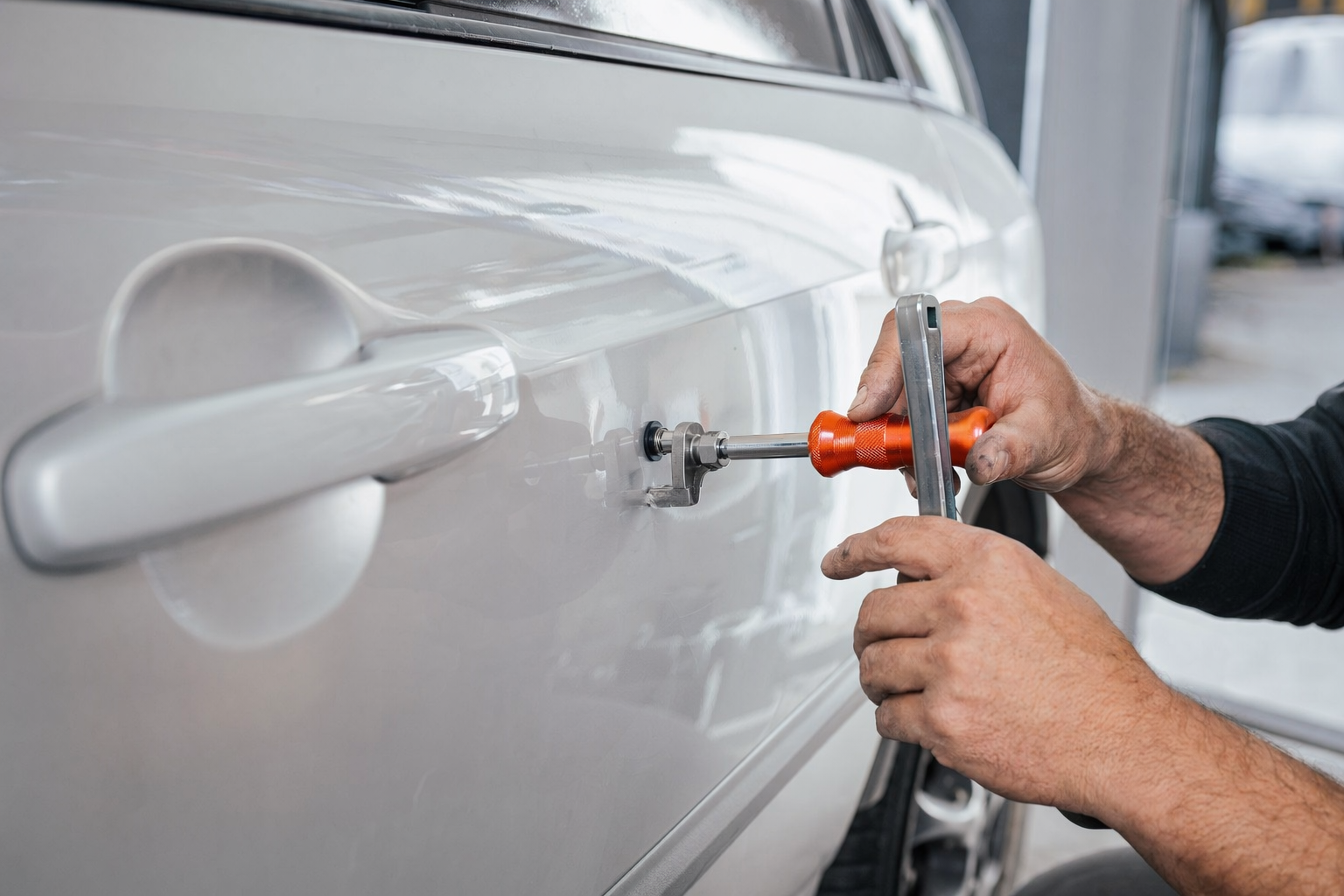
Is Paintless Dent Repair Right for My Dent?
Paintless dent repair is a method for pushing or massaging a dent out from behind the panel, without sanding, filling, or repainting. It is often used for door dings, hail dents, and some small parking lot dents.
It may be a good fit if:
- The paint is not cracked, chipped, or peeled.
- The dent is shallow and smooth, not torn or sharply folded.
- The damage is on a metal panel that can be accessed from behind.
- There is no sign of hidden damage to sensors, trim, or inner parts.
It may not be a good fit if:
- The paint is broken.
- The dent has a sharp edge or deep crease.
- The panel is stretched, cracked, or near a body line.
- The damage is on plastic, or the area is hard to reach.
If you are not sure, a shop can inspect it and tell you whether PDR is enough or whether you need traditional repair. You can also learn more on our dent repair service page and our quick answers after an accident.

The short answer
Yes, PDR can be right for your dent if the damage is small, the paint is still good, and the panel shape can be restored without repainting.
No, it is usually not the right choice if the dent is deep, the paint is broken, or the car needs filler, sanding, or refinishing. In those cases, a shop may need regular body repair and paint work.
A simple rule helps here. If the dent looks like a clean dip and the paint looks intact, PDR may be possible. If it looks torn, creased, or scraped, ask for a full inspection before you decide.
What you need to know
PDR is popular because it can save time and avoid repainting. But it is not magic, and it does not work on every dent.
What matters most:
1. Paint condition. If the paint is damaged, PDR alone usually is not enough.
2. Dent shape. Small round dents are easier than long creases or sharp folds.
3. Location. Some spots are easy to reach. Others need more labor or special tools.
4. Hidden damage. A dent can look minor outside, but still affect brackets, trim, or nearby parts.
Typical PDR costs can be lower than full repair, but prices vary a lot by size, location, and how many dents you have. These are typical ranges, not quotes.
If your car was in a larger crash, or if the dent is near a bumper, sensor, or structural area, ask the shop to inspect carefully. For more context, see collision repair and how to choose a trustworthy body shop.
Also, if you are filing a claim, the insurer or shop may first list PDR as an option, then switch methods after inspection. That is normal when the full damage becomes clear. Learn more in how the auto body insurance claim process works.
Steps to take
If you think PDR might work, take these steps:
- Wash the area if needed. Clean paint makes the dent easier to inspect.
- Take clear photos. Get close and wide shots in good light.
- Check the paint. Look for chips, cracks, or scraping.
- Compare repair options. Ask whether PDR, regular dent repair, or repainting is best.
- Get a written estimate. Ask what is included before work starts.
- Confirm the timeline. Ask how long the repair should take and whether parts are needed.
If you want help finding a nearby shop, use get matched. CollisionLane is free. You compare and choose the shop that feels right for you.
If your car has more than one issue, like a dent plus bumper damage or glass damage, ask the shop to review the full vehicle. You can also browse auto body repair services for a simple overview of common repair types.
Common mistakes
A few mistakes can cost time or money:
- Assuming every dent can be fixed with PDR.
- Ignoring cracked paint or a sharp crease.
- Not checking for hidden damage behind the panel.
- Accepting a repair plan without a written estimate.
- Choosing the cheapest option without asking what is included.
- Driving the car too long if the damage may affect safety parts.
Another common mistake is letting a shop start work before you understand the repair method. Always ask, will this be PDR, traditional body repair, or a mix of both?
If you want help asking the right questions, use our body shop question sheet or read questions to ask before you pick a body shop.
Get matched with a shop
Not every shop does PDR well, and not every dent should be repaired the same way. The safest move is to get a real inspection from a trusted local shop.
CollisionLane makes that easier. We are a free matching and information service, not a body shop, insurer, or law firm. We help drivers get connected with local auto body shops, in plain language and in 10 languages.
If you are ready, get matched and ask for a written estimate. Then compare the repair method, price, and timing before you approve any work.
If you are still deciding, you can also review how CollisionLane works or visit the home page to start from the beginning.
Common questions
Can PDR fix a dent if the paint is scratched?
Usually not by itself. If the paint is cracked, chipped, or peeled, the shop may need traditional dent repair and repainting.
Is PDR only for hail damage?
No. It is often used for hail, but it can also work for small door dings and shallow dents, if the panel and paint are suitable.
How do I know if my dent is too big for PDR?
A deep crease, sharp fold, or dent with stretched metal is often too much for PDR alone. A shop should inspect it and explain the repair options in writing.