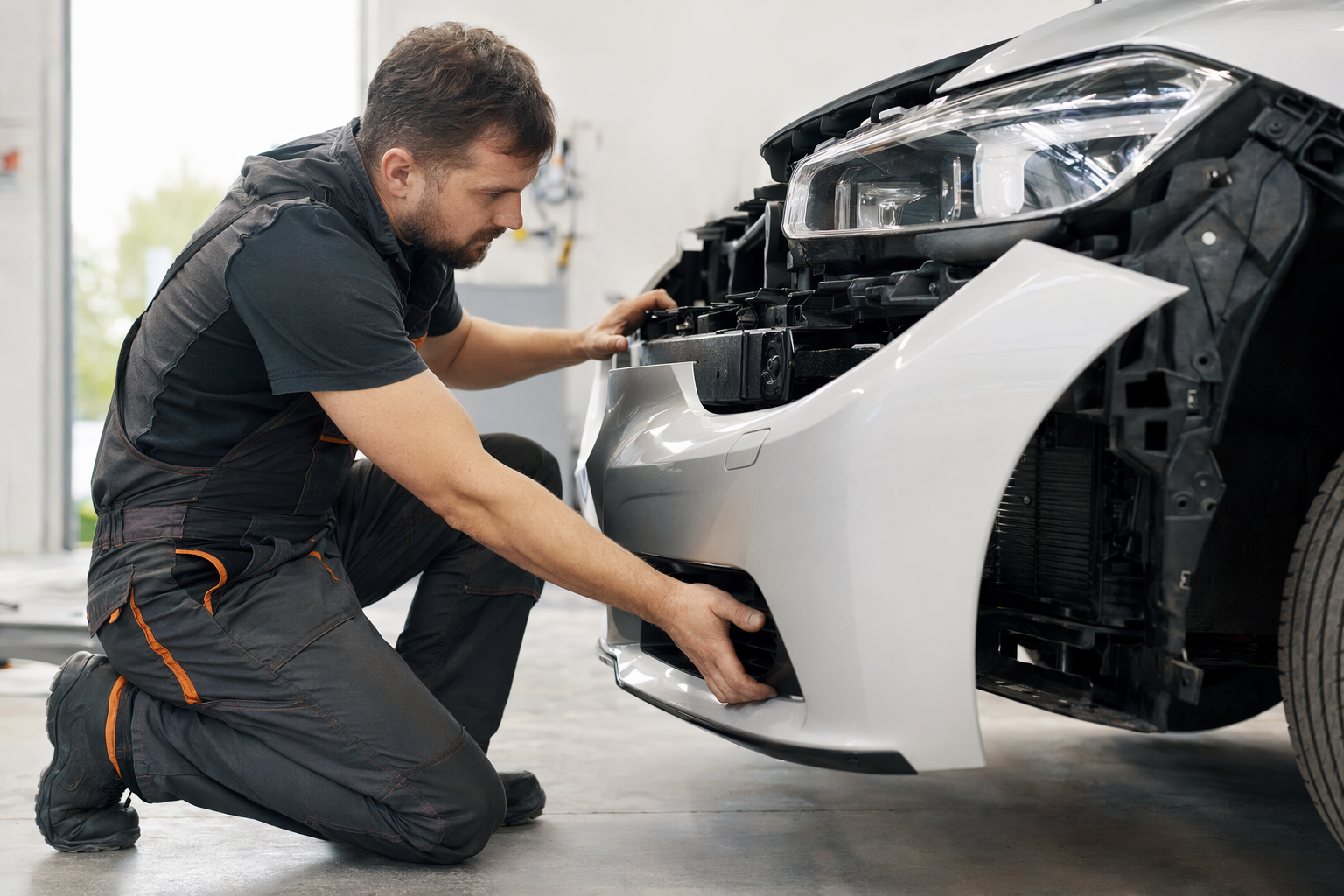
When Does a Bumper Need Replacing?
A bumper usually needs replacing when the damage is more than skin deep. If it is cracked, torn, badly bent, or the mounting tabs are broken, repair may not hold up well. A shop may also recommend replacement if the bumper cover has damage near sensors, brackets, or energy-absorbing parts behind it.
A bumper is not just the colored cover you see. There can be foam, crash bars, sensors, and wiring behind it. That is why two cars with similar-looking damage can need very different repairs. If you want a simple overview of bumper work, see Bumper repair and replacement.
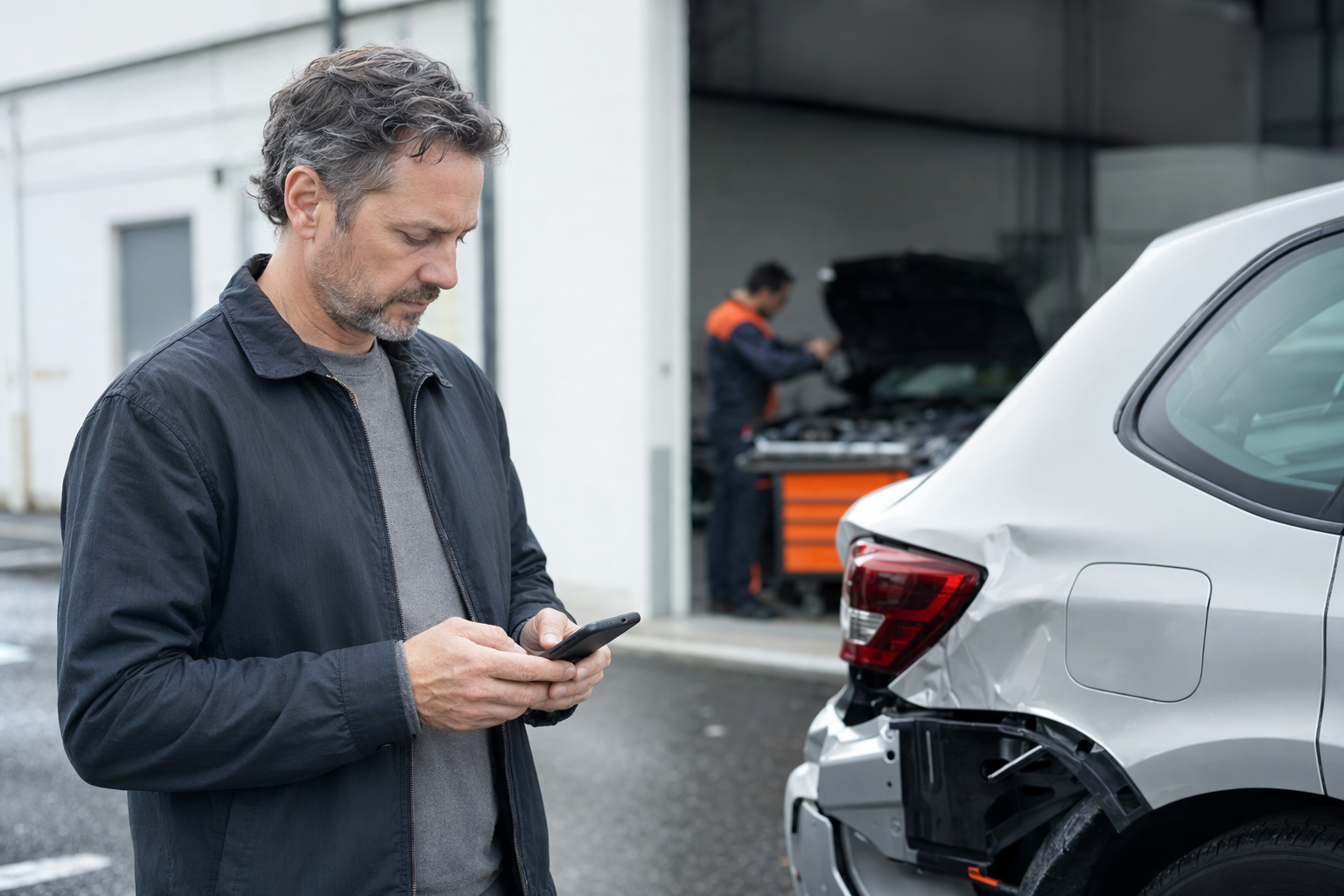
The short answer
If the bumper has only light scratches, paint damage, or a small dent, repair may be enough. If it is cracked, split, hanging loose, or the clips and mounts are broken, replacement is often the safer and cleaner fix.
Also, if the car has parking sensors, cameras, blind spot parts, or other driver-assist features near the bumper, the shop should check those before deciding. A damaged sensor area can turn a small crash into a bigger repair.
A good shop will look at the bumper cover, the hidden parts behind it, and the fit of the panel gaps. They should explain the difference in writing and give you a written estimate before work starts.
What you need to know
Here are the most common signs that a bumper may need replacement:
- Cracks, splits, or holes in the bumper cover
- Large dents that do not return to shape
- Broken tabs, clips, or mounting points
- The bumper is loose, sagging, or shifted out of place
- Damage reaches sensors, brackets, foam, or reinforcement parts
- Paint is damaged over a large area and repair would not look right
Sometimes a bumper can be repaired with plastic welding, reshaping, or refinishing. But repair is not always the best choice. If the material is too damaged, the fix may not be strong or may not match well. In those cases, replacement can save time and reduce repeat problems later.
The final choice often depends on safety, appearance, and cost. Typical bumper repair or replacement costs vary a lot by vehicle, parts, and hidden damage. These are typical ranges, not quotes. Ask for a written estimate and confirm the price before any work starts.
If you are also dealing with an insurance claim, the estimate may need to include hidden damage after the bumper comes off. For a general overview of the claim process, see How the auto body insurance claim process works and How to read an auto body repair estimate.
Steps to take
If your bumper was hit, take these simple steps:
- Take photos from the front, back, and sides.
- Look for cracks, loose parts, warning lights, or leaking fluid.
- Do not force the bumper back into place.
- If the car feels unsafe, do not drive it far.
- Get a written estimate from a trusted body shop.
- Ask whether the bumper can be repaired or should be replaced, and why.
- Ask if sensors or other hidden parts need to be checked.
- Compare estimates if you have time and choose the shop you trust.
If you want help understanding whether the car is safe to drive, read Is My Car Safe to Drive After an Accident? or use the After-an-Accident Checklist.
If you are ready to talk with a shop, CollisionLane can help you Get matched with a trusted auto body shop. It is free, and you can use it in your language.
Common mistakes
A few mistakes can make bumper repairs more expensive or less reliable:
- Assuming a scrape is only cosmetic, when the hidden parts are damaged
- Driving with a loose bumper that can fall off or scrape the road
- Choosing the lowest estimate without checking what is included
- Not asking about sensor checks or recalibration if the car has driver-assist systems
- Skipping photos before the car is repaired
- Not confirming whether the quote is for repair or full replacement
Another common mistake is waiting too long. Small cracks can spread. A loose bumper can lead to more damage to brackets, wiring, or paint. If the damage is fresh, get it checked soon. A quick inspection can help avoid a bigger repair later.
For broader help after a crash, you can also visit Quick answers after an accident or learn How CollisionLane works.
Get matched with a shop
CollisionLane is a free matching and information service. We are not a body shop, insurer, or law firm. We help drivers find a local shop that can inspect the bumper, explain repair versus replacement, and give a written estimate.
That matters when you are stressed and not sure what the damage means. A good shop should explain the problem in plain English, show you the damaged parts if possible, and let you compare before you choose.
If you want help now, start here: Get matched with a trusted auto body shop.
Common questions
Can a cracked bumper be repaired, or does it always need replacement?
Not always. Small cracks may sometimes be repaired, but larger cracks, split plastic, broken mounts, or damage near sensors often mean replacement is the better choice.
Does bumper damage always mean there is hidden damage too?
No, but hidden damage is common after a hit. The shop should inspect what is behind the bumper, including brackets, foam, wiring, and sensors, before deciding on repair or replacement.
Should I get a bumper estimate before I file a claim?
Usually it helps to get a written estimate either way so you understand the damage. CollisionLane does not give insurance advice, but a shop estimate can help you see what may need repair and what the likely options are.