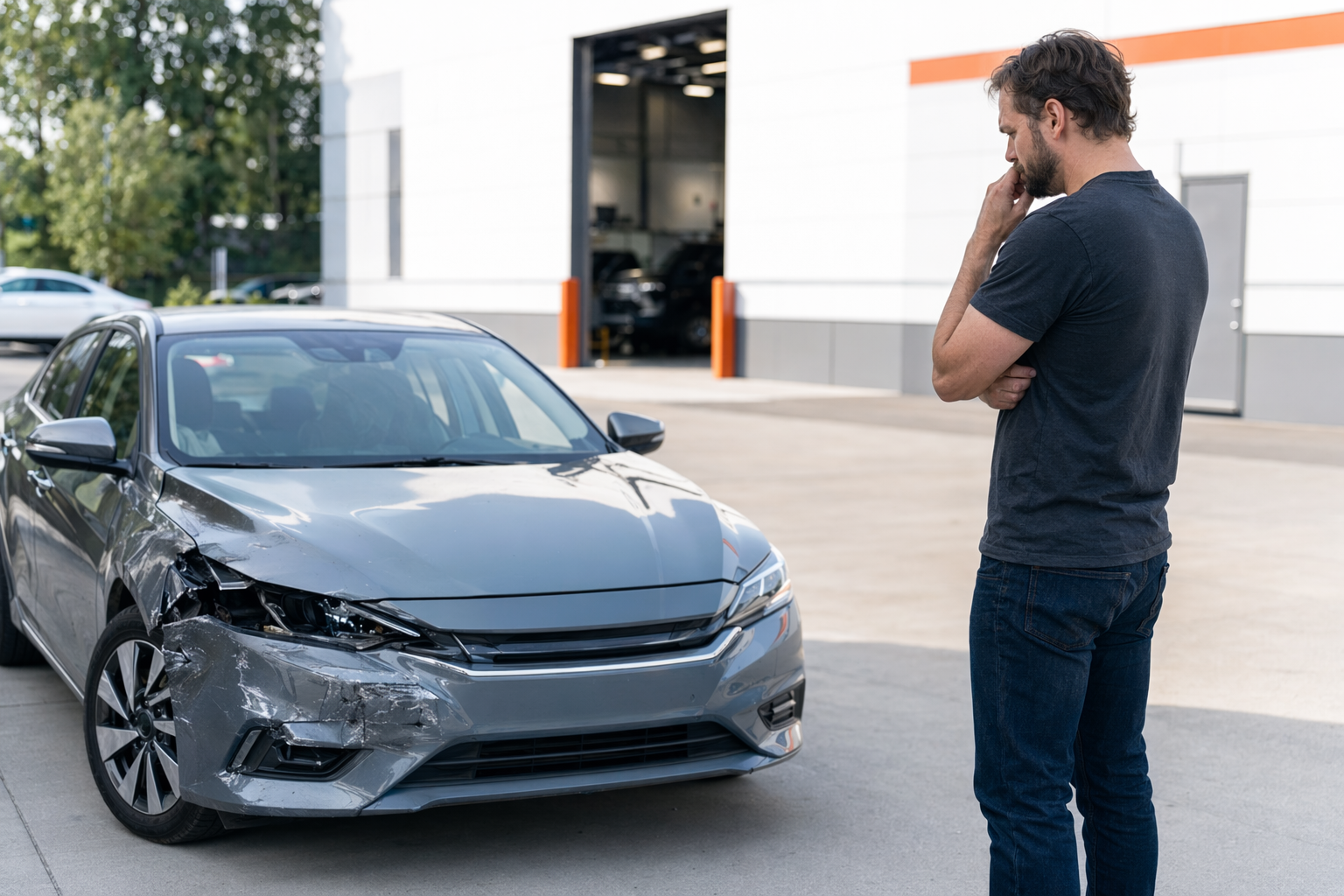
Diminished Value Claims
Diminished value means your car is worth less after an accident, even after a proper repair. The loss can happen because the car now has an accident history, buyers may worry about hidden damage, and some repairs do not restore a vehicle to the exact same market value.
This usually comes up after a collision, even a minor one. For example, a car with $4,000 to $8,000 in body repairs may still lose some resale value. In some cases, the loss is small. In others, especially for newer cars, higher-end vehicles, or cars with structural damage, the loss can be more noticeable. These are typical ranges, not quotes.
There are different kinds of diminished value, but the main idea is simple. A repaired car can be worth less than a similar car with no accident history. If you want a repair estimate first, you can start with repair estimates explained and collision and frame repair.

Why it matters
This matters because the repair bill is not always the full story. A car can be safe and drive well after repair, but still sell for less later. That can affect trade-in value, private sale price, and sometimes lease-end costs.
Diminished value is often more important when:
- The car is newer.
- The damage was significant.
- The repair involved frame or structural work.
- Airbags deployed.
- The car is a higher-value model.
A simple example helps. If two similar cars are listed at $18,000, but one has a recent accident on its record, a buyer may offer less for the repaired car. The loss might be a few hundred dollars, or it might be several thousand. There is no single fixed amount.
If you are also trying to understand whether the car is safe, see is my car safe after an accident? and what is frame damage.
Step by step
If you think you may have a diminished value claim, a calm, organized approach helps.
- Get the car repaired properly. Keep every estimate, invoice, supplement, and final repair sheet. A supplement is an added repair charge discovered after teardown, and it can matter later. Learn more in what is a supplement in collision repair.
- Save proof of the damage. Keep photos from the crash, the police report if you have one, and any repair notes.
- Ask for written records. You may want the shop to note structural repairs, paint work, or part replacement.
- Document the car’s value before and after. Some drivers use mileage, trim level, and market listings for similar vehicles. An appraisal may help in some situations.
- Check how the claim is being handled. The process can depend on who caused the crash and how the insurance claim is set up. For a general overview, see how the auto body insurance claim process works and who pays for repairs when you're not at fault.
- Ask before the repair is finished. If possible, ask the insurer or claim handler what they require to review a diminished value request.
Important: CollisionLane is a free matching and information service, not an insurer or law firm. We cannot tell you whether a claim will be paid. We can help you find a shop that can document repairs clearly and give you written estimates through get matched with a trusted auto body shop.
Your rights as the owner
As the vehicle owner, you usually have the right to ask questions, request written estimates, and keep copies of all repair paperwork. You also have the right to compare repair shops and choose where your car goes in many situations. See do I have to use my insurer's shop?.
In general, whether a diminished value claim is possible can depend on:
- Your state.
- Who was at fault.
- The insurance coverage involved.
- The age and condition of the vehicle.
- The severity of the damage and repairs.
Some drivers may pursue a claim with the at-fault party’s insurer. Others may not qualify, or may not recover much. Because the rules can vary, it is smart to keep the discussion general and to ask the claim handler what documents they want.
If you are unsure what the estimate means, a good body shop can explain the repair path in plain English. You can also review how to read an auto body repair estimate and questions to ask before you pick a body shop.
Common mistakes
People often lose time or weaken their paperwork by making simple mistakes.
- Repairing the car before saving records. Take photos and store estimates first.
- Not asking for written estimates. Verbal numbers are easy to forget.
- Ignoring structural or hidden damage. A small bumper hit can hide larger problems.
- Assuming the first offer is final. Estimates and claim reviews can change after teardown.
- Missing deadlines. Claim timing can matter, so do not wait too long.
- Thinking every car automatically qualifies. Not every vehicle has a strong diminished value case.
- Confusing repair quality with market value. A good repair does not always remove the accident history from resale records.
Also, do not guess on prices. Ask for written estimates and confirm the price before work starts. If you want help finding a shop that can inspect the damage, compare options, and explain the work clearly, start with how CollisionLane works or get matched.
When to get matched with a shop
You should get matched with a shop when you need a clear repair plan, a written estimate, or a second opinion about visible and hidden damage. That is especially helpful if the car has bumper damage, paint damage, glass damage, or possible frame damage.
A trusted shop can help with:
- Written estimates for repairs.
- Photos and notes that document the damage.
- Tear-down findings that show hidden damage.
- Repair recommendations that are easier to share with an insurer.
- Clear answers about whether the car may need body repair, paint, bumper work, or glass replacement.
This does not guarantee a claim result or a specific dollar amount. But it can make the process easier, especially if you are already stressed or if English is not your first language. You can also review auto body repair services and guides for drivers after an accident.
If you just want to move forward, we can help you compare local options and connect with a shop that fits your situation. Start here: get matched with a trusted auto body shop.
Common questions
Can I claim diminished value if my car was repaired well?
Yes, sometimes. A quality repair can restore how the car looks and drives, but the accident history may still lower market value. Whether a claim is possible depends on the facts of the crash, the state, and the insurance situation.
How much is a diminished value claim worth?
There is no fixed amount. Losses can be small, or they can reach into the low thousands for newer or higher-value vehicles. The amount usually depends on the car’s age, mileage, damage severity, and market demand. These are typical ranges, not quotes.
Do I need repair paperwork to pursue a claim?
Usually, yes, good paperwork helps. Keep your written estimate, final invoice, photos, and any supplement records. Clear documentation from the shop makes it easier to show what was repaired and why it mattered.