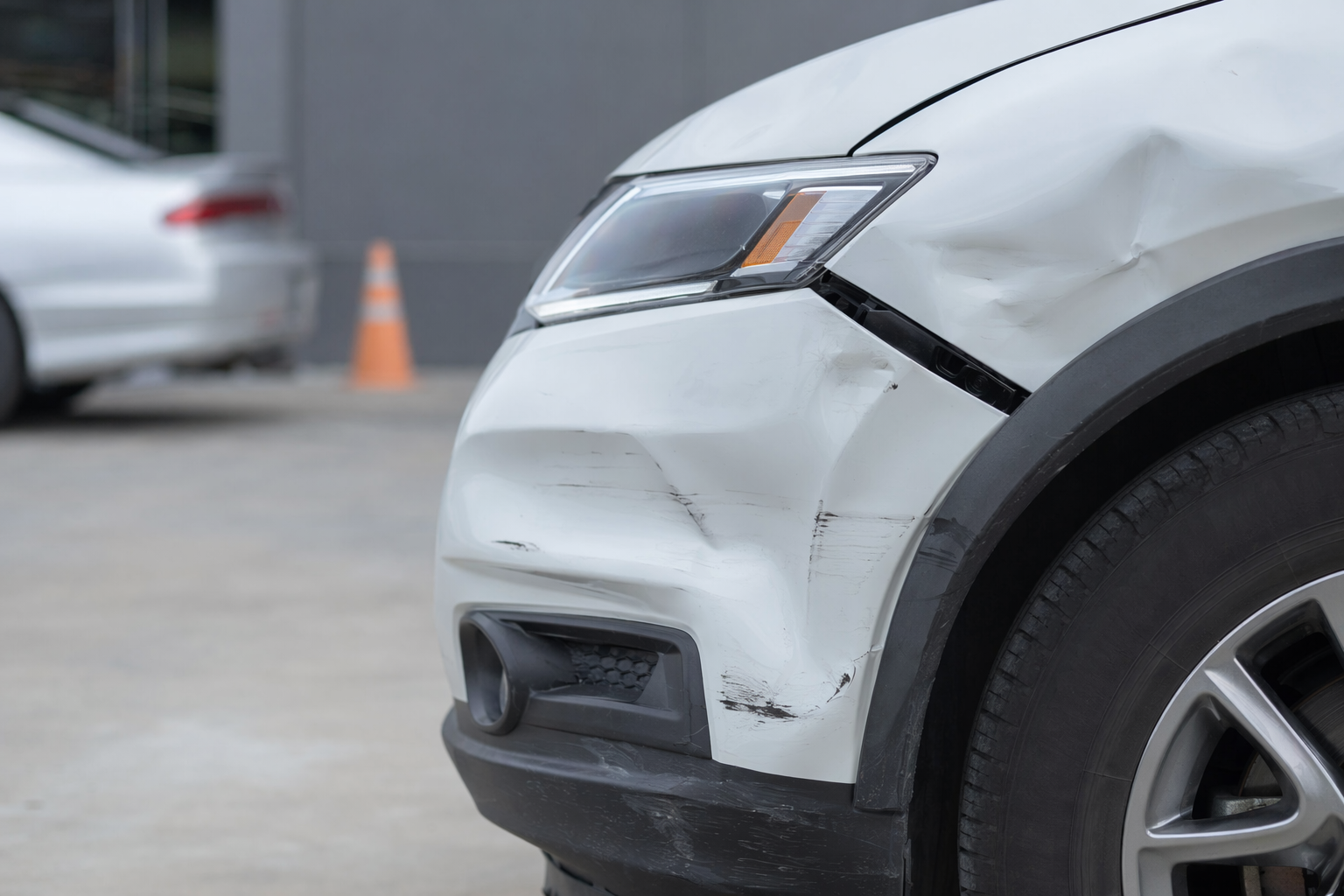
Hit-and-Run & Uninsured Accidents
A hit-and-run means the other driver left the scene. An uninsured driver means the other person may be identified, but they do not have active coverage to pay for the damage. In both cases, you may need to use your own policy, pay out of pocket, or wait for more information from the police or insurer.
This is common after parking lot bumps, rear-end crashes, side-swipe damage, broken glass, bumper cracks, dent repair, or frame damage. Even if the car still drives, hidden damage can show up later. If you need a quick refresher on the repair side, see collision and frame repair and glass replacement.
Why it matters
The driver who caused the crash may not be able to pay. That can change how the repair gets handled and which coverage applies.
Why this matters:
- Your repair bill can be delayed while fault and coverage are sorted out.
- You may need to decide whether to use your own policy.
- Some damage can get worse if you keep driving, especially alignment, suspension, bumper, and safety system issues.
- Rental car help may depend on your policy and the exact claim.
Typical collision repairs can range from about $500 to $2,500 for smaller bumper, dent, or paint jobs, and $2,500 to $10,000 or more for heavier crash damage. Glass repair or replacement often ranges from about $150 to $500 for a simple repair and $300 to $1,000+ for replacement, especially if cameras or sensors need recalibration. These are typical ranges, not quotes.
If you want help understanding pricing, you can review repair estimates explained and use the repair cost estimator.
Step by step
Here is a simple path to follow after a hit-and-run or uninsured-driver crash.
- Get safe. Move to a safe place if you can. Check for injuries first.
- Call police if needed. For a hit-and-run, a police report can be important. Ask for the report number.
- Take photos. Get wide shots and close-ups of both cars, the road, debris, skid marks, glass, and license plates if you have them.
- Write down details. Time, location, weather, direction of travel, witness names, and any description of the other vehicle.
- Check for cameras. Nearby stores, homes, or traffic cameras may have footage. Act quickly before it is erased.
- Contact your insurer. Ask what coverage may apply. Keep it general if you are unsure. If you have uninsured motorist coverage, that may be relevant. If you have collision coverage, that may also be used depending on the claim.
- Do not approve repairs too fast. Get a written estimate first. If you are comparing options, get matched with a trusted auto body shop or read how CollisionLane works.
- Ask about hidden damage. A shop should inspect for structural issues, sensor damage, and alignment problems.
- Keep all records. Save photos, reports, estimates, claim numbers, and receipts for towing or a rental.
If you are not sure what to say to a shop, use questions to ask before you pick a body shop.
Your rights as the owner
As the vehicle owner, you generally have the right to choose where to get estimates and where to have the car repaired. You do not have to accept the first shop or the first number you hear. You can compare more than one estimate and ask for the work to be explained in plain language.
You also have the right to ask:
- What damage is visible now.
- What damage may be hidden.
- Whether the car is safe to drive before repair.
- Whether parts will be new, OEM, aftermarket, or used, if that matters to you. See OEM vs aftermarket vs used parts.
- Whether sensors, cameras, or ADAS systems need recalibration. See Do I Need ADAS Recalibration After Repair?.
If the repair estimate is low, you can ask for a supplement. A supplement is an added amount when the shop finds more damage after teardown. That is normal in collision repair. Learn more in What Is a Supplement in Collision Repair?.
If your car may be totaled, the rules can get different. A total loss usually means the repair cost is too high compared with the car’s actual cash value, or ACV, which is the car’s market value before the crash. See Understanding Actual Cash Value (ACV) and What Happens If My Car Is Totaled?.
Common mistakes
A stressful crash makes it easy to rush. Try to avoid these mistakes:
- Leaving without good photos or a police report, especially after a hit-and-run.
- Assuming the other driver has insurance without checking.
- Driving a car that may have frame, tire, suspension, airbag, or glass damage.
- Accepting a repair without a written estimate.
- Not asking whether the estimate includes parts, paint, labor, and calibration.
- Choosing the cheapest option without checking the shop’s reputation and process.
- Forgetting to ask about your deductible, rental coverage, and whether you need to pay anything before work starts.
- Starting repairs before the claim is clear, unless the car is unsafe and you need to act fast.
If you are unsure whether the car is safe, read Is My Car Safe to Drive After an Accident?. If you want help spotting problems with a shop, see how to spot a bad body shop.
When to get matched with a shop
Get matched when you want a repair plan you can trust, especially if the other driver fled or has no insurance and you need clear next steps.
A shop match can help if:
- You need more than one estimate.
- You want a shop that handles insurance paperwork and supplements.
- Your car may have hidden structural, bumper, paint, or glass damage.
- You need a shop that can explain options in simple English or another language.
- You want to compare repair timelines, parts choices, and price before you decide.
CollisionLane is a free matching and information service. We are not a body shop, insurer, or law firm. We help you find a local shop, compare choices, and move forward with less stress. If you are ready, get matched with a trusted auto body shop or start from the guides for drivers after an accident.
If you want to understand the full repair path, you can also look at auto body repair services and how the insurance claim process works.
Common questions
If the other driver has no insurance, who usually pays for my car repairs?
It depends on your coverage and the facts of the crash. In general, people often look at their own collision coverage or any uninsured motorist coverage they may have. If you are unsure, ask your insurer what may apply and get a written estimate from a shop first.
Do I need a police report after a hit-and-run?
Usually it is a smart idea to get one, especially if you may file a claim later. A report can help document what happened, where it happened, and any details about the other car.
Can I still compare body shops if I am using my own insurance?
Yes. You can usually compare shops and ask for written estimates. It is a good idea to confirm price, parts, and repair scope before work begins.